
Showing posts with label reformation. Show all posts

Sir Walter Raleigh and Allegations of “Atheism”

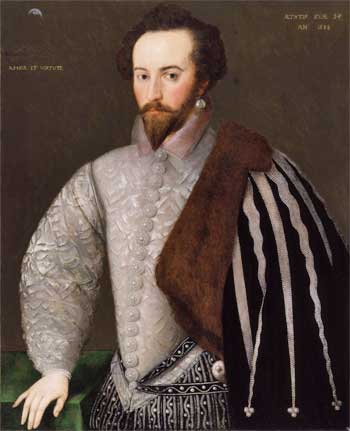
Sir Walter Raleigh

“Sir Walter Raleigh”

Chapter 7: Poet, Patron and “Atheist”

By Willard M. Wallace
Princeton University Press, First Edition, ©1959

Page 72

…tinued to struggle against odd impossible to overcome. True, he wrote deftly, delicately, of nymphs and sherpherds, of “Coral clasps and Amber studs,” but generally he left such subjects to others of his contemporaries. More likely was he to speak of the “weary soul and heavy thought,” of the uncertainty of love, and of the mystery of life. As the distinguished editor of the latest edition of his verse, Miss Agnes Latham, has written, Raleigh from his experience “knew how beauty is never more keenly apprehended than in the moment that emphasizes its inevitable decay, that light shows never brighter than between the two darknesses. He begins a love-song, and the last verse is an epitaph.” 3 What remains of Cynthia is a noble poem in imagery, thought, and passion; it is too little known. But in it, as in so many of his other poems, are the acerbic allusions, freighted with experience, to human frailty and the tragic transcience of life.

Raleigh could examine with a clinical eye and express an opinion astringent in its accents

✂ snipping poem ✂

Page 73

A similar emphasis, somberly ironical, appears in the solemn epitaph written on Sir Philip Sidneyʼs death in the Lowlands:

snipping poem

Probably nothing Raleigh ever wrote revealed so brilliantly his mastery of the savage thrust as The Lie. In those years when Essex supplanted him and when his own mischance brought him to a parting of the ways with the Queen after 1592, he brooded upon his experience of the world and penned a denunciation in which anger, bitterness, and disgust combined to form a ruthless, unsparing attack:

snipping poem

Page 74

snipping poem

Page 75

snipping poem

It is hardly surprising that a poem so critical in its spirit and content should provoke offended interests into replying. The answers to The Lie were numerous and biting. One starts:

snipping poem

Another reply, after enumerating the points challenged by Raleigh, ends:

snipping poem

Still another, somewhat more sophisticated, contains counter-charges:

snipping poem

Page 76

snipping poem

Men were always finding something sinister in Raleigh, and by many he was believed an atheist. The charge was given wide currency by Father Robert Parsons in a polemical counterattack to the Queenʼs proclamation of October 18, 1591 against the Jesuits. If Raleigh was admitted to the Privy Council, Parsons contended, one might expect at any time a royal edict denying the basic principles of Christianity. Parsons spoke of “Sir Walter Raleghʼs school of atheism by the way, and of the conjurer that is M[aster] thereof, and of the diligence used to get young gentlemen to this school, wherein both Moses and our Savior, the Old Testament and New Testament are jested at, and the scholars taught among other things to spell God backward.” 7

Raleighʼs tolerance has been exaggerated, particularly his tolerance towards Catholics, but it was ironical that he should have been singled out by a Catholic for an attack that found favor with his enemies, many of whom were bitterly anti-Catholic. But Parsons also called Lord Burghley an atheist, so Raleigh was in respectable company at the very least.

The appellation “atheist” has an unpleasant connotation for most people even today, but in the sixteenth century it could be utterly damning: men were burned for atheism. That it lacked precise definition made it a convenient tag to apply to oneʼs enemies, much as, today, it is possible to ruin a manʼs reputation by calling him a communist; whether he is or not is beside the point. Elizabethans considered as atheists people who would now be generally classified as atheists proper—skeptics, agnostics, deists, unitarians, persons seemingly acting without regard to ethical considerations—or, as the ablest analyst of Raleighʼs thought has declared in a recent study, simply “a dubious character or an intractable opponent.” 8

Page 77

Raleighʼs beliefs are not easy to categorize, for his was not a mind that saw things in blacks and whites or that accepted dogma without examination. He had read his Machiavelli, he cited him in his writings, and his behavior occasionally comported with the advice of the great Italian. But that Raleigh accepted Machiavellian principles without qualification is as much a misapprehension as that he believed without reservation in the theology of the day. Raleigh did not disbelieve in a God; rather, he was uncertain of the precise nature of God. One summer evening in 1593, Sir George Trenchard, Deputy Lieutenant of Dorset, gave a dinner party to which he invited, among others, Raleigh and his brother Carew; Sir Ralph Horsey, also Deputy Lieutenant; Ralph Ironside, a clergyman of Winterborne; and Vicar Whittle of Forthington. Carew Raleigh made a number of remarks to which Horsey objected as “loose” and dangerous. When Carew asked Ironside why this should be so, Ironside replied that “the wages of sin is death.” To Carewʼs jesting rejoinder that death came to saint and sinner alike, the clergyman declared that “death which is properly the wages of sin, is death eternal, both of the body and of the soul also.”

“Soul, what is that?” asked Carew, greatly daring.

When Ironside expressed a disinclination to inquire closely into what constituted the soul, and then fell silent altogether, Raleigh took over from his brother and entreated Ironside to answer Carewʼs question. “I have been a scholar some time in Oxford,” Raleigh added; “I have answered under a bachelor of art, and had talk with diverse; yet hitherunto in this point (to wit what the reasonable soul of man is) have I not by any been resolved.”

The conversation that followed satisfied Raleigh neither on the nature of the soul nor the nature of God. “Marry, these two be like,” he said impatiently, “for neither could I learn hitherto what God is.” Finally, he requested that grace be said, “for that…is better than this disputation.”

The dinner party became, in 1594, the subject of an investigation conducted under authorization of the Queenʼs “High Commissioners in Cases Ecclesiastical.” The investigating commission met at Cerne Abbas and included Viscount Howard of Bindon, Thomas Howard, Chancellor Francis James, John Wil-

Page 78

…liams, Francis Hawley, and Sir Ralph Horsey. The last had been present at the party. The written testimony submitted by Ironside contained a reasonably full account of the dinner conversation. Although no formal action was taken against Raleigh as a result of the investigation, there can be little doubt that his intellectual interests, Renaissance-natured in their number and diversity and in his desire to preserve an open mind, made him liable to suspicion. 9

What Raleigh actually believed shows evidence of a penetrating and sophisticated mind, if not one of great originality. In his opinion, God is known by His works or His words—“either by observing and conferring of things… or else by the word of God Himself.” 10 Furthermore, God “hath no any bodily shape or composition, for it is both against His nature and His word.” 11 Nor should God and Nature be confused, for “it is God that only disposeth of all things according to His own will…it is nature that can dispose of nothing, but according to the will of the matter wherein it worketh.” 12 Though men know by means of their reason the existence of God, they cannot know His essence: “such a nature cannot be said to be God, that can be in all conceived by man.” 13 God, therefore, is mystery, real in the evidence of His presence but inconceivable in image and essence. By comparison, the anthropomorphic conception of many of Raleighʼs contemporaries was something less than crude.

Raleigh on manʼs soul was reasonably conventional. 14 He speaks of three kinds of souls: the “feeding” soul, the “feeling” soul, and the soul “endowed with reason.” Animals have only the first two types and are mortal, whereas manʼs soul is immortal and possesses “an heavenly beginning.” The substance of the soul, “with its appetite and affection and desire,” he admits, is hardly known (a view he acknowledges St. Augustine as sharing), but it comes from God and returns to God. Sin, however,

Page 79

comes not from God. Rather, “the body doth communicate it to the soul, as the soul doth impart many things to the body; for they both make one person, and the soul in the body is straightway subject to the state of sin with the body…” He considered the soul of man to be immortal, a belief, he points out, which ancient thinkers, including Plato, shared and the Sadducees denied. The soul “hath no cause of death within it or without it…but liveth and abideth for ever after the body is dissolved.”

Raleighʼs thought is well within the traditional frame. His conceptions of God and the soul were foreshadowed by the great Christian fathers, Jerome and Augustine. His argument that the desires of the soul constitute evidence of immortality was used by Plato. His insistence that the soul furnished form to the body, giving life and motion to the whole, was straight out of Aristotle. If he leans more strongly toward Plato in preference to any other thinker, ancient or modern, his writing is studded with scriptural allusions with which he buttresses argument after argument. Certain modern writers have seen in Raleighʼs writings associations with liberal thinkers evidence of greater modernity in religious thinking than he may have deserved. As Edward Strathmann has pointed out in his masterly analysis of Raleighʼs intellectual interests, Raleighʼs emphasis on reason did not prevent him from yielding to scripture as the ultimate authority, and the skepticism evident in his arguments was no a device to attack Christianity but to support it. 15

The more closely one examines his writings, both prose and poetry, the more one sees a profound respect for religion. In his remark,

Say to the Church it shows
Whatʼs good, and doth no good,

he criticized the Church as an institution falling down in its mission, but that did not prevent him from telling the Dean of Westminster that he meant to die in the faith professed by the Church of England. 16 In his argument with Ironside, the latterʼs reasoning, rather than his convictions, annoyed him—“you

Page 80

answer not like a scholar,” Raleigh told the clergyman. To his son, in later days, Raleigh wrote, “Serve God; let Him be the Author of all thy actions,” 117 and there is little reason to conclude that this paternal advice was mere lip-service to a convention. His The Passionate Manʼs Pilgrimage is one of the truly great religious poems of his time. That Raleigh did not wholly convince some people, even to the day of his death, that he was not an atheist was owing less to what he actually believed, or professed to believe, than to what men preferred to think he believed. For Raleighʼs enemies were legion.

Part of the reason for the reputation of “atheist” that he acquired was undoubtedly the attraction that he felt for any man with a different sort of mind or interest. One brilliant, devil-may-care Elizabethan with whom his name is linked was Christopher Marlowe. Another, held in almost equal disrepute, was Thomas Hariot. Much has been written of the relationship between Marlowe and Raleigh, who may have been introduced by their mutual friend, Hariot. Most of the evidence of direct contact between Raleigh and the author of Tamburlaine and Dr. Faustus is based on inference. According to Mr. Strathmann, the sole bit of evidence that the two had ever conversed is the testimony of a spy, Richard Cholmeley, himself accused of atheism, that “Marlowe is able to show more sound reasons for atheism than any divine in England is able to give to prove divinity, and that Marlowe told him that he hath read the atheist lecture to Sir Walter Raleigh and others.” 18 All this aside, each was acquainted with the otherʼs works, and a bond of intellectual understanding may have existed between them. Raleigh was the more serious, the more realistic, as his reply to Marloweʼs Passionate Shepherd to His Love indicates. 19 Marloweʼs song is joyous and carefree:

Come, live with me and be my love,
And we will the the pleasures prove

snipping poem

Page 81

But Raleigh has the Nymph reply in a tone that manages to be both teasing and serious:

snipping poem

Like Raleigh, Marlowe was hounded by the rumors of atheism. His former tutor, Francis Ket, was sent to the stake in 1589 on the charge. Less cautious than Raleigh, Marlowe was finally brought to a near-reckoning when, in 1593, a warrant was issued for his arrest on the charges of atheism and blasphemy. But it was only a near-reckoning after all, since, before the law closed in, he died on May 30 from a knife wound received in a tavern brawl at Deptford. It is as absurd to conclude, as has been done, that Raleigh contrived to have Marlowe

Page 82

…assassinated as it is to contend, as has also been done, that Raleigh was the real William Shakespeare! 20

Raleighʼs association with Hariot likewise caused talk. Marlowe was rumored to have boasted that, beside his friend Hariot, “Moses was but a juggler,” and that Hariot “being Sir W. Raleghʼs man can do more than he.” At least, this was the report of an informer. 21 Hariot, of course, was Raleighʼs friend and protégé, the scientist and mathematician who had gone with Lane to Virginia. After 1593, Hariot became a member of the retinue of Henry Percy, Earl of Northumberland, but he and Raleigh remained close friends. Hariotʼs scientific interests led people to suspect his orthodoxy, and he had to clear himself before the Council. Aubrey, the seventeenth-century biographer, reported that Hariot taught the doctrine of deism to both Raleigh and Northumberland and that the divines looked upon his death from cancer of the lip or tongue as “a judgment upon him for nullifying the Scripture.” 22

Also suspicious company for Raleigh was Dr. John Dee, a strange person who has left a revealing diary. He knew astronomy, geography, (this alone would have interested Raleigh), and mathematics, and wrote a treatise on the Gregorian calendar which formed the basis for government acceptance of the change from the old Julian calendar until the English ecclesiastics, their fear of anything Catholic extending even to a time calculation, persuaded the government to cling to the old, if less accurate, method. But Deeʼs curious mind also led him into astrology and into delving into the occult. He heard mysterious noises in the night, dreamed weird dreams, spoke of evil spirits. How he escaped the stake was nothing short of a miracle, but Elizabeth seems to have liked him and Raleigh became his good friend. On April 1583, Dee wrote, “…the Queen went from Richmond toward Greenwich, and at her going on horseback, being new up, she called for me by Mr. Rawly his putting her in mind, and … gave me her right hand to kiss.” 23 Raleigh

Page 83

wrote to him, over two months later, of the Queenʼs good will to him. 24 As late as October 9, 1595, Raleigh invited Dee to dine with him at Durham House. 25 Many people thought Hariot was the master conjurer alluded to by the Jesuit Parsons in his attack on Raleighʼs “school of atheism” but Dee was certain he himself was the one Parsons had in mind. In any event, the fact that Raleigh and Dee enjoyed any kind of association was probably equally damning to each.

Raleighʼs abilities and interests, as well as the patronage he gave, are reflected in the attention scholars accorded him. Richard Hakluyt expressed his indebtedness to him. Martin Bassaniere of Paris dedicated to him his edition of an original narrative of the French attempt to settle Florida. The publisher of John Caseʼs Praise of Music dedicated this outstanding musical publication of its day to Raleigh as a skilled musician. Thomas Churchyard, the poet, inscribed his Spark of Friendship to him. Undoubtedly in response to his lively interest in chemistry and drugs, a medical treatise was also dedicated to him. An antiquarianʼs continuation of an ancient Irish history contained a warm tribute to Raleigh in the introduction as “rather a servant than a commander to his own fortune.” And so it went, by no means concluded with this list, an impressive catalogue of interests by this amazing man. 26

Raleigh was generous with his time and money, and careless of his reputation, where his interests and sympathies were involved. Anyone at all intellectually unusual could be sure of a hearing and possibly of support; he preserved an open and inquiring mind. It was his misfortune, from the point of view of contemporary popularity, that he took no pains to disguise his superiority but, rather, gloried in it in a manner so boldly insolent that it graveled men. They rejoiced at every misfortune that overtook him, and would have felt that he had received his just deserts had he been executed for atheism. No wonder they believed that his trip to Ireland in 1589, when he visited with Spenser, was a flight or an exile from Court; this was what they wanted to believe, for surely, in their eyes, he merited some kind of reduction in standing. And soon, if not in 1589, they were to have an opportunity to applaud more vigrously.

Sir Walter Raleigh Princeton Press

3. Latham, Raleghʼs Poems, xxvii.

7. An Advertisement Written to a Secretary of My L. Treasurers of England, by an English Intelligencer as He Passed through Germany towards Italy (1592), 18 quoted by E. A. Strathmann, Sir Walter Raleigh, A Study in Elizabethan Skepticism, 25; see also pp. 26-30.

8. Ibid., 96.

9. For a full report of the Cerne Abbas inquiry, see G. B. Harrison, Willobie His Avisa, App. III. For comment, see Strathmann, Ralegh, A Study in Elizabethan Skepticism, 46-52.

10. History of the World, bk. V, ch. i, sec. I (Works, II, 4).

11. Ibid. bk. I ch. ii, sec. I (Works, II, 46-47).

12. Preface to ibid. (Works, II, lvii).

13. Preface to ibid. (Works, II, lx).

14. The quotations that follow are from Raleighʼs A Treatise of the Soul, in Works, VIII, 571-91.

15. Strathmann, Ralegh, A Study in Elizabethan Skepticism, 126-32. See also R. W. Battenhouse, Marloweʼs “Tamburlaine,” 50-68; V. T. Harlow (ed.), The Discoverie of Guiana, xxxii-xxxviii; U. M. Ellis-Fermor, Christopher Marlowe, 163, M. C. Bradbrook, The School of Night, 61.

16. D. Jardine, Criminal Trials, I, 508.

117. Works, VIII, 570.

18. Strathmann, Ralegh, A Study in Elizabethan Skepticism, 40 and n. 51; the quotation is from Harleian MSS (British Museum), 6848, fol. 190.

19. For suggestions concerning the mental affinity of Raleigh and Marlowe, see Thompson, Ralegh, 78; Ellis-Fermor, Marlowe, 163, 165; Harlow (ed.) Discoverie of Guiana, xxxiv-xxxv.

20. For the assassination theory, see S. A. Tannenbaum, The Assassination of Christopher Marlowe, for the Shakespeare claim, see H. Pemberton, Jr., Shakespeare and Sir Walter Raleigh

21. See Harleian MSS (British Museum), 6848, fols., 185-86; C. F. Tucker Brooke, The Life of Marlowe, 98-100.

22. Aubrey, Brief Lives, I, 287.

23. The Private Diary of Dr. John Dee, 20.

24. Ibid., 21.

25. Ibid., 54-

26. Stebbing, Ralegh, 53-54.

Calvin, the Reformers and their Animosities

Calvin, the Reformers and their Animosities

“The Reformers” [not simply Luther and Calvin, but other Reformation leaders as well] sometimes employed degrees of theological and personal recriminations toward each other that might shock not a few readers who have never studied that particular phase of “Christian” history. (Which also makes me suspect that at least one attraction of “Christianity” or “Islam” or other such faiths is the fact that people can call each other neat sounding theological names like “heretic,” and also threaten each other with “Godʼs wrath” without such speech ever going to court. But then “Communism” also had itʼs own ideological code words of reprobation, like “decadent.”)

The passages below are drawn from “History of the Life, Works, and Doctrines of John Calvin” by J. M. V. Audin, translated by Rev. John McGill (Louisville: B. J. Webb & Brother, 1850). Citations for each quotation can be found at the bottom of each page in Audinʼs work.

[Audin, p. 158-159]
[On Jan. 12, 1538] Calvin [wrote] in a confidential letter to his friend, Bucer. “If Luther can, in the same embrace, bind us and our confusion, my heart will be overwhelmed with joy; but there is no one but himself in the church of God…What are we to think of Luther? In truth, I know not: I believe that he is a pious man; I would wish only that they are mistaken in representing him as they do (and the testimony is that of his friends,) as foolishly obstinate; and his conduct is well calculated to accredit these suspicions. They inform me that he boasts of having compelled all the churches of Wittenberg to recognize his lying doctrine; strange vanity! If he be tormented by so great a desire of glory, all serious hope of peace in the truth of the Lord must be renounced; with him there are not only pride and wickedness, but ignorance and hallucination the most gross. How absurd was he at first with his bread, which is the true body!

If now he believes that the body of Christ is enveloped in the material substance, it is a monstrous error. Ah! If they wish to inculcate such absurd doctrines to our Swiss, what a beautiful path to concord do they prepare! If, therefore, thou hast over Martin any influence, labor to chain to Christ, rather than to the doctor, all those souls with whom he has so unfortunately contended: let Martin at length give a hand to the truth which he has manifestly betrayed. As to myself, I can well render testimony, that, from the day on which I first tasted the word of truth, I have not been abandoned by God, to the point of not comprehending the nature of the sacraments and the sense of the Eucharistic institution.”

[Audin, p. 403-408]
At the death of Zwingli, the church of Zurich was divided into various sects: the Significatives, theTropists, the Energicals, the Arhabonarians, the Adessenarians, the Metaphorists, the Iscariotists, and the Nothingarians. The dispute for the moment tranquilized, was revived again on the slightest historical accident. Melanchthon vainly endeavored to appease his master [Luther]. Luther declared, that, as long as there remained a drop of blood in his veins, or sufficient ink in his inkstand to fill his pen, he would wage war against the Sacramentarians. In 1543, he wrote to Foschauer, that the Saxon church could not live in peace with the heretical church of Zurich. And in his annotations on Genesis, published the year following, he acted the part of the Eternal Judge, and condemned [his fellow Protestant Reformers] Zwingli, Oecolampadius, and their adherents, to eternal flames…

The Zurichers commenced the contest with a pamphlet, the whole venom of which is in the title: “A summary of the teaching of the evangelists of Zurich, chiefly regarding the Lordʼs Supper, against the calumnies, the outrages, and the insolence of doctor Martin.”…

Luther did not take up the gauntlet; but…some days prior to his death, he wrote: “Happy the man who has not walked in the counsel of the Sacramentarians, who has not been found in the ways of the Zwinglians, who has not seated himself in the chair of the Zurichers.”

Calvin for a moment flattered himself with the hope of reconciling divided minds by means of his hermaphrodite system. Farel advised his friend [Calvin] to go to Zurich, where his word, sustained by the Holy Ghost, would operate a reconciliation…

Calvin is tormented in contemplating this “son of Peleus,” as he calls Luther, who listens to no advice, and marches upon his path, without fear of thickets and mountains. He would have Luther approximate to Zwingli, and to effect this approximation, he believed in the omnipotence of his treatise on the Lordʼs Supper, which is welcomed no where.

“But of what terrible malady is your Pericles ill?” Calvin wrote to Melanchthon [i.e., “Pericles” being a reference to Luther]. “Whom has he [Luther] induced to think with him, by all his tumults of words? Let him play his real game of a furious fool. Certes [i.e., Melanchthon], I revere him, but he does me wrong. And what is most unfortunate is, that no person is found to repress, or even to calm an impetuosity so insolent.” [Calvin to Melanchthon, Jan. 28, 1545]

The Genovese reformer [Calvin] was still more confidential with Bullinger, because he was acquainted with the dispositions of his correspondent. He has no fear now that his revelations will be abused; he [Calvin] writes:

“I learn that Luther, with his insolent petulance, attacks us all together: I cannot decently hope that you will observe silence; for, after all, it is not just to be treated so badly, and not dare defend oneself. I acknowledge that Luther is a man of fine genius, that he has received extraordinary gifts from heaven, that he has an admirable fortitude of soul, a constancy above all trial, and that to this day he has combated the Antichrist. I have frequently said, that, were he to treat me as an incarnate demon, I would still not the less rank him as a great servant of Christ, but also great for his faults. Would to God he had employed against the enemies of the truth that bile, which he does not cease to pour out against the servants of Christ.” [Calvin to Bullinger, Nov. 25, 1544]

During ten years the private opinion of Calvin regarding Luther had undergone no variation. Already, in 1538, he [Luther] was a man of vanity and falsehood, laboring under gross hallucination, an absurd doctor, who maintained that material bread is the body of Christ; an insolent opponent of the truth. [Calvin to Bucer, Geneva, Jan. 12, 1538]

But language changes with circumstances. It happens that Calvin needs Lutherʼs patronage for his book against the Nicodemites; now, the writerʼs words [Calvinʼs words] are sweet as honey…

This morose monk [Luther] died, bequeathing to Leo Judae, Calvin, and the Sacramentarians the following testament, written in his [Lutherʼs] own hand:

“Seeing the heresies heaped upon heresies on every side, and that the devil puts neither limit nor term to his rage and fury, in order that after my death they may not be able to make use of my writings to defend the errors of the Sacramentarians, as has already been done by some brainless fellows, corrupters of the supper of the Lord and of baptism; I have desired, before God, and before men, to make my confession, in which, with the Lordʼs aid, I wish to persevere and present myself before the tribunal of Jesus Christ…- I say likewise, of the Lordʼs Supper; that in it, the true body and the true blood of Jesus Christ in the bread and wine, is eaten and drunk, even though those who give and those who receive it have lost faith, or abuse the sacraments…and if, in the struggle of my death, temptation should force from my mouth anything contrary to this, I disavow it, and by the confession which I make, I protest that such thing can only come from satan: So help me God. Amen.” [Luther in 3 parte de caena — Tran. De FL. De Remond]

Protestants would have us believe that, before his death, Luther denied some of his dogmas, and especially his formulary respecting the real presence; they stand in need of this apostacy in order to exalt Calvin. In default of official testimony, they have culled from an obscure writer an anecdote, which they quote in order to prove that Luther did not regard Calvin as a heretic. We ask nothing better than to recount this little story. [The “little story” is a bit too long to repeat here along with Audinʼs comments. — Ed. Babinski]…

But the spectacle of those intestine divisions [amongst Protestant Reformers], doctrinal transformations, antilogies, of those prodigies of variations, retractations, and contradictions, does not in the least alarm Protestant historians, who, with great coolness, propound the statement:

That there is unity between the two churches, the reformed and the protestant church, if not of teaching, at least of faith in Jesus Christ. But then we will ask Calvinʼs last biographer, to explain to us the anger of John of Noyan against Westphalius, Pighius, and Gentilis, all Protestants, who apparently believed in Jesus Christ and in the merits of his blood?

[Audin, p. 84-85]
We have beheld Luther at Marbourg, at the colloquy imagined by Philip of Hesse, refuse to give the kiss of peace to the Sacramentarians, whom Calvin represents, and in leaving for Wittenberg, devote them to the wrath of God and men…

Has not Luther just torn out the page in Calvinʼs Institutes of the Christian Religion — where Calvin speaks of the bread and wine of the Eucharist as mere emblems — as a page inspired by the evil spirit?…

If King Francis I embraces the symbol of Calvin, Luther threatens the King with reprobation. If the King listens to Luther, Calvin damns him irremediably, for allowing himself to be seduced by “the detestable error of the Real Presence.” Apostles of the Lord agree then among yourselves. You both tell me, take and read, here is the book of life, the bread of truth, the manna of the desert. I listen to you, and your word throws my soul into an abyss of doubts. — Who then will cause to shine “that first star of day,” as Calvin calls his gospel.

“I will” says Osiander, “but accept my essential justice.”
“I will,” says Calvin, “but reject the justice of the heretic Osiander,and accept my gratuitous justice.”
“I will,” says Melanchthon, “but remain in the papacy, for the church must have a visible head.”
“I will,” says Calvin, “but reject the pope, the prince of darkness, the anti-christ of flesh and bone.”
“I will,” says Luther, “but believe that with your lips you receive the body and blood of Christ.”
“I will,” says Calvin, “but believe that your mouth only touches the symbols of the flesh and blood, and that faith alone has the power to transform them into reality.”

Where then did the first star of day stop in its course?

“At Zurich,” says Zwingli.
“At Bale,” says Oecolampadius.
“At Strasbourg,” says Bucer.
“At Wittenberg,” says Luther.
“At Neuchatel,” says Farel.

But in what Bible shall I read the word of God?

“In Lutherʼs Bible,” says Hans Lufft, his printer.
“In the Geneva Bible,” say Calvin and Beza.
“In the Bible of Zurich,” exclaims Leo Judae.
“In the Bible of Bale,” answers Oecolampadius.
“In truth,” says Beza, “the translation of Bale is pitiful, and in many passages offensive to the Holy Spirit.”
“Cursed be the Geneva translation,” says the colloquy of Hamptoncourt, “it is the worst that exists.”
“Be on your guard,” says Calvin, “against the Bible of Zwingli, it is poison; for Zwingli has written “that Paul did not recognize his epistles as holy, infallible scripture, and that immediately after they had been written, they had no authority among the Apostles.”

[Audin, p. 486-487]
All who have known him withdraw from him [Calvin], because they are unable to endure his arrogant speech, his bilious egotism, his bursts of vanity, and his immeasurable pride. Melanchthon reproaches him with a moroseness that nothing can bend. Bucer, with the disease of evil speaking which has passed into the very blood, like the virus of a mad-dog. Papire Masson, with an insatiable pride and thirst for blood, under the mask of modesty and simplicity; Balduinus, with an intolerable self sufficiency of which every one complains.

If he be such as his [Calvinʼs] admiring biographers represent him to us, how did it happen, that one by one he lost all his friends, even the most devoted? Caroli, at the disputation of Lausanne, had tendered him [Calvin] the noblest pledges of devotedness. And Caroli, whom at first he had lauded, at length was nothing better than “a mad dog.” The reason, is that Caroli was unwilling to sell his liberty to the reformer. Castalion was one of his beloved disciples, whom he had placed at the head of the college of Geneva; but Castalion falls into disgrace with Calvin, because he understands the descendit ad infers of the Athanasian creed differently from him…Pighius, whose learning he [Calvin] has admired, is transformed into a beardless scholar, as soon as he questions the reformerʼs authority. Bucer is compelled one day to explain: “thou [Calvin] lovest and thou hatest without any other motive than that insupportable self-love, which annoys all that are acquainted with thee.” Luther, whom at first he regarded as an angel [after first reading Lutherʼs works], soon becomes a wicked woman, who would do much better to employ the fist she has received from God in correcting her own faults, than to be sustaining her shameless blasphemies of the “real presence.” Search all the pages of Protestant or Reformation biography, and you will not encounter a single reputation that he [Calvin] has not attacked, torn to pieces, vilified. He calls, “Luther, in ridicule, the Pericles of Germany;

Melanchthon, an inconstant person and a coward; Osiander, an enchanter, a seducer, a savage beast; Augiland, minister at Montebeliard, proud, strife making, wrathful; Capmulus, a nobody; Heshus, a stinking babbler; Staincer, an Arian; Memnon, a miserable Manichean.” Hence they were wont to say at Geneva: “better be in hell with Beza, than in paradise with Calvin.” [Beza thought ill of the same people and ideas that Calvin did. After Calvin died, Beza became Calvinʼs biographer. But the saying went in Geneva that even “being in hell with Beza was better than being in heaven with Calvin.” — Ed Babinski]

[Audin, p. 550]
When at a later period, thanks to the efforts of the synod of Dort, thought was allowed to scrutinize the Genevese Confession [i.e., The Confession of Faith that Calvin authored for the people of Geneva when Calvin was the chief preacher and spiritual authority there], see how, each day, some one or other of the articles of the Confession has been given up, till of all Protestant cities Geneva has become the least Calvinistic…However the Reformation may seek to hide itself beneath the mantle of Zwingli, of Luther, of Calvin, of Oecolampadius, or of Knox, it cannot enjoy a dogmatic existence except by the favor of princes: its kingdom is of this world.

[Audin, p. 548-549]
Calvinʼs word, having been brought to the low countries [Holland, et al] and subjected to examination, had been found insufficient…Each city of Holland had an “apostle sent by God”…[and] of all of Calvinʼs books the only one that they considered the work of the Lord was Calvinʼs Treatise Concerning the Duty of Public Magistrates to Punish Heretics, which each Protestant sect translated in order to put it in practice against those who dissented.* Bogermann, professor of Fancker, wrote comments on the pamphlet, and added some new texts to prove that the civil power has the right to put to death the blasphemer of Godʼs name. He called every one a blasphemer who did not think with him on the subject of grace. [Two Protestants] Jacob Arminius and Franz Gonar, revived the subjects of dispute that had occupied Luther [a Protestant] and Erasmus [a Catholic]. Franz Gomar damned Arminius, who maintained the liberty of the will; Arminius doomed to the flames Fanz Gomar, who preached the doctrine of serf-will. There were intolerants and tolerants, rigid Calvinists and moderate Calvinists, lapsarians and supralapsarians.

[*Footnote by Audin at the bottom of page 549, “We refer those of our readers, desirous to become acquainted with the variations of the Reformation, to the German book of Hoeninghaus, My Excursion Through Protestantism, or the Necessity of a Return to the Catholic Church, Demonstrated Exclusively by the Avowals of Protestant Theologians and Philosophers. It is one of the finest books of the epoch, unfortunately almost unknown in France.”]

Mutual Animosities of the Protestant Reformers

I have no problem if this was true, but is it? I am not aware that the two main “Reformers”, Luther (1483-1546) and Calvin (1509-1564), had anything to do with each other. Not only were they two different generations (Luther being ~26 years older that Calvin), in two different countries (Eastern Germany and Switzerland), and AFAIK never met, I would be surprised if Luther could even read Calvinʼs French and I am not sure that Calvin could read Lutherʼs German.
Mutual Animosities of the Protestant Reformers

Luther and Calvin did have something to do with each other. They read each otherʼs writings, and each reacted to the otherʼs teachings (especially concerning the Lordʼs Supper) and to each otherʼs personalities, as evidenced in letters they wrote to others, including Calvinʼs correspondence with Melanchthon, Lutherʼs close associate. Calvin even attempted a “compromise” interpretation of the Lordʼs Supper (that was published not long before Lutherʼs death) in an attempt to reconcile Lutherʼs view with his own and with that of the Zwinglianʼs. Calvin sent a copy of that treatise to Melanchthon to share with Luther, but was not pleased with Melanchthonʼs nor Lutherʼs reaction. Calvin and Lutherʼs acrimonious opinions of each other and of each otherʼs interpretations of the Lordʼs Supper, appears below.

At the end I also list a website where more quotations can be found from different works that further document what I originally said, namely that “the Reformers” [not simply Luther and Calvin, but other Reformation leaders as well] sometimes employed degrees of theological and personal recriminations toward each other that might shock not a few readers who have never studied that particular phase of “Christian” history. (Which also makes me suspect that at least one attraction of “Christianity” or “Islam” or other such faiths is the fact that people can call each other neat sounding theological names like “heretic,” and also threaten each other with “Godʼs wrath” without such speech ever going to court. But then “Communism” also had itʼs own ideological code words of reprobation, like “decadent.”)

The passages below are drawn from _History of the Life, Works, and Doctrines of John Calvin_ by J. M. V. Audin, translated by Rev. John McGill (Louisville: B. J. Webb & Brother, 1850). Citations for each quotation can be found at the bottom of each page in Audinʼs work.

[Audin, p. 158-159]
[On Jan. 12, 1538] Calvin [wrote] in a confidential letter to his friend, Bucer. “If Luther can, in the same embrace, bind us and our confusion, my heart will be overwhelmed with joy; but there is no one but himself in the church of God…What are we to think of Luther? In truth, I know not: I believe that he is a pious man; I would wish only that they are mistaken in representing him as they do (and the testimony is that of his friends,) as foolishly obstinate; and his conduct is well calculated to accredit these suspicions. They inform me that he boasts of having compelled all the churches of Wittenberg to recognize his lying doctrine; strange vanity! If he be tormented by so great a desire of glory, all serious hope of peace in the truth of the Lord must be renounced; with him there are not only pride and wickedness, but ignorance and hallucination the most gross. How absurd was he as first with his bread, which is the true body! If now he believes that the body of Christ is enveloped in the material substance, it is a monstrous error. Ah! If they wish to inculcate such absurd doctrines to our Swiss, what a beautiful path to concord do they prepare! If, therefore, thou hast over Martin any influence, labor to chain to Christ, rather than to the doctor, all those souls with whom he has so unfortunately contended: let Martin at length give a hand to the truth which he has manifestly betrayed. As to myself, I can well render testimony, that, from the day on which I first tasted the word of truth, I have not been abandoned by God, to the point of not comprehending the nature of the sacraments and the sense of the Eucharistic institution.”

[Audin, p. 403-408]
At the death of Zwingli, the church of Zurich was divided into various sects: the Significatives, the Tropists, the Energicals, the Arhabonarians, the Adessenarians, the Metaphorists, the Iscariotists, and the Nothingarians. The dispute for the moment tranquilized, was revived again on the slightest historical accident. Melanchthon vainly endeavoured to appease his master [Luther]. Luther declared, that, as long as there remained a drop of blood in his veins, or sufficient ink in his inkstand to fill his pen, he would wage war against the Sacramentarians. In 1543, he wrote to Foschauer, that the Saxon church could not live in peace with the heretical church of Zurich. And in his annotations on Genesis, published the year following, he acted the part of the Eternal Judge, and condemned [his fellow Protestant Reformers] Zwingli, Oecolampadius, and their adherents, to eternal flames… The Zurichers commenced the contest with a pamphlet, the whole venom of which is in the title: “A summary of the teaching of the evangelists of Zurich, chiefly regarding the Lordʼs Supper, against the calumnies, the outrages, and the insolence of doctor Martin.”… Luther did not take up the gauntlet; but…some days prior to his death, he wrote: “Happy the man who has not walked in the counsel of the Sacramentarians, who has not been found in the ways of the Zwinglians, who has not seated himself in the chair of the Zurichers.” Calvin for a moment flattered himself with the hope of reconciling divided minds by means of his hermaphrodite system. Farel advised his friend [Calvin] to go to Zurich, where his word, sustained by the Holy Ghost, would operate a reconciliation… Calvin is tormented in contemplating this “son of Peleus,” as he calls Luther, who listens to no advice, and marches upon his path, without fear of thickets and mountains. He would have Luther approximate to Zwingle, and to effect this approximation, he believe in the omnipotence of his treatise on the Lordʼs Supper, which is welcomed no where. “But of what terrible malady is your Pericles ill?” Calvin wrote to Melanchthon [i.e., “Pericles” being a reference to Luther]. “Whom has he [Luther] induced to think with him, by all his tumults of words? Let him play his real game of a furious fool. Certes [i.e., Melanchthon], I revere him, but he does me wrong. And what is most unfortunate is, that no person is found to repress, or even to calm an impetuosity so insolent.” [Calvin to Melanchthon, Jan. 28, 1545] The Genovese reformer [Calvin] was still more confidential with Bullinger, because he was acquainted with the dispositions of his correspondent. He has no fear now that his revelations will be abused; he [Calvin] writes:
“I learn the Luther, with his insolent petulance, attacks us all together: I cannot decently hope that you will observe silence; for, after all, it is not just to be treated so badly, and not dare defend oneself. I acknowledge that Luther is a man of fine genius, that he has receive extraordinary gifts from heaven, that he has an admirable fortitude of soul, a constancy above all trial, and that to this day he has combated the Antichrist. I have frequently said, that, were he to treat me as an incarnate demon, I would still not the less rank him as a great servant of Christ, but also great for his faults. Would to God he had employed against the enemies of the truth that bile, which he does not cease to pour out against the servant of Christ.” [Calvin to Bullinger, Nov. 25, 1544]
During ten years the private opinion of Calvin regarding Luther had undergone no variation. Already, in 1538, he [Luther] was a man of vanity and falsehood, laboring under gross hallucination, an absurd doctor, who maintained that material bread is the body of Christ; an insolent opponent of the truth. [Calvin to Bucer, Geneva, Jan. 12, 1538] But language changes with circumstances. It happens that Calvin needs Lutherʼs patronage for his book against the Nicodemites; now, the writerʼs words [Calvinʼs words] are sweet as honey… This morose monk [Luther] died, bequeathing to Leo Judae, Calvin, and the Sacramentarians the following testament, written in his [Lutherʼs] own hand:
“Seeing the heresies heaped upon heresies on every side, and that the devil puts neither limit nor term to his rage and fury, in order that after my death they may not be able to make use of my writings to defend the errors of the sacramentarians, as has already been done by some brainless fellows, corrupters of the supper of the Lord and of baptism; I have desired, before God, and before men, to make my confession, in which, with the Lordʼs aid, I wish to persevere and present myself before the tribunal of Jesus Christ…- I say likewise, of the Lordʼs Supper; that in it, the true body and the true blood of Jesus Christ in the bread and wine, is eaten and drunk, even though those who give and those who receive it have lost faith, or abuse the sacraments…and if, in the struggle of my death, temptation should force from my mouth anything contrary to this, I disavow it, and by the confession which I make, I protest that such thing can only come from satan: So help me God. Amen.” [Luther in 3 parte de caena — Tran. De FL. De Remond]
Protestants would have us believe that, before his death, Luther denied some of his dogmas, and especially his formulary respecting the real presence; they stand in need of this apostasy in order to exalt Calvin. In default of official testimony, they have culled from an obscure writer an anecdote, which they quote in order to prove that Luther did not regard Calvin as a heretic. We ask nothing better than to recount this little story. [The “little story” is a bit too long to repeat here along with Audinʼs comments. — Ed. Babinski]… But the spectacle of those intestine divisions [amongst Protestant Reformers], doctrinal transformations, antilogies, of those prodigies of variations, retractations, and contradictions, does not in the least alarm Protestant historians, who, with great coolness, propound the statement: That there is unity between the two churches, the reformed and the protestant church, if not of teaching, at least of faith in Jesus Christ. But then we will ask Calvinʼs last biographer, to explain to us the anger of John of Noyan against Westphalius, Pighius, and Gentilis, all Protestants, who apparently believed in Jesus Christ and in the merits of his blood?

[Audin, p. 84-85]
We have beheld Luther at Marbourg, at the colloquy imagined by Philip of Hesse, refuse to give the kiss of peace to the Sacramentarians, whom Calvin represents, and in leaving for Wittenberg, devote them to the wrath of God and men…
Has not Luther just torn out the page in Calvinʼs Institutes of the Christian Religion — where Calvin speaks of the bread and wine of the Eucharist as mere emblems — as a page inspired by the evil spirit?…
If King Francis I embraces the symbol of Calvin, Luther threatens the King with reprobation. If the King listens to Luther, Calvin damns him irremediably, for allowing himself to be seduced by “the detestable error of the Real Presence.” Apostles of the Lord agree then among yourselves. You both tell me, take and read, here is the book of life, the bread of truth, the manna of the desert. I listen to you, and your word throws my soul into an abyss of doubts. — Who then will cause to shine “that first star of day,” as Calvin calls his gospel.
“I will” says Osiander, “but accept my essential justice.”
“I will,” says Calvin, “but reject the justice of the heretic Osiander, and accept my gratuitous justice.”
“I will,” says Melanchthon, “but remain in the papacy, for the church must have a visible head.”
“I will,” says Calvin, “but reject the pope, the prince of darkness, the anti-christ of flesh and bone.”
“I will,” says Luther, “but believe that with your lips you receive the body and blood of Christ.”
“I will,” says Calvin, “but believe that your mouth only touches the symbols of the flesh and blood, and that faith alone has the power to transform them into reality.”
Where then did the first star of day stop in its course?
“At Zurich,” says Zwingle.
“At Bale,” says Oecolampadius.
“At Strasbourg,” says Bucer.
“At Wittenberg,” says Luther.
“At Neuchatel,” says Farel.
But in what Bible shall I read the word of God?
“In Lutherʼs Bible,” says Hans Lufft, his printer.
“In the Geneva Bible,” say Calvin and Beza.
“In the Bible of Zurich,” exclaims Leo Judae.
“In the Bible of Bale,” answers Oecolampadius.
“In truth,” says Beza, “the translation of Bale is pitiful, and in many passages offensive to the Holy Spirit.”
“Cursed be the Geneva translation,” says the colloquy of Hamptoncourt, “it is the worst that exists.”
“Be on your guard,” says Calvin, “against the Bible of Zwingle, it is poison; for Zwingle has written “that Paul did not recognize his epistles as holy, infallible scripture, and that immediately after they had been written, they had no authority among the Apostles.”

[Audin, p. 486-487]
All who have known him withdraw from him [Calvin], because they are unable to endure his arrogant speech, his bilious egotism, his bursts of vanity, and his immeasurable pride. Melanchthon reproaches him with a moroseness which nothing can bend. Bucer, with the disease of evil speaking which has passed into the very blood, like the virus of a mad-dog. Papire Masson, with an insatiable pride and thirst for blood, under the mask of modesty and simplicity; Balduinus, with an intolerable self sufficiency of which every one complains.

If he be such as his [Calvinʼs] admiring biographers represent him to us, how did it happen, that one by one he lost all his friends, even the most devoted? Caroli, at the disputation of Lausanne, had tendered him [Calvin] the noblest pledges of devotedness. And Caroli, whom at first he had lauded, at length was nothing better than “a mad dog.” The reason, is that Caroli was unwilling to sell his liberty to the reformer. Castalion was one of his beloved disciples, whom he had placed at the head of the college of Geneva; but Castalion falls into disgrace with Calvin, because he understands the descendit ad infers of the Athanasian creed differently from him…Pighius, whose learning he [Calvin] has admired, is transformed into a beardless scholar, as soon as he questions the reformerʼs authority. Bucer is compelled one day to explain: “thou [Calvin] lovest and thou hatest without any other motive than that insupportable self-love, which annoys all that are acquainted with thee.” Luther, whom at first he regarded as an angel [after first reading Lutherʼs works], soon becomes a wicked woman, who would do much better to employ the fist she has receive from God in correcting her own faults, than to be sustaining her shameless blasphemies of the real presence. Search all the pages of Protestant or reformation biography, and you will not encounter a single reputation that he [Calvin] has not attacked, torn to pieces, vilified. He calls, “Luther, in ridicule, the Pericles of Germany; Melanchthon, an inconstant person and a coward; Osiander, an enchanter, a seducer, a savage beast; Augiland, minister at Montebeliard, proud, strife making, wrathful; Capmulus, a nobody; Heshus, a stinking babbler; Staincer, an Arian; Memnon, a miserable Manichean.” Hence they were wont to say at Geneva: “better be in hell with Beza, than in paradise with Calvin.” [Beza thought ill of the same people and ideas that Calvin did. After Calvin died, Beza became Calvinʼs biographer. But the saying went in Geneva that even “being in hell with Beza was better than being in heaven with Calvin.” — Ed Babinski]

[Audin, p. 530-532]
Pope Paul III, when dying, forgave all his enemies after the example of the Saviour on his cross…including all those who had caused him to suffer in this life: without this evangelical wish, the Catholic priest never would say to the soul: Depart, Christian soul. Calvin treated Pope Paul III as Luther did Henry VIII, covering his face with mud. [And] Calvin in his last hour, pardoned nobody. Would Beza, who undertakes to describe the last moments of his friend; have forgotten to record the words of mercy which he should have heard?…On the 27th of May, 1564 [Calvin]…had ceased to breathe. “On that day,” says Beza, “the sun went down, and the greatest luminary that ever came into the world for the direction of the church of God was withdrawn into heaven. On that night and the following day, there were great lamentations throughout the city: the prophet of the Lord was no more.” [Beza, The Life of Calvin] Beza adds, “There were many strangers who came from a distance and marvelously desired to see him [Calvin], dead as he was, and urged to be allowed this…But, to prevent all calumny, he was taken away about 8 in the morning, and about two hours before noon, he was borne in the usual manner…to the common burial place…” This “calumny” of which Beza here speaks was public rumor, which recounted strange things regarding the last moments of the reformer. It was said that no one had been allowed to enter the death chamber, because the body of the deceased bore traces of a desperate struggle with death, and showed a decomposition in which the eye would have seen visible signs of divine anger, or marks of an infamous disease; also, they had hastened to veil the face of the corpse with a black cloth, and to bury it before the rumor of his death had been spread through the city, so great fear had they of indiscreet looks [at the face and body]! But it chanced that a young student, having glided into the chamber of the dead man, lifted the cloth, and beheld the mysteries which it was their interest to keep concealed. No one had asked him to reveal the secret. He wrote: “Calvin died, smitten by the hand of and avenging God; the victim of a shameful disease which ended in despair.” [Joann. Harennius, apud Pet. Cutzenum.] This student was Harennius, who had come to Geneva to attend the lessons of the reformer.

[Audin, p. 550]
When at a later period, thanks to the efforts of the synod of Dort, thought was allowed to scrutinize the Genevese Confession [i.e., The Confession of Faith that Calvin authored for the people of Geneva when Calvin was the chief preacher and spiritual authority there], see how, each day, some one or other of the articles of the Confession has been given up, till of all Protestant cities Geneva has become the least Calvinistic…However the Reformation may seek to hide itself beneath the mantle of Zwingle, of Luther, of Calvin, of Oecolampadius, or of Knox, it cannot enjoy a dogmatic existence except by the favor of princes: its kingdom is of this world.

[Audin, History of the Life, Works, and Doctrines of John Calvin, p. 548-549]
Calvinʼs word, having been brought to the low countries [Holland, et al] and subjected to examination, had been found insufficient…Each city of Holland had an “apostle sent by God”…[and] of all of Calvinʼs books the only one that they considered the work of the Lord was Calvinʼs Treatise Concerning the Duty of Public Magistrates to Punish Heretics, which each Protestant sect translated in order to put it in practice against those who dissented.* Bogermann, professor of Fancker, wrote comments on the pamphlet, and added some new texts to prove that the civil power has the right to put to death the blasphemer of Godʼs name. He called every one a blasphemer who did not think with him on the subject of grace. [Two Protestants] Jacob Arminius and Franz Gonar, revived the subjects of dispute that had occupied Luther [a Protestant] and Erasmus [a Catholic]. Franz Gomar damned Arminius, who maintained the liberty of the will; Arminius doomed to the flames Fanz Gomar, who preached the doctrine of serf-will. There were intolerants and tolerants, rigid Calvinists and moderate Calvinists, lapsarians and supralapsarians.

[*Footnote by Audin at the bottom of page 549, “We refer those of our readers, desirous to become acquainted with the variations of the Reformation, to the German book of Hoeninghaus, _My Excursion Through Protestantism, or the Necessity of a Return to the Catholic Church, Demonstrated Exclusively by the Avowals of Protestant Theologians and Philosophers_. It is one of the finest books of the epoch, unfortunately almost unknown in France.”]

To learn more about the mutual animosities of the Protestant Reformers visit “Van Allens: Protestant Division and Mutual Animosities”