Showing posts with label bible. Show all posts

King James was Gay

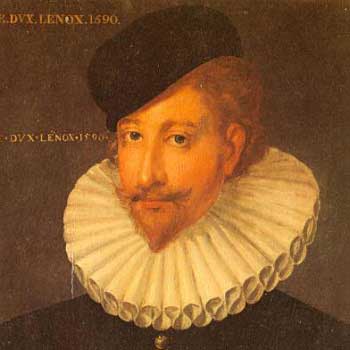
1st Duke of Lennox, Esmé Stuart, King Jamesʼ Lover

How many folks know that King James (who commissioned the King James Bible and to whom it was dedicated) loved men and had sex with them? At the age of thirteen James fell madly in love with his male cousin Esmé Stuart whom he made Duke of Lennox. James deferred to Esmé to the consternation of his ministers. In 1582 James was kidnapped and forced to issue a proclamation against his lover and send him back to France.

Later, James fell in love with a poor young Scotsman named Robert Carr. “The king leans on his [Carrʼs] arm, pinches his cheeks, smooths his ruffled garment, and when he looks upon Carr, directs his speech to others.”
—Thomas Howard, Earl of Suffolk, in a letter, 1611

Carr eventually ended the relationship after which the king expressed his dissatisfaction in a letter to Carr, “I leave out of this reckoning your long creeping back and withdrawing yourself from lying in my chamber, notwithstanding my many hundred times earnest soliciting you to the contrary...Remember that (since I am king) all your being, except your breathing and soul, is from me.” (See The Letters of King James I & VI, ed., G. P. V. Akrigg, Univ. of Calif. Press, 1984. Also see Royal Family, Royal Lovers: King James of England and Scotland, David M. Bergeron, Univ. of Missouri Press, 1991)
—Skip Church


King Jamesʼ favorite male lovers were the Earl of Somerset and the Duke of Buckingham.
—Ben Edward Akerly, The X-rated Bible


Jamesʼs sexual orientation was so widely known that Sir Walter Raleigh joked about it in public saying “King Elizabeth” had been succeeded by “Queen James.”
—Catherine D. Bowen, The Lion and the Throne


“James, aged thirteen, was completely starstruck by these new arrivals. After being brought up by dour Presbyterians and a rough-hewn bunch of nobles, he suddenly appeared from the schoolroom to find a group of charming, well-traveled, well-educated and attractive men. He was fascinated by them, welcoming his release from the Reformist nobilityʼs stranglehold. The attraction of these personable and worldly courtiers was a breath of fresh air, and they quickly played on his sensibilities. These new ‘favorites’ were the key to free him from the shackles of the Kirk and his schoolroom. Within a month of Esméʼs arrival, James had agreed to leave Stirling and to take his place at Holyrood, where Esmé reorganized the Court and his household on the French model.

There was more to Jamesʼs relationship with these favorites than kicking against his religious upbringing. Their charisma provided a sensual stimulus for him that he was not to enjoy with his interfering and insensitive wife, Anne of Denmark, when they married in 1589. They provided the glamour that he lacked, and there can be little doubt that his homosexuality stemmed from his early attraction to the androgynous Esmé. Well experienced in Court circles in France, Esmé took advantage of the sexual overtures of this vulnerable adolescent, twenty-four years his junior. James would openly clasp him in his arms to kiss him, shocking the Reformist clergy, who saw that Esmé ‘went about to draw the King to carnal lust’, while James showered him with offices and presents. By March 1580, the English ambassador, Bowes, was telling Elizabeth that Esmé was ‘called to be one of the secret counsel, and carryeth the sway in court’. By September ‘few or none will openly withstand anything that he would have forward’.

—Esmé Stuart, 1st Duke Of Lennox


King James 1 was a known homosexual who murdered his young lovers and victimized countless heretics and women. His cruelty was justified by his “divine right” of kings.
—Otto J. Scott, James the First


Although the title page of The King James Bible boasted that it was “newly translated out of the original tongues,” the work was actually a revision of The Bishopʼs Bible of 1568, which was a revision of The Great Bible of 1539, which was itself based on three previous English translations from the early 1500s. So, the men who produced the King James Bible not only inherited some of the errors made by previous English translators, but invented some of their own.

Desiderius Erasmus was a “Christian humanist” who collected Greek (and Latin) New Testament manuscripts and compared and edited them, verse by verse, selecting what he considered to be the best variant passages, until he had compiled what came to be known as the “textus receptus.” Early English translations of the Bible, like those mentioned above, were based on his “textus receptus.” Erasmus was also a monk whom some historians believe engaged in homosexual activities.

But without both King James and Erasmus, the most widely touted Bible in Christian history would never have been produced, the KJV (or shall we say, Gay-JV?) Bible.
—Skip Church


A physical weakling, as an adolescent James had shown himself to be a coward, who liked only to hunt, to read (which he did, prodigiously) and to talk. To protect himself he wore thick quilted doublets, so padded that they provided a kind of armor against any assassin who might attack him with a knife. When he revealed a sexual preference for men, falling in love with his cousin Esmé Stewart and elevating him to a position of authority on the royal council, some of his nobles kidnapped James and held him captive, banishing Stewart and controlling Jamesʼs every move. After nearly a year James escaped, but continued to resent his jailers; after he began to rule on his own behalf, at seventeen, he made it a priority to bring the turbulent Scots nobles under control.

As he aged James indulged his preference for handsome men, living apart from his wife. His doting fondness was part paternal, part erotic; he called his favorite George Villiers “sweet child and wife” and referred to himself as “your dear dad and husband.” But to his courtiers, the sight of the aging, paunchy, balding monarch, who according to one court observer had a tendency to drool, leaning on his paramours was utterly repellant.

The first of the kingʼs minions was Robert Carr, Groom of the Bedchamber, who the king elevated to earl of Somerset and appointed Lord Chamberlain. After six years of favors and royal gifts Carr was brought low, accused of murder and sent away from court. The second and greatest royal favorite, the extraordinarily handsome George Villiers, rose from cupbearer to Gentleman of the Bedchamber and ultimately to Earl of Buckingham.

“I love the Earl of Buckingham more than anyone else,” James announced to his councilors, “and more than you who are here assembled.” He compared his love for the earl to Jesusʼs affection for the “beloved disciple” John. “Jesus Christ did the same,” the king said, “and therefore I cannot be blamed. Christ had his John, and I have my George.”

With such pronouncements King James seemed to reach a new level of outrage, especially when he compounded his offense, in the view of many, by heaping Buckingham with costly jewels, lands, and lucrative offices.

—Royal Panoply, Brief Lives Of The English Monarchs
Carrolly Erickson, History Book Club


Additional Reading

Florence Nightingale, The Red Cross and Christianity
Exactly how “Christian” Florence Nightingale was, or Dunant (founder of the International Red Cross), or Barton (founder of the American Red Cross) depends on whether you also believe that freethinking anti-Trinitarians, Universalists, mystics, and gays, can all be considered “true Christians.”…

Non-Exclusivism, Universalism, Evil, and, Philosophy As One Big “IF”

Non-Exclusivism, Universalism, Evil, and, Philosophy As One Big “IF”

by Edward T. Babinski

Americaʼs leading Evangelical Christian philosophers (influenced perhaps by the struggle to find a way to justify the devilish amount of sheer ignorance in the world) are more attracted to ideas of “non-exclusivism” (i.e., people who are not born-again nor confessing Christians can still be “saved”), including even universalism (i.e., everyone will one day be “saved”), than are Americaʼs leading Evangelical Christian theologians, the latter of whom spout relatively more exclusivistic views based on a stricter linguistic interpretation of the Scriptures.

Though Alvin Plantinga is not a universalist, he is apparently a non-exclusivist who is attracted to the idea that more than just born-again or confessing Christians will be “saved.”

Evangelical Christian philosopher, Vic Reppert [who argues on a philosophical basis that there is a likelihood of a “second chance” after death] adds, “There really isnʼt a firm quotable statement [regarding exactly what Plantingaʼs views are]. However, when I used to attend SCP meeting on a regular basis, I would have to say that exclusivism was very much a minority position. The philosophers, Robert Merrihew Adams and his wife Marilyn McCord Adams, are both Universalists, and next to Plantinga, they are the best-regarded [Evangelical] Christian philosophers.” [email from Reppert to Babinski, Tuesday, October 24, 2006]

Victor Reppert at his blogsite also recently posted an entry debating questions concerning Godʼs “middle knowledge,” titled, Gale, Adams, and universal salvation, that ended with Vicʼs observation that “since Adams [mentioned above] is a card-carrying universalist, it looks like he can dodge this objection. Everyone gets saving grace.”

Philosophy As One Big “If”, Part 1

I suspect there are even more “ifs” if everyone looked harder at every argument—from eternal damnationism to universalism to simply death and rotting. I think it would demonstrate that philosophy is one big “if” when it comes to such questions.

Such “ifs” must also include the fact that the Bible is a book of words written by human beings, and such words are not equivalent to visibly seeing God, Jesus, the afterlife. Furthermore, people who claim to have seen God and/or the afterlife are also FEW in number. And many such “sights” are brief at best, or hazy (and they grow either “hazier” or “clearer” with the passage of time, depending on whether one is relying strictly on oneʼs memory, or continually redefining oneʼs memory of oneʼs vision in verbal terms linked to increasingly dogmatic influences and interpretations applied from outside). Even of those few visions that some claim to have seen clearly, thereʼs a wide variety of things seen, not simply Christian ones. So there is no coherent interpretation that includes and explains all such visions, let alone a “theologically systematic” whole, and as I said, FEW have ever seen such things.

Philosophy As One Big “If”, Part 2, Points For Plantinga And Vic To Ponder Concerning Evil And Freewill

1) If freewill was truly free than maybe itʼs logically impossible to assert that a God with “freewill” can also be defined as “good,” because a God with “freewill” could also act “evil” by definition of having “freewill.” Such a “God” would then have to be defined first and foremost as “free” and His actions defined as “indeterminate” or “vacillating based on choice.”

2) Even if someone tries to argue that the definition of “freewill” (i.e., “always being able to choose either good or evil”) applies to “God,” then thereʼs yet another question.

Letʼs accept a tri-omni good God exists. The “defense” offered for evil in that case is that anything God creates would be inherently less than God and more subject to temptations toward evil. But such an argument simply redefines the words “less than God,” as “evil,” but there is no proof that such a redefinition is necessarily true. Being “less” than “God” does not necessarily entail a creature becoming “evil,” not anymore than Godʼs own “freewill” might leave God in the exact same situation of always having to choose between two options. And Whatever May Be Said In The One Case Applies To Both. Whatever keeps a tri-omni good God from never using His freewill to choose evil, could just as well apply to a less than tri-omni creation that came directly out of that same God. I stick by that statement, but Plantinga and Vic deny it on no provable basis that I have yet seen.

Conclusion

So there is no way for theistic philosophy to prove it has argued its was to reality or THE truth, because it just tries to redefine “freewill” in different terms for God and man, (or, it tries to equate the phrase “less than God” with “evil,” again without proving that it is necessarily so), just based on Presuppositions That It Must Be So. And such presuppositions remain as Questionable as any other view.

In the end the idea of evil coming out of perfect goodness remains an unproven proposition.


All such philosophical arguments also flounder on the fact that we grow up via experiences of this cosmos. We learn about “‘good’ and ‘evil’ and the spectrum of actions lying in the grey area” in this cosmos before we ever learn how to separate those examples and concepts fully from one another in the form of “words,” and claim they are fully and absolutely separate from one another. So the separation takes place afterwards (after oneʼs mental development and contact with the world), and only after such a separation do philosophers take one of those abstracted concepts and try to build a bridge over to the opposite word and concept:

Perfect goodness➜ Evil

When I read about arguments that try to create such a bridge I canʼt help noting all of the sheer ingenuity and guess work employed in the process of trying to find a way to bridge those two things that We as human beings experienced and learned about as they already co-existed together, a world with both good evil and many grey areas of various shades as well. People living in this cosmos in which all those things co-existed, have learned how to pull such things apart mentally, and imagine only one of them existing alone in the beginning, then philosophers try to mentally derive one FROM the other. But that proves nothing about reality itself, the one in which we were raised and in which such things co-existed already.

Itʼs like beginning with

Perfect Cold➜ Hotness

Perfect Darkness➜ Luminosity

A philosopher can of course argue based on scientific knowledge that the answer in the above cases is that molecules start to move faster, generating more heat and even light. But then the philosopher must also recognize that “perfect coldness” has no molecules that move faster than “perfect coldness” allows. Not if you begin with Nothing But “perfect coldness.” So you can Never get to the opposite side or cross the bridge from the initial defining point—you canʼt cross the bridge from one word to the other if both are already so well defined to the complete exclusion of the opposite word. (*Donʼt misunderstand me, I am speaking in terms of the limitation of going from one abstract word or concept to another, which by definition excludes the former word or concept. I am not speaking in terms of a creationist argument in which the cosmos began in perfect darkness and coldness—and even that argument is fallacious because scientists admit many possibilities not simply the one that the cosmos was created out of an inert cold and dark mass. They admit cosmoses might oscillate, give birth to other cosmoses, there might be an infinity of cosmoses and super-cosmoses throughout infinite time and space. And using “God” to explain the existence of the cosmos is simply to employ an even greater mystery (“God”) to explain a lesser one, a more immediate and universally recognizable one.)

Now consider these questions and how they might be bridged:

Perfect Cold➜ Hotness

Perfect Darkness➜ Luminosity

In nature, coldness can and does sometimes warm up and/or cool down again; and darkness can and does grow brighter, and/or dimmer again. We observe such things happening on earth and via telescopes. So in nature Changes Occur, including oscillating ones. We observe that to be a fact of which there is no facter. Because thereʼs a variety and mix of forces and co-existence of forces in the cosmos, all of which exist Together, side by side, rather than there being “Perfect cold” or “Perfect darkness.” Nature, isnʼt “perfect” in either respect, and unlike philosophy, nature appears to be multi-sided, changeable and filled with the co-existence of things philosphers simply want to purify down into “perfect” words of which there is no worder.

Therefore, philosophy invents and relies on abstractions from nature that philosophers then further elevate to “perfections” or “absolutes,” but they are picked a bit here and there from nature, like gnats from natureʼs hair, and philosophers claim that each particular thing they plucked from nature mentally is the “IT” that began it all.

Thatʼs probably why philosophers continues running into the same debates and obstacles to agreement since the pre-Socratics, because philosophy begins with fragments of the whole natural world of experience and then after fragmenting nature has to try and reunite the fragments back together to get This whole cosmos. Philosophy is the Humpty Dumpty rhyme writ large.

Thus the Big Questions appear to lay beyond the ability of philosophers to get people to agree upon their answers. Philosophy cannot prove itʼs various conflicting explanations for reality, for this cosmos in which things co-exist, mix, and change. Philosophy has so far proven nothing. It is a mere wax nose on the faces of all philosophers, as flexible as their brains that keep alive all sorts of opposing views and viewpoints concerning the Big questions.


Back To The Question Of “Eternal Separation”

Why speak about “eternal separation” as if change is no longer possible after some point? If there is “freewill” and if “freewill” is so vitally important, then why not retain freewill and that means retaining possibilities of change throughout eternity? Maybe people have their “up” and “down” periods throughout eternity? If youʼre looking at options Purely Philosophically then eternal oscillation with no point of “no return,” remains as good a purely mental option as any. But most people simply want the game of philosophy to end in some definitive way. They donʼt even begin to think in terms of life the universe and everything as an Infinite game (rather than a finite one). I suppose thatʼs partly because philosophers are lazy like the rest of the primates on this planet. Finish the job, reach the point of no return and get some sleep. (But read James Carseʼs Finite And Infinite Games too, as well as Alan Wattsʼs The Book Of The Taboo: Against Knowing Who You Really Are.)

- Edward T. Babinski

Question of Evil

Victor Reppert wrote at my blog…

I asked you [Ed] a yes or no question. Do you believe that the argument from evil proves that God does not exist. If you are consistent in maintaining that philosophy is all a game and proves nothing, then the answer has to be no.

Donʼt you see that the atheist is trying to disprove the existence of God by appealing to the argument from evil? I am asking you whether you think they succeed in doing so.

If I ask you whether or you think an argument proves something, you can answer “yes,” “no,” or I donʼt know. Given the fact that the terms in this discussion are clear, the choices are stark. Stop BSing and make a clear statement.


Question of Evil

Dear Vic,

  1. Itʼs moot who is “BSing” whom. (See my original article and comments to Vic here.) Not being an atheist nor a classical theist, my point was that none of us appear to know all we need to know in order to construct convincing (purely philosophical) proofs of things like a “tri-omni God” of classical theism; or prove purely philosophically that we all shall live eternally; or prove what the afterlife will be like; or prove that we know for sure (or even that people believing in the same holy books agree) on all the things we must believe (or do) in order to ensure a positive eternity.

  2. Concerning your second question, on “the argument from evil,” it does not appear to be a matter of denying its validity or asserting it, because one does not even need to construct “philosophical proofs” in order to entertain basic questions concerning “why” the cosmos is the way it is. I personally hope there is more than just mortal life with its pains and then death. Having the brain/mind to be able to foresee my own eventual death, I simply donʼt find the prospect inviting. Neither am I a big fan of sickness, natural disasters, poverty, ignorance, nor the confusion and problems inherent in the very act of attempting to communicate with one another (across boundaries of language, place or culture), as well as across boundaries in communication that arise simply by virtue of not having read the same books, nor met the same people, all of which affect our beliefs.

    Neither does it require philosophical “proofs” to express the desire for a life that does not end but continues to grow and flourish, or a desire not to have to struggle so greatly against ignorance, poverty, illness, and acts of nature that destroy, cripple or kill. (Moreover, if the ancient Hebrews, a religious people, could conceive and desire a mythical “Eden” in which people were fed without having to sweat over thorns and thistles, where there was no danger in giving birth, no animals with poisonous bites, no illness, and where everyone spoke the same language, then questions concerning why a physical cosmos more desirous than our own could not have been created “in the beginning,” are not simply the result of atheistic doubts, but remain valid questions humanity has pondered for quite some time.)

  3. A further word on the tri-omni God idea and all the assumptions that lay behind it. I donʼt begin my own search for truth with the notion of a tri-omni God, but simply with an admission of lack of knowledge. But concerning such a God one should note there are “open” theologians who cite the Bible to argue that God is not necessarily revealed as being tri-omni, but who consider that God might not know everything. If so that might make the problem of evil less of a problem.

    The “free will” defense seems less convincing as a possible solution, because nature presumably got along without human “free will” for hundreds of millions of years, i.e., long before humanity showed up, God was perfecting the ways and means of nature, including carnivorism, diseases, natural disasters, along with the inevitability of death of every individual living thing. Moreover, the presumed attributes/definitions of a tri-omni God that combine “absolute freewill” with “absolute goodness” is a mind boggler. (Doesnʼt sound like any definition of “freewill” that human beings know about, since for us it is defined as involving a genuine choice between “good” and “evil.” Neither has anyone proven that the “will” of human beings is “free” in a libertarian philosophical sense, but the tri-omni God philosophers have zipped past that unanswered question and already claim to be devising “proofs” regarding matters pertaining to things about “Godʼs will.” How imaginative of them!)

    It also remains questionable just what the “good” is in various cases—because a theologian can simply pluck imaginatively from various dogmas, even competing dogmas about “God,” and claim in each case that such dogmas illustrate what is “good” about God. For instance, Godʼs commanding of the slaying of the Canaanite children has been interpreted by some theologians as “good” in the sense that God was sparing those childrenʼs souls from growing up, falling into sin and going to hell, by instead sending them to eternal bliss via the blessing of a bloody sword, and thus Godʼs character as “love” was demonstrated. But Calvinists and other teachers of the classical Augustinian doctrine of “infant damnation,” interpret the slaying of the Canaanite children as being “good” because God wished to demonstrate his character as “judge,“ including children, including sending them forthwith to eternal damnation. Itʼs all “good” depending on oneʼs interpretive theology!

Talk about theology being a wax nose!

I didnʼt even mention the third alternative according to the Catholic tradition of “limbo“ for dead unbaptized children, which was viewed as “good” by Catholics for over a thousand years (though I read about “limbo” being abolished just this year at a recent church council, or close to being abolished?). Limbo kept the unbaptized infants at a distance from Godʼs holiness, but not deserving of eternal hellfire.

So weʼve got three definitions of what was “good” about God commanding the killing of everything alive in cities that refused to submit and become Israelite slaves. And different Christians seem quite content to always come up with their own excuse (read, “guess”) for why they believe such commands and actions were “good.“

Itʼs also “good” no doubt for a tri-omni God to ensure that a high percentage of the young of every species on earth provide food for viruses and bacteria—as they have for hundreds of millions of years right up to the present.

In short what I am saying is that I begin with features in the cosmos that we all know and can agree upon relatively well, and also begin with some “good” desires that many share, rather than seek to justify every last command and activity of “God” as described in various “holy books.” I also share many basic hopes and fears that both atheists and religionists share. So I think I am asking some plain questions.

I reiterate, we live in a cosmos that already has “good” and “evil” as well as plenty of grey areas in-between. Philosophy (especially philosophy of religion) seems to want to take these notions that we have gained from living in this cosmos of mixed blessings and death of all living things, and strain out everything in this cosmos that we donʼt like, and try to begin with assumptions that are all “good” (again, depending on what definition of “good” you are using vis a vis “God”). But that means that “philosophy” (especially philosophy of religion) then has the unenviable task of explaining how everything began “perfect good,” but led to the cosmos we all know where everything dies and even the things we desire most seem mixed blessings (including the hope of converting everyone else to our own view).

— Edward T. Babinski

Problem of Evil

Problem of Evil

by Edward T. Babinski

  1. Theistic philosophers who discuss the problem of pain/evil without acquainting themselves with specific cases in detail from nature are like Kant who apparently avoided the museum of art that he walked past each day on his way to write a book on the “philosophy of art/aesthetics.” (A philosophy professor even shared with me that Kant boasted something to the effect that it wasnʼt even necessary to look at art in order to write his treatise).

    Unlike Kant I prefer to begin all investigations, philosophical or otherwise, by pondering specific instances. And since the topic is suffering (including suffering unto madness) please see the collection of instances found HERE. The effect of reading and pondering those examples is a bit different from reading a philosophical treatise on “suffering” that spends the majority of its time juggling-stretching-and-playing with huge generalizations such as “good,” “evil,” “pain,” “suffering,” “God,” “perfection,” “omnipotence,“ and “freewill,” etc.)

  2. Has any philosopher yet explained (except via verbal alchemy) how something can start out perfectly good and yet evil can come out of it? If God is defined as the perfectly good and only source of everything, then whence comes evil? Endless ages of verbal alchemy attached to this question explain nothing, the question remains.

    Note that if God is perfectly good and has freewill then a freewilled being can exist in a state of perfect goodness. But if God has freewill then wouldnʼt it be possible for God Himself to commit evil, or become evil? (Or do Christian apologists employ a different definition of “freewill” when it comes to “God?”) Conversely, if God does not have freewill then doesnʼt that imply that freewill is not necessarily of ultimate value and that humanity has something even God lacks?

  3. Is there something, ANYTHING, that a Christian apologist might consider to be “unjustifiable suffering?”

    For instance, what types of horrendous suffering (or chronic forms of soul-grinding suffering, or physically or psychologically crippling forms of suffering, even mentally maddening forms of suffering) have NOT happened to someone somewhere on this planet, or may not happen say, to someone throughout eternity? And is not ALL of that suffering “justifiable” according to Christian apologists? Judaism claims that even the righteous suffer like Job. While Christianity claims that an infinite eternal and guiltless Being (AKA Jesus-God) has “suffered” and even spent time in “hell,” though everyone still continues to suffer here on earth, including for the past two thousand years since that Being suffered. So there does not appear to be any form of suffering thatʼs not justifiable to the Christian apologist, is there, including Jews suffering in concentration camps simply for being Jewish in some way—and then they die in such a camp and may will awaken on judgment day to find their new bodies (and old souls) in eternal hell, right? (For centuries both devout Calvinists and Catholics even spoke about seeing the damned suffer for eternity and not only finding the eternal suffering of the damned something justifiable, but also something worth REJOICING over.) I ask again, is there any form of suffering that a Christian apologist might consider to be “unjustifiable suffering?”

    And why must people believe that the only way God can “accept” a person is if that person believes God has wrath (or a need to punish), and cannot simply forgive, nor punch a super pillow till His wrath abates, nor calmly instruct with minimal pain, and give people more than one chance, but instead God must take the sum total of His wrath out on the most unworthy recipient, a wholly guiltless individual, who also happens to be Himself? Why is such a belief necessary? And why do Christian creeds insist on the necessity of such a belief, when it obviously does not appeal to all, nor even make sense to all? All people donʼt even find the same stories (whether they involve “God” or not) as equally appealing or believable.

    At present about a third of the world is nominally speaking, “Christian.” No doubt the Bible is constantly being published and republished, even Uber-published if I may coin the phrase, and passed out round the world, making it the “worldʼs biggest best seller,” though a more truthful accolade might be the “worldʼs most handed out book,” or the “worldʼs most common gift book,” or the “most commonly suggested book that Christian men and women and pastors tell others that they should or must get a copy of and read.”

  4. I wonder whether Christian apologists have ever come to grips in a truly convincing fashion with the ways their God is portrayed (either in reality or metaphorically) in the book that they claim “reveals” the truth of their beliefs to humanity? For instance does the DEVIL threaten to cast people body and soul into hell? No. That type of imposed suffering is Godʼs design. Does the Devil get portrayed as wiping out every breathing thing on the planet except some ark survivors? Nope. Thatʼs God again. Does the Devil command the destruction of everything that breathes in certain cities? Does the Devil send plagues, famines, poisonous snakes, and opposing armies to teach people lessons like the God of the Bible is portrayed as doing? Does the Devil strike husband and wife both dead if they lie about giving all of their earthly possessions to the church?

Have Christian philosophers really dealt with questions like those above and below, or do they tend to flee them till they reach a nice quiet corner of huge generalizations resembling nothing so much as pious platitudes? But think for just a moment longer about this…

God is portrayed as acting thusly toward the “apple of His eye,” the “children of Israel”: The God of Israel tried to kill Moses (and failed); struck dead two sons of Aaron; commanded “brother to kill brother” leading to the deaths of 3,000 Israelites (right after He gave them the commandment, “Do not kill”); opened up the earth and buried alive “wives, sons and little children;” sent a fire that consumed 148 Levite princes; cursed his people to wander in the desert for forty years and eat 40,000 meals of quail and “manna” (talk about a monotonously torturous diet—and when they complained about it, God killed 3,000 Israelites with a plague); had a man put to death for picking up sticks on the Sabbath; denied Moses and Aaron entrance into the “promised land” because Moses struck a rock twice with his staff instead of talking to the rock; delivered to his people a “promised land” that was parched, bordered by desert, and a corridor for passing conquering armies; sent fiery serpents among Israel, killing many; wanted to kill every Israelite and start over with Moses and his family (but Moses talked God out of that plan); drove the first king of Israel to suicide; killed someone who tried to steady a teetering ark of the covenant; murdered king Davidʼs innocent child; sent plagues and famines upon his people that killed men, women and children; ordered the execution of 42 children of the king of Judah; “smote all Israel” killing half a million men of Israel in a civil war between Israel and Judah; “delivered into the hand of the king of Israel” 120,000 Judeans massacred in one day along with 200,000 Jewish women and children; gave Satan the power to kill Jobʼs children and servants (in order to win a bet); let the Babylonians conquer the holy city of Jerusalem, and then the Greek forces of Alexander the Great, followed by the Romans; and finally left the Jews homeless and persecuted by Christians and Moslems for nearly 2000 years. Furthermore, the large number of laws in the Hebrew Bible concerning the treatment of lepers and those with sores demonstrates that the Israelites were far from being blessed with unparalleled good health. And archeological evidence indicates that in ancient Israel the infant mortality rate was as high as fifty percent.

Edward T. Babinski [See the Bible for all of the cases mentioned above, except for the archeological evidence concerning ancient Israelʼs infant mortality rate. For the latter see, Drorah OʼDonnell Setel, “Abortion,” The Oxford Guide to Ideas & Issues of the Bible, ed. by Bruce Metzger and Michael D. Coogan (Oxford University Press, 2001)]

The Problem of Evil, Alvin Plantinga & Victor Reppert

by Edward T. Babinski

I saw through Plantingaʼs initial assumptions regarding his “solution” to the problem of evil twenty years ago while reading Plantingaʼs book that a Calvinist friend loaned me. I phoned Plantinga years later. He didnʼt answer my question.

Problem of Evil

Hereʼs my question…

A free-willed
All powerful
All knowing
All good
All perfect
All blissful God

creates something SOLELY out of His own will, power, knowledge, goodness, perfection, and bliss…so what room is there for anything less?

…but out of infinite perfection comes a cosmos where everything dies, where bliss is fleeting, where minds and hearts grow confused, damaged, sometimes even shattered via the process of struggling to earn a living and/or raise a family, or whittled down via repressive labor, or bored to death. Where human development is difficult and perilous, where communication is difficult, even perilous, for both people and nations, where ignorance (inherent in each culture, family and individual) and stubbornness about oneʼs ignorance is rife (the latter perhaps due to increasing inflexibility of the brain/mind once it has assumed a “system”—or been “assumed by” a system—because we not only “have beliefs,” but there is also evidence that “beliefs have us” as well). A cosmos where we cannot “see” whatʼs “behind it,” where “God” and “heaven” and the “afterlife” (or even the “before birth”) remains “hidden” to the vast majority of the earthʼs inhabitants throughout time. A cosmos where consciousness does not appear to pop out fully grown all at once, but has to develop just as the brain/mind develops in the womb and during the time of infancy, childhood, adolescent impulsiveness and finally adulthood. A cosmos where we continue to struggled against a world of nature that kills with cold, wind, fire, water, earth, desert heat, lava, predators, poisons, diseases, parasites. A cosmos where we strive to lessen the painful effects of, or eliminate, natureʼs dangers and pains that haunt not only us, but every other living organism on this planet. So we fighting the cold weather that kills to the desert heat that withers, and we strive to discern early warning signs of natural disasters and epidemics. A cosmos where we also strive to eliminate barriers of communication, or blow each other up trying.

Christian apologists like Plantinga ADD to the above mix of confusion and dangers their PRESUMPTION that this cosmos is all for the greater good, and PRESUME that besides all of the above confusion imperfection and dangers—from the death of everything we see—to insufferable boredom—to daily pains—passions—miscommunications—the ignorance inherent in each culture, family and individual—the inflexibility and inertia inherent in each brain/mind as it develops from youth—or degenerates with age—besides all that—Christian apologists insist everyone MUST believe in a particular holy book written by true believers (even in a particular INTERPRETATION of that holy book), or we will not only continue to suffer as on earth, but suffer relentlessly for eternity, without mercy.

And Plantinga presents it all like itʼs the most “rational” view possible.

Christian philosopher Victor Reppert at his blog, “C. S. Lewisʼs Dangerous Idea,” seems at least doubtful that Plantingaʼs view is the most rational and suggests that it might made a bit more sense if people received “another chance” after they had died to “convert.” I assume Vic believes that the ignorant limited brain/minds, and confused or debilitated characteristics of peopleʼs brain/minds from living in this imperfect cosmos will be healed following death (otherwise they might misperceive even the afterlife based on past limited experiences or imperfect brain/mind constitutions). So Vic suggests non-Christians will all be given another chance to “believe” after they have seen God and heaven and had time to investigate and ponder matters on the “other” side of this cosmos. But Vic also realizes I suppose that this is a rationalization on Vicʼs part. (What other of Vicʼs beliefs might not also be “rationalizations to believe” as he does, i.e., rather than “reasons to believe?”) At the very least Vic does not appear to think that Plantinga has “solved” all the problems regarding this cosmos and the Christian view of salvation, since Vic recognizes the need to try and go “further” than Plantinga via Vicʼs “second chance” scenario/rationalization.

Victor Reppert remains uncomfortable, has more questions than most orthodox Christian apologists on the internet. (Welcome to my mind/brain world, Vic, filled with more questions than answers.)

I have rational difficulties conceiving of a perfectly good and perfectly powerful being squeezing out a cosmos such as this. Furthermore, the experience of this cosmos in which all things die (and struggle not to) with such daily persistence is a shared experience of everyone on the planet.

I have even GREATER difficulty imagining that humanity (and every other organism on earth) have been placed in such a universally deadly situation in order that human beings might “hear the Word of the Christian God” and either choose to believe a book written by true believers, or die an everlasting death.

P.S., Since Iʼm agnostic, let me play around with a philosophical suggestion or two, a rationalization here, a guess there, concerning God. What if “God,” being a perfect eternal being, got omni-bored and tried to surprise Himself/Herself/They/Itself by playing “hide and seek” with Him/Her/They/Itself in a panentheistic fashion? Not that I even know what “panentheism” is, except to say that some say it refers to a view of “God” as the flame of all reality with everything else being flamelets proceedings from the one great flame, a lot like pantheism, but with each flamelet having a slightly greater degree of individuality. (I wonʼt argue whether such a conception of “degrees of individuality” is “true or not” in a philosophical sense, which will obviously get us no where, since how could one prove any of my assumptions above at all)? At any rate the “Hide and Seek” playing panentheistic God who gets omnibored and then tries to generate “Surprise,” might help explain a cosmos in which life arises yet everything dies, and it might help explain humanity as well, including the “hiddenness” of God. But again, I admit Iʼm only dealing with analogies from “fire,” or from basic human emotions such as “boredom” and “surprise,” and ways in which we understand such matters, and thus I am bending the wax nose of philosophical ideas and words in ways I cannot prove and that prove nothing. Though if someone wished to follow up on this little suggestion they could do worse than read Alan Wattsʼs BOOK OF THE TABOO (Against Knowing Who You Really Are); or his Christian version of the same view in an earlier work he wrote while still an Anglican priest, BEHOLD THE SPIRIT. I am not however suggesting one must read anything of the sort.

Another guess concerns the views of universalist Christians who believe that God and time are the best teachers, hence they donʼt fear what comes next for anyone, and merely seek to blow on the spark of eternal salvation already lying inside us all, to inspire and uplift.

Iʼm not saying any philosophical suggestion of mine, or Plantingaʼs, or Reppertʼs, is easy to maintain however, not if pains or diseases of body and/or mind grow excruciating. People suffering a “ringing in the ears” have been known to leap to their deaths because the ringing kept them up till they had gone nearly mad. Sleep deprivation, even just dream deprivation (waking up a person whenever they go into rapid eye movement (or REM) mode to prevent them from dreaming) can apparently kill a person faster than depriving them of food. During times of intense pain, disease, or deprivation neither philosophy nor theology seem to help the person who is being forced to suffer greatly. Even in the Bible, though Job didnʼt curse God, he sought answers. “WHY?” Even Jesus is portrayed as shouting out “WHY” in a despairing line from a psalm before his death, “My God, My God WHY have you forsaken me?” C.S.Lewis admitted a year before he died that he “dreaded most” the thought that he may have been “deceiving himself” concerning the kind of “God” who would give his wife cancer and then himself cancer. Or as in the case of a conversation Mother Teresa had (she didnʼt believe in pain killers) with a man suffering intense pain from cancer, “Jesus is kissing you,” to which the man replied, “Then I wish heʼd stop.” Thatʼs the problem of pain in a nutshell. The “dread” of C.S. Lewis. The “Whys” of Job and Jesus. Not to mention Victor Reppertʼs “second chance.”

The Da Vinci Code, Fiction and The Gospels

by Edward T. Babinski

Dan Brownʼs novel proves that FICTION can be highly engrossing, and obtain a wide readership—especially if the fiction begins with a fictional promise of unveiling truth (*smile*), and especially if the market is ripe for it. The same might also be said of the Gospels and why they became “bestsellers.”

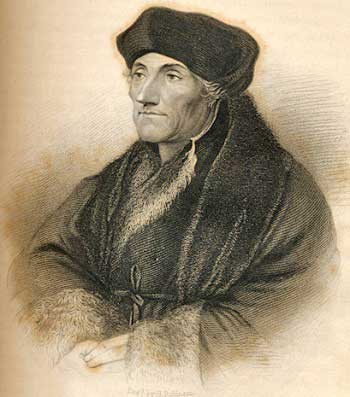
Erasmus

British actor Ian McKellen who appeared in The Da Vinci Code, put it this way: “Iʼve often thought the Bible should have a disclaimer in the front saying this is fiction. I mean, walking on water, it takes an act of faith.”

Quite a few people — including many fans of Dan Brownʼs book — will probably be displeased with such sentiments, but itʼs difficult to argue that significant amounts of the Bible arenʼt fiction. Obviously some portions are historical to one degree or another, but any more historical than the true parts of Dan Brownʼs novel? [Austin Cline at http://atheism.about.com]

The Gospels were like a first-century “Da Vinci Code” novel, featuring wild pesher and midrashic interpretations of “riddles and clues” that God allegedly added to the ancient Hebrew books of the Bible, written centuries before Jesus was born, yet which “foretold” his arrival and even incidents of his deeds, death and resurrection. The earliest Gospel, “Mark,” also speaks mysteriously about Jesus being secretive about his true identity. Sounds similar to the unconvincing arguments found in Dan Brownʼs mystery novel! Especially since the alleged “prophecies about Jesus” which were lifted (sometimes a mere half verse at a time) from the O.T. were based on the most tenuous of alleged connections, or even possibly based on making some stories of Jesus up just to suit the verses! [Google Jeff Lowderʼs online article, “The Fabulous Prophecies of the Messiah;” and also google “Fiddler Zvi” and his online “Messiah and Tanakh” page. Also note that the earliest Gospel, of which 90% was reproduced in the two later ones, Matthew and Luke, is also the gospel featuring the idea that Jesusʼs messiahship was originally kept a secret, which is a bit different from the last written Gospel were Jesusʼs messiahship is out in the open from the start beginning with Nathaniel in chapter one and with Jesus speaking solely about himself every chance he got in public, “I am” this, “I am that,” with not a word spent talking in parables to the public.

Another point raised by the Da Vinci Code is the haughtiness and self-seeking hierarchies of the Catholic church and her theologians, a point that even Christians throughout history have raised in ways that might make Dan Brown smile in recognition:

Take the words of the Catholic satirist, Erasmus, “As for the theologians, perhaps it would be better to pass them over in silence, not stirring up a hornetsʼ nest and not laying a finger on the stinkweed, since this race of men is incredibly arrogant and touchy. For they might rise up en masse and march in ranks against me with six hundred conclusions and force me to recant. And if I should refuse, they would immediately shout ‘heretic.’ For this is the thunderbolt they always keep ready at a moments notice to terrify anyone to whom they are not very favorably inclined” (Erasmus 57).

His commentary continues regarding the theologiansʼ ridiculous penchant for “endless and magisterial definitions, conclusions,” and “corollaries” (Erasmus 58).

“They [theologians] are so blessed by their self love as to be fully persuaded that they themselves dwell in the third heaven, looking down from high above on all other mortals as if they were earth-creeping vermin almost worthy of their pity…”

“Moreover, they explicate sacred mysteries just as arbitrarily as they please, explaining by what method the world was established and arranged, by what channels original sin is transmitted to Adamʼs posterity, by what means, by what proportion, in how short a period of time Christ was fully formed in the virginʼs womb… There are others which they think worthy of great and ‘illuminated’ [in the faith by the Holy Spirit] theologians, as they say. If they ever encounter these, they really perk up. Whether there is any instant in the generation of the divine persons? Whether there is more than one filial relationship in Christ? Whether the following proposition is possible: God the Father hates the Son. Whether God could have taken on the nature of a woman, of the devil, of an ass, of a cucumber, of a piece of flint? And then how the cucumber would have preached, performed miracles, and been nailed to the cross?…”

Dan Brown, in comparison with Erasmus, simply wondered whether Jesus could have had children and still “saved the world.”

Erasmus continued, “And then these most subtle subtleties are rendered even more subtle by the various ‘ways’ or types of scholastic theology, so that you could work your way out of a labyrinth sooner than out of the intricacies of the Realists, Nominalists, Thomists, Albertists, Occamists, Scotists—and I still havenʼt mentioned all the sects, but only the main ones.”

Erasmus does not spare the “religious” or the “monks” his berating wit either. Erasmus branded those who considered themselves “religious” or “monk” to be anything but that which such monikers signify. He, in fact, couldnʼt imagine “how anything could be more wretched than these men,” who were in reality “far removed from religion” and “encountered more frequently everywhere you go” (Erasmus 61).

Popes and priests are offered the same treatment. Popes are painted as the antithesis of the Christ example of poverty, labor, teaching, and sacrifice. It is the popes who have an abundance of luxuries, honor, and pomp. Popes have all of the advantages this life can afford. “How many advantages would these men be deprived of if they were ever assailed by wisdom” (Erasmus 66)? The priests, on the other hand, and when not fighting “for their right to [being given the] tithes [of parishioners], with sword, spears, and stone, with every imaginable sort of armed force,” are busy keeping a “sharp lookout to harvest their profits” (Erasmus 67-68).

SOURCE: Erasmus, Desiderius. In Praise of Folly. A Reformation Reader: Primary Texts with Introductions. Ed. Denis Janz. Minneapolis, MN: Fortress Press, 1999.

http://www.lofitribe.com/

So if Dan Brown satirized excesses within the Catholic Church, perhaps he was too light in doing so, especially when compared with what Erasmus (a reform-minded Catholic humanist) and Martin Luther (a former Catholic who became a Protestant Reformer) both wrote about it!

- Edward T. Babinski

Gospel of John in American Evangelicalism

Gospel of John

by Edward T. Babinski

A Christian seminarian (at a Southern Baptist seminary—a conservative inerrantist institution), named Chris Petersen, has composed an article titled, “The Triumph of the Gospel of John in American Evangelicalism”, that includes some questions I too struggled with before I left the fold.

The questions this student raises are not new. They arise whenever students and scholars of the Bible compare the three synoptic Gospels with the Gospel of John. For instance, professor James D. G. Dunn in his most recent monumental theological works on Jesus has acknowledged that the historical Jesus most probably didnʼt speak a word of what the Gospel of John portrays Jesus as having said.

Chris also has a five-part series on the discrepancy between the day of the week in which Jesus died according to the three Synoptic Gospels, compared with the day mentioned in the Gospel of John, titled, “The Date of Passover and the Pitfall of Inerrancy”.

(Perhaps J. P. Holding and Dave Armstrong might consider reading Chrisʼs pieces and offer to explain to the bright young lad why his questions, like Dr. Dunnʼs, arenʼt worth focusing any serious attention on.)

- Edward T. Babinski

Which “God” Should A Classical Theist Believe In?

Which God Should Classical Theist Believe In?

by Edward T. Babinski

According to a detailed survey performed by Baylor University researchers, the type of god people believe in can predict their political and moral attitudes more so than just looking at their religious tradition.

Researchers found that none of the “four gods” dominated among believers. The data showed:

  • 31.4 percent believe in an Authoritarian God, who is very judgmental and engaged
  • 25 percent believe in a Benevolent God, who is not judgmental but engaged
  • 23 percent believe in a Distant God, who is completely removed
  • 16 percent believe in a Critical God, who is judgmental but not engaged

Source: Baylor University

USA Today breaks down more information about those political and moral attitudes which are associated with each of the four types of God:

The Authoritarian God (31.4% of Americans overall, 43.3% in the South) is angry at humanityʼs sins and engaged in every creatureʼs life and world affairs. He is ready to throw the thunderbolt of judgment down on “the unfaithful or ungodly,” Bader says.

Those who envision God this way “are religiously and politically conservative people, more often black Protestants and white evangelicals,” Bader says. “(They) want an active, Christian-values-based government with federal funding for faith-based social services and prayer in the schools.”

Theyʼre also the most inclined to say God favors the USA in world affairs (32.1% vs. 18.6% overall).

The Benevolent God (23% overall, 28.7% in the Midwest) still sets absolute standards for mankind in the Bible. More than half (54.8%) want the government to advocate Christian values.

But this group, which draws more from mainline Protestants, Catholics and Jews, sees primarily a forgiving God, more like the father who embraces his repentant prodigal son in the Bible, Froese says. Theyʼre inclined (68.1%) to say caring for the sick and needy ranks highest on the list of what it means to be a good person.

The Distant God (24.4% overall, 30.3% in the West) is “no bearded old man in the sky raining down his opinions on us,” Bader says. Followers of this God see a cosmic force that launched the world, then left it spinning on its own.

This has strongest appeal for Catholics, mainline Protestants and Jews. Itʼs also strong among “moral relativists,” those least likely to say any moral choice is always wrong, and among those who donʼt attend church, Bader says. Only 3.8% of this group say embryonic stem cell research is always wrong, compared with 38.5% of those who see an authoritarian God, 22.7% for those who see God as benevolent and 13.2% who see God as critical but disengaged.

Philosophical Problems of Knowledge and Communication

by Edward T. Babinski

Victor Reppert said…
OK Letʼs go back to kindergarten. The argument from evil is proffered as a proof of the nonexistence of an omnipotent, omniscient, and perfectly good being. The defender is trying to prove nothing except that the atheist has not proven atheism. A person can accept the argument from evil who does not accept the existence of an omnipotent, omniscient, and perfectly good being, even if they believe in some other being that might be in some sense a deity.

You can believe that the existence of the worldʼs evil is logically incompatible with theism, you can believe that it provides substantial and virtually overwhelming evidence against theism. You can believe that it provides some, but not overwhelming evidence against theism. or that it provides no evidence against theism. Which is it Ed? These options exhaust the alternatives, unless you actually think that evil provides evidence for theism. Where do you stand?

In the issue of the problem of evil, itʼs atheists like Loftus and Carr, and Flew and Mackie, and Rowe and Draper, who put the argument forward as a good or perhaps decisive reason to reject theism. Some of them go as far as to say that the argument from evil proves that all theists hold their beliefs irrationally. If they are right then a philosophical argument in a major topic in the philosophy of religion works, and works well. If you donʼt, then you accept the outcome of my project, which has always been to show that there is nothing overwhelming about the argument from evil.

You lose credibility every time you dodge this question and pour out pages and pages of anti-Christian diatribe while at the same time refusing to accept the idea that any argument in philosophy really works. Unless you make clear what conclusion you are driving at, I must conclude that your animadversions on these matters are “full of sound and fury, signifying nothing.” Or, to put it another way, BS.

Victor Reppert recently left me a comment at his blog that began with an invitation for me to return to kindergarten, and concluded that my replies were full of “sound and fury,” and my questions “signified nothing.” My reply appears below.

Philosophical Problems of Knowledge and Communication

Vic,
Since you wish to take me back to kindergarten, then letʼs do so. No evasions, letʼs begin from scratch.

Tell me all that you know about God, all that youʼve seen of God, touched of God, heard of God, tasted of God; and then tell me all that you know about the world you see and taste and touch and hear, the people you see everyday, and the cosmos where you see all things die.

The “God” knowledge appears relatively more “hidden” to me than the knowledge I have of the cosmos we all live in together.

I am not saying that the problem of evil has ceased being problematical any more than I am saying it is impossible for anything other than nature to exist. Iʼm simply telling you what I know with some degree of certainty compared with beliefs that I am less sure about.

I have also pointed out what I consider to be flaws in philosophizing about the Big Questions. Anyone may philosophize all they wish, and argue for whatever “God” or “force” they believe exists or doesnʼt.

However the more I read such arguments, the less convincing I find them. “Words” themselves do not appear to provide absolutely accurate descriptions of the realities they are supposed to parallel. “Words” are stuck having to describe things that can also be understood as lying along spectrums of change. Words and concepts appear to be distilled from experiences within this cosmos where words/concepts and their opposites co-exist, or intermingle along spectrums of change. Neither am I of the opinion that verbal analogies constitute proof. Poetry yes. Proof no. I suspect the human mind of also being flexible enough to come up with counter analogies and counter arguments aplenty concerning all the BIG questions.

So I have simply come to trust direct experience a bit more than idealized philosophical arguments purporting to explain the answers to all the Big Questions. I also have grown more patient, not less, with living life day to day, and with the experimental process on both a personal level and in terms of humanityʼs groping toward greater knowledge. I choose patience even to the point of admitting I will very probably grow old and die with the same questions we have discussed, being debated still among philosophers.

Let me put it this way, I donʼt even know nor can I prove in a strictly philosophical fashion whether or not death ends “me” permanently, or, whether I or bits of me might survive after I die in a “ghostly” fashion, or, whether bits of me might not merge or join with others or bits of others that have died to form something new that begins again in a cosmos like ours or continues in some another dimension, or, whether I or bits of me might not “come back” in a reincarnate fashion, or, whether bits of me might survive after death for a long time and THEN even those bits die eventually, or, whether I have an immortal individual “soul” that can never die, or, perhaps I will die and an exact duplicate of me will be CREATED with the exact same knowledge and memories I had right up to the instant of my death (I donʼt know whether or not such a thing could be done by beings of super-intelligence from the future or past or parallel cosmoses, or by a demi-god or infinite Being who kept a copy of me in their “memory” and so could recreate me in some other place time or cosmos even if the “me” that lives here “dies”). Christian philosophers of mind also canʼt agree on the later two options, an immortal soul, or recreation after death by God. Some of them even use the Bible to argue that human beings donʼt “have” souls, they “are” souls. So, they agree the mind could be a function of the brain and the summation of experiences and knowledge each brain takes in as it grows and develops and becomes enculturated. Purely philosophically speaking, any or all of the above options might be true. Itʼs even possible philosophically speaking to argue that what we call “consciousness” does not include our particular memories and knowledge and lives which might accrue and gather round “consciousness” and interact with it, so “consciousness” might be something that is more basic even to the cosmos itself, malleable and universal rather than individual. (Note, Iʼm not saying I view all options as equally appealing.)

There certainly are many weird things Iʼve read about when it comes to consciousness, including mystical experiences, and weird visions people claim to have experienced which vary depending on oneʼs culture. Though unfortunately, most people whose heart stop during surgery, or for long periods, and they are revived, recall nothing. And most sleep during the night is unconscious, dreamless. And thereʼs questions that result from split-brain experiments, and thereʼs cognitive science that is teaching us some of the many ways we each are influenced by items around us, or by others, unconsciously, and thereʼs pheromonal influences as well (scents we canʼt even consciously smell that affect us). Recently I read about how certain bacteria might be affecting peopleʼs brain/minds. Other experiment indicate that the brain/mind is an excuse generator, even a belief generator (as indicated in some-split brain experiments).

It also seems to me that humanity is young as an intellectual species. Heck weʼre still stuck on the cradle planet.

So tell me Vic, what do you really know? How much do you think you know about “God the universe and everything?” What percentage of that knowledge consists of philosophical conundrums that have remained unresolved for millennia? While just how much more do you interact with and know about the cosmos in which you live, move and have your being, and in which everything dies? I think youʼd have to agree with me that you know more about the latter than the former.

P.S., By the way, your recent post about the Deityʼs “right to choose” as a possible reply to “evil,” appears like youʼre thrashing blindly about for answers nearly as much as I am. I donʼt know how you can continue to believe you are building up “proofs” when you sink back in that post to relying on total mystery and faith in whatever “God does,” which is close to relying on the mystery of “whatever will be will be.” Are you honestly considering no longer even asking WHY “God” might “choose” the things “God” chooses, or what the definition of “good” is? Is it simply whatever God chooses? Whatever exists? Again, mystery. Didnʼt Aquinas and Barth also sink back into total mystery in the end and admit all of their philosophizing wasnʼt quite the point, or didnʼt provide the ultimate proofs theyʼd hoped to present?

I know youʼre not a fundamentalist Vic, and you DO admit uncertainties. I simply admit more than you do. By the way, thereʼs a book about kindergarten that I enjoyed reading once, titled, Everything I Need to Know I Learned in Kindergarten.

- Edward T. Babinski

Christianity's “Power to Do Good”

Michael: “With all due respect, there isnʼt a single original thought in anything youʼve written. Your attempted indictment of Christianity is skewed towards the residual fallout of religious extremists. Religion, including Christianity, has the power to good, or to do evil. The scriptures say as much. In fact, the context of your entire post could have been easily taken from the Bible itself.”
Christianity's Power to do Good

Edward: With all due respect, you and Kevin both ignore that fact that for a thousand years, from the rise of Constantine to the Thirty Years War in Europe, Christian religious extremism was hardly what one might call “residual.”

You and Kevin also conveniently leave unanswered the question of WHY did/does the Bible and Christianity lead to religious extremism? What is it about many of the cruder ruder examples and teachings throughout the Bible that provides such fine soil in which extremism can grow and flourish and spread? I address that question in my reply to Kevin. Buddhist, Taoist and Confucian texts donʼt seem to lead to the amount and kind of extremism as Christian texts do.

It was C.S. Lewis who once admitted in a letter (written near the end of Lewisʼ life) to his universalistic friend, Dom Bede Griffiths (who hosted a Christian-Hindu ashram in India): “Even more disturbing as you say, is the ghastly record of Christian persecution. It had begun in Our Lordʼs time - ‘Ye know not what spirit ye are of’ (John of all people!) I think we must fully face the fact that when Christianity does not make a man very much better, it makes him very much worse… Conversion may make of one who was, if no better, no worse than an animal, something like a devil.”

As for the fact that the context of my post could have been taken from the Bible itself, so what? The context of my post could have been taken from the Dhammapada or the Tao Te Ching as well, or even from some passages in the Koran. My advice is wise up. The cosmos doesnʼt revolve around the earth, and the religious cosmos, along with morality and ethics do not revolve around the Bible.

Best, Ed

Execution of A Child and Adulterers in Calvin's Geneva

The sections below are from historical works both old and new. The most recent source cited below is Robert M. Kingdon, Adultery and Divorce in Calvinʼs Geneva (Cambridge: Harvard University Press, 1995 [the same year my own work, Leaving the Fold was published]). At the end of each section appears the SOURCE. These particular quotations deal only with “the execution of a child” and “execution of adulterers” in Calvinʼs Geneva and Calvinʼs complicity.
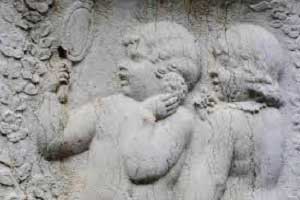
Execution of a Child and Adulterers in Calvin's Geneva

One further note: Calling Luther and Calvin “men of their time” whenever it is shown how closely they followed the herdʼs intolerant views is merely to admit that even with the promise of the “Holy Spirit” to “lead them into all truth,” and an “inspired book” that they studied their whole lives, they remained but “men of their time.”

Moreover, Luther and Calvin were not simply “men of their time,” but outspoken leaders.

And Luther and Calvinʼs intolerance was — by their own admission — the fruit of their Bible study. They agreed for instance that the Bible portrayed Jesus as concerned with how individuals could “inherit eternal life.” Neither did Jesus deny that the laws of Moses remained in force, nor did he admit to his opponents that he had truly violated any of them. Neither did Jesusʼ command, “Give to all who ask, asking nothing in return,” constitute practical advice concerning the laws and activity of a nation. So Jesus directed his teachings at individuals, not toward the setting up of laws and the governance of a state. Meanwhile, Paul taught that all rulers (whether Christian or not) were instituted by God and “did not bear the sword in vain.” That left only the “laws of Moses” as a list of Godʼs most holy laws for governing a nation.

Luther and Calvinʼs Bible studies further compelled them to conclude that humanity lay in the depths of sin, blindness, stubbornness and ignorance. So, given a choice, Christians needed to choose and serve a godly ruler who would protect and care not just for the peopleʼs bodies but for their souls as well — a ruler who would enforce not just the laws on the second tablet of the “Laws of Moses” (governing interactions between men), but enforce the laws on the first tablet as well (governing interactions between man and God). That was also the view of Christian theologians ever since the first Roman Emperor converted to Christianity. The Emperorʼs conversion was taken as a sign that God wanted the state to protect and care for more than just the body. Indeed, examples in the Old Testament abound in which prophets from Moses onward claimed that nations were either blessed or cursed by God based on collective obedience to His holy laws, especially those concerning the extinguishing of “idolatry” and “blasphemy” in the nation as a whole.
— E.T.B.


Execution Of A Child And Adulterers In Calvinʼs Geneva

On the legislation of Geneva… he [Calvin] exercised a twofold, a direct and indirect, influence. Immediately after his return [to Geneva] he established the code of morals… The revision of the laws generally was committed to him, as well as the task of framing a code of morals… By his strenuous co-operation a collection of laws and ordinances [p. 354] was completed in the year 1543, and in the same year a new liturgy was given to the church. [p. 355]…

In the year 1555 [the year when the majority of Calvinʼs political opponents had been routed] he [Calvin] succeeded in limiting the freedom of the state, so that his opponents might not have it always in their power to summon the [greater, larger] council [of 200], which possessed so great, so almost irresistible an influence. His [Calvinʼs] name is not mentioned in the report of the proceedings, but nothing whatever was attempted at this period without his being consulted. [p. 357]…

It may appear strange that Calvin did not undertake the second revision of the laws [of Geneva]; but it seems that a certain degree of jealousy, on the part of the magistrates, prevented their entrusting him again with so important a matter, not only because he was a foreigner, but because of the religious power which he possessed. The task was therefore entrusted to Germain Colladon though he too was a stranger. But as Calvin was on very intimate terms with Colladon, who entertained the most devoted regard for him [they were not only neighbors but they were also the only two university-trained lawyers of repute in Geneva. — E.T.B.], he [Calvin] still continued to exercise an indirect influence on the legislation. If Calvin therefore considered a new law necessary, he appeared before the council and demanded it in the name of the Consistory; and this was granted whenever any of the members of the assembly were of his opinion or party. A great many remarkable documents show, that Calvin thoroughly examined not only the higher spheres of Genevese legislation, but penetrated even to its minutest peculiarities…

We recognize in Calvinʼs legislation the majesty, the earnestness [p. 358] and strictness of his mind, the qualities which God glorifies in his own holy severity as the judge of the wicked. He had the honor of God, and not merely the security of man, in view. The spirit that guided him, and the principle which lay nearest his heart, are found expressed in a letter to Somerset, the regent of England, to whom, in 1546, he tendered instructions, in the highest degree characteristic, respecting the Christian government of a kingdom. The right of punishment established by the old covenant, which everywhere threatened the stiff-necked people with death, proclaiming thereby the anger and righteousness of God, is constantly apparent in the statements of Calvin. With him, as with Moses, the spiritual members of the state were judges; both were zealous for the honor of God. As with Moses idolatry, so now was blasphemy punished with death. As the law of Moses recognizes no peculiar crime as treason against the state, which however must probably occur in the existence of a nation; so with Calvin, in the same way, it is marked as treason against God. To curse, to strike a parent, is punished in both systems with death; theft in both is punished with loss of freedom only; unchastity is treated severely in both, and the penalty of adultery is death. …

There is even reason to believe that Calvin, as soon as he obtained increased authority, endeavored to sharpen by degrees the severity of the earlier laws, which had been received by the state; that they retained their original form till about the year 1560, but were, after his death [in 1564], thoroughly imbued with his sterner principles. Several cases of punishment illustrate this statement. Edicts exist, drawn up by him [Calvin] in 1556, “Sur les paillardises, adulteres, blasphemes, juremens et despitemens de Dieu;” but the council of two hundred found them too severe, and decided (Nov. 15th) that, because they seemed too rude to some, they should be moderated and revised, and après entre presentes en general. [Audin gives a date of 1560 and a translation for the above edicts: “On the 15th of November, 1560, they [the Genevan council] decided that the new decrees, ‘regarding debauchery, adultery, blasphemy, and contempt of God,’ added to his [Calvinʼs] code, ‘seemed to some persons too severe, and ought to be revised and moderated, and afterwards be in general presented.’”
— J. M. V. Audin, History of the Life, Works, and Doctrines of John Calvin, trans. Rev. John McGill, (Louisville, R. J. Webb & Brother), p. 357]

The overthrow [in 1555] of the “Libertines” [which was the name Calvin had given his major political opponents, though they called themselves “The Children of Geneva” — E.T.B.] had given power to the Consistory, and offenders could now be punished with more success than formerly. Adultery, which, before Calvinʼs return [to Geneva], was [p. 359] punished only by an imprisonment of some days, or by a trifling fine, was now punished with death. An adulteress was drowned in the Rhone. Thus two citizens of the best families (Heinrich Philip and Jacques le Nevue) were beheaded. [p. 360]…

There is great beauty in the earnestness with which the authority of parents is defended. In the year 1563, a young girl who had insulted her mother was kept confined, fed on bread and water, and obliged to express her repentance publicly in the church. A peasant boy who had called his mother a devil, and flung a stone at her, was publicly whipped, and suspended by his arms to a gallows as a sign that he deserved death, and was only spared on account of his youth. Another child in 1568, for having struck his parents was beheaded. A lad of sixteen, for having only threatened to strike his mother, was condemned to death; on account of his youth the sentence was softened, and he was only banished, after being publicly whipped, with a halter about his neck. [p. 361]…

The military ordinance before alluded to declares that… the double crime of adultery should be punished with loss of life: simple adultery was to be punished with the iron-collar; witchcraft with only nineteen daysʼ imprisonment; but the states-register names a great number of individuals who were drowned for this species of crime…

The severity of the legislation thus established is evinced in some of the minutest points of discipline… The clergy showed themselves still more earnest in this matter than the council: they refused to tolerate many amusements [p. 362] which the council accounted innocent. In the year 1576 they excommunicated some young people, who on the day of the three holy kings were found playing at a game common to the festival, and one of the simplest among them was persuaded into the belief that his head would be cut off. The council considered that such a punishment would be too severe, and made their representations to the Consistory accordingly…

In respect to attendance at church, he [Calvin] acted with such determination, that he inflicted a regular penalty of some sous on those who were guilty of negligence. He admonished the people with great earnestness on this duty, as we see from the following letter: “Invaluable is the fruit of that holy institution, by means of which we assemble together in one place, to be instructed in common in the divine doctrines of Christ… to show ourselves before God and the angels as the soldiers of Christ. This is indispensably necessary, and Satan could not expose you to a more dangerous temptation than that of inducing you, under any pretence whatever, to treat so great a benefit with contempt. … Godʼs anger is openly revealed against those whose hearts are not made partakers of his Word.”

Much has been said respecting the violence which he [Calvin] employed in compelling men to perform the services of religion. Calvin may possibly have derived this compulsory mode of acting, in matters of pastoral duty, from his great master, Augustine, who, unlike Calvin, was somewhat inconsistent with himself [p. 445] in his adoption of compulsory principles, which he partly put in force and partly rejected, in his treatment of opponents [like the Donatists — E.T.B.]. Calvin, impressed with the idea that Christians need a spiritual education, and that ministers are answerable for souls, went further in his zeal for pastoral superintendence than his great exemplar…

All… regulations for the guidance of ministers were reviewed by the Consistory. The members of this evangelical, moral tribunal afforded regular reports of that which was brought before them. Every unbecoming word, even heard in the street, was made known to the Consistory. Judgment was pronounced without respect to persons: an officer brought the offenders before the tribunal [which met weekly]. Thus both men and women of the highest [and lowest] class, the daughters of the first families [and the last families], were obliged to appear, and questions were put to them on the tenderest points of conscience. We may easily imagine with what rage and indignation those proceedings would be regarded by the old families, who… delighted… in music and dancing, in theatrical and other public amusements. Under the Catholic bishops they had enjoyed themselves… and had struggled successfully for their political liberty. But now they were obliged to submit themselves to the power of the stern reformer [who was almost always in attendance at each meeting of the Consistory, as the Registers of the Consistory proceedings attest. — E.T.B.], who demanded a lofty earnestness, … chasteness and purity, both in word and action. The Consistory admonished offenders. Very frequently such offenders would not submit themselves, but appealed to the council, which in its turn desired them to seek reconciliation with the church, and to pray the Consistory to pardon the offences that they had committed. In obedience to this injunction, they were obliged to kneel before the tribunal, to listen to its severe rebukes, and in bad cases to remain separated from communion, which was considered the most humiliating of disgraces. [p. 446]…

Calvin, notwithstanding his vehemence, always conducted himself with great dignity in the Consistory… But it also appears that Calvin sometimes used very strong language towards those before him, calling them hypocrites, and that they returned the abuse, a conduct which he did not leave unpunished. On such occasions he would rise indignantly from his seat, command attention, and require the Consistory to give the matter over to the council, that the offence might be punished as it deserved. As soon as the Consistory entertained a suspicion against any one, it referred them to the council, who ordered the accused to prison.

Calvin felt that he was especially elected to uphold the purity of doctrine… Many facts indeed tend to show that, at the first, any one who opposed the faith, or offended believers, or even ventured to take accused persons under his protection, exposed himself to great annoyances, complaints and processes. [p. 447]…

Heretical speeches against religions might even place the offenderʼs life in danger. Thus a woman, Copa of Ferrara, was sentenced in 1559 to ask mercy of God and of justice, and to be banished, with the order that she should depart within 24-hours, under pain of losing her head. This sentence was pronounced upon her because she had uttered certain heretical expressions against Calvin, and the directions of the Consistory… Some men who laughed while Calvin was preaching were put in prison for three days, and condemned to ask pardon before the Consistory. Numberless processes of this kind took place. In the two years 1558 and 1559 alone there were 414 such trials. [p. 448]

SOURCE:
Paul Henry, D.D. [Protestant minister and seminary-inspector of Berlin], The Life and Times of John Calvin, The Great Reformer, Vol. I (Translated by Henry Stebbing, D.D., F.R.S., author of “The Church and Reformation” in Lardnerʼs Cyclopaedia; History of the Church of Christ From the Diet of Augusburg; Lives of the Italian Poets, etc.) (London: Whittaker and Co., 1849) [The “Translatorʼs Preface” in Vol. I states: “The present work affords ample details on the main points connected with Calvinʼs history, and with that of his age. They have been derived from sources now, in great part, for the first time made public… Dr. Henryʼs admiration of Calvin is almost unbounded. But devoted as is his veneration for the great reformer, he has been too candid to conceal either his faults or his errors. Though generally taking the part of an apologist, he never omits facts or documents; never garbles a letter, or weakens, by an imperfect abstract, a hostile argument… Twenty years, we understand, intervened between the commencement and the completion of Dr. Henryʼs work.” The “Authorʼs Preface” follows the “Translatorʼs Preface” and the translator has injected merely a paragraph where the author had originally listed the sources he consulted for his information. The sources are therefore listed in the original German publication, but not in the English translation, which contains only this paragraph: “Dr. Henry gives a detailed account of the sources of his information. The substance of this statement will be found in the notes and references. No author perhaps could ever lay claim to greater industry or honesty in the examination of original authorities than Dr. Henry.” So the original German edition of Dr. Henryʼs work must be consulted for the sources that he employed. — E.T.B.]


Calvin The Theocrat

In the year 1555, when some soldiers were on the point of starting from Geneva for the defense of their country, Calvin had these three letters, “I. H. I.,” engraved on their flags, to the end that they might understand, that above all things, they were children of the church. He had so skillfully combined the two elements, the religious and the political element, that the commune was as greatly troubled by the apparition of a heresy, as by the appearance of a standard of Savoy upon the Genevese territory. The people had to take part in every crusade set on foot, against a seditious or impious book; and whoever opened such book was punished, now by the prison, again by fines, and sometimes, if his curiosity assumed the form of revolt against the Calvinistic school, by death itself.

His [Calvinʼs] name is not inscribed at the head of the legislative code of 1543, which, however is entirely the product of his inspiration. At Strasbourg, from a prophetic anticipation of his recall [to Geneva], he had studied carefully the customs, and ancient edicts of the republic. He formed of them a collection, to which he added a great number of new edicts. … As long as Calvin lived, no one dared touch his Draconian work. To aid him in his labor, they had given him the syndic Roset, an apostate, who had become rich by [p. 353] purchasing at a trifling price, the confiscated property of Catholics, and, at a later period, the syndic la Rive, and some other councilmen, and also they exempted him Calvin from the duty of preaching on Sundays [so as to complete the code]. …

After the lapse of three centuries, a cry of reprobation burst forth from a Genevese breast, and in a writing, printed at Geneva, by a Protestant, we can read this energetic sentence: “Calvin overturned everything that was good or honorable to humanity [p. 354] in the reformation of Geneva, and established the reign of the most ferocious intolerance, of the most gross superstitions, of the most impious dogmas. He at first attained his end by cunning, then by force, menacing the council with an insurrection, and the vengeance of all the satellites by whom he was surrounded, when the magistrates wished to cause the laws to prevail over his usurped authority. Let them, then, admire him as an adroit, profound man, after the order of all those petty tyrants, who have enslaved republics in so many different countries; this must be allowed to feeble minds. Blood was necessary for that soul of mud.” [Galiffic, Notices genealogiques, t. III, p. 21.]…

At Geneva, they threw adulterous women into the Rhone; and the difference was, that in [ancient Christianized Rome] Constantinople the executioner sewed his victims in a sack, to hide them from the light. At Geneva, they threw them into the river with their eyes open [and for all to see the victim — E.T.B.].

“There was a rich burgher [in Geneva] named Henry Philip le Neveu, who, for fifteen years, kept a figure painted upon glass, which he called his familiar demon. Now, when he desired to know what his wife was doing, he approximated its ear, and the indiscreet image told him, in a whisper, something that it would have been much better for him not to have asked. The husband afterwards went to relate to any person who was willing to listen, how, at his lodgings, he had an image on glass which spoke, and a wife who would be very glad to make it keep silence. Le Neveu babbled so much that the council cause him to be arrested.” The image was silenced, and so was le Neveu: they cast one of them into the Rhone and hung the other.

Spon, that wise historian, says, very seriously: “In the year 1560, the Genevese made two examples of justice which savored of ancient [Christianized] Rome. A citizen having been condemned to the lash by the small council, for the crime of adultery, appealed from its sentence to the Two Hundred. His case was reconsidered, and the council, knowing that he had before committed the offense, and been against caught therein, condemned him to death, to the great astonishment of the criminal, who complained that they did him a wrong, to punish him with the highest degree of punishment. Some time after, for the same crime, a banker was executed who died with great repentance, blessing God that justice was so rigorously observed.” [Spon., History of Geneva, in 4 to., t. I, 305.]

There were children publicly scourged, and hung, for having called their mother she-devil and thief. When the child had not attained the age of reason, they hung him by the arm-pits, to manifest that he deserved death. [Picot, History of Geneva, in 8 vols., t. II, p. 264] [p. 355]

Calvin set to work to “brand the forehead” [a figure of speech — E.D.] of every intelligence sufficiently bold to question his mission, to discuss his theological doctrines, or to refuse his symbol of faith [communion]. Bolsec, who denied Calvinʼs predestination, was driven away from the republic; Gentilis, who rejected the Calvinistic quaternity, was condemned to take the rounds through the city [kneeling and crying repentance], with a halter on his neck; Castalion, who considered the Song of Songs [Song of Solomon] as apocryphal [was not allowed to become a minister, and had to leave town to find a better job — E.T.B.]; and Servetus, who had made sport of the Institutes, was burned alive.

Sometimes a wretch, worn out by sufferings, after having in vain cried for mercy to Colladon [a lawyer, and close friend and neighbor of Calvin] and his acolyte, the executioner, who, on the next day, were to resume their torturing, addressed himself to God, imploring Him to terminate his life; but soon he learned that God had not heard him; then he fell into despair, and requested to see Calvin. And Calvin entered the dungeon, and wrote to Bullinger: “I am able to assure you that they have acted very humanely towards the guilty; they hoist him up on the stake, and cause him to lose the earth by suspending him from the two arms.” [See chapter titled, “Servetus” in Audinʼs History of…Calvin]…

Most of the patients subjected to the torture, “on the recommendation of M. Colladon,” as we read in the registers of the city, acknowledged the real or false crimes, of which they were accused…

John Roset, under the violence of tortures, acknowledged the adultery [p. 356] of which he was accused; one of the judges experienced some remorse of conscience, and obtained a commutation of punishment. The decree ran: “John Roset has merited death with the halter; the council show him favor. He shall be scourged through the city, have his feet chained with an iron chain, and be put in prison for ten years; afterwards be perpetually banished from the city, under penalty of two hundred florins or crown fine, for which he shall give security.” [Registres de la ville.]…

Some verses were put into circulation [in Calvinʼs Geneva], in which the judges and executioner [of Geneva] were devoted to the wrath of God. The police seized them, and noted in them several infernal heresies. Three citizens, suspected of occupying themselves with the religious poetry, were cast into prison. Colladon, who had tortured them, according to his custom, concluded that they should suffer “the pain of death.” But the poets did not die; they were condemned to… cast [their own] heterodox inspirations into the flames.

Colladon… treated his prisoners as so many damned souls. If they refused to confess their crimes, he said, “The finger of Satan is here;” and he had the criminal shorn, and again subjected to the torture, persuaded that the devil was concealed in the hair of the sufferer.

Do not fear that Calvin will cry mercy, in behalf of the victim. If he descended into the lionʼs den, called the question chamber, it is not in order to say to the executioner, “Enough!” But coldly to write to Bullinger: “I should never have done, were I to refute all the idle stories which are circulated in my regard. … They say that unhappy persons have been forced to confess, under the torture, crimes, which afterwards they disavowed. There are four of them, it is true, who, at the moment of dying, changed some trifling things in their first avowals; but that torments constrained them to lie to God, this is not so.” Do you recognize here the [earlier Calvin], student of Noyon, who, by the dead body of his [newborn] child, wrote [unemotionally] to his friend, “Do come, we shall chat together?”

The whole study of the man, who calls himself minister of a God of mercy, is to invent new crimes, in order undoubtedly, to resemble the Being, whom he presents to us in his book of predestination, impelling his creatures to evil, and afterwards smiting them, in order to display his justice.

The Genevan councils themselves, the pliant instruments of Calvin, grew weary of beholding the blood flow; they dreaded lest it should cry to God; and, on the 15th of November, 1560, they decided that the new decrees, “regarding debauchery, adultery, blasphemy, and contempt of God,” added to his Draconian code, “seemed to some persons too severe, and ought to be revised and moderated, and afterwards be in general presented.” The civil power was visited by a good thought, of which it should be proud; but it dreaded to proclaim it, for fear of offending Calvin, and attributed it to “some persons,” as if it was afraid to accept the responsibility. [p. 357]

SOURCE:
J. M. V. Audin [Member of the Academy and Literary Circle of Lyons, of the Tiberine Academy, and of the Academy of the Catholic Religion, of Rome], History of the Life, Works, and Doctrines of John Calvin, trans. Rev. John McGill, (Louisville, R. J. Webb & Brother, 1850)


Bible Verses Concerning The Necessity Of Executing Rebellious Children

He that strikes his father or his mother shall die the death.
— Exodus 21:15

He that curses his father or his mother shall die the death.
— Exodus 21:17

If any man has a son that is stubborn and disobedient, which will not hearken unto the voice of his father, nor the voice of his mother, and they have chastened him [The Hebrew word for “chasten” means literally “chasten with blows.”], and he would not obey them, Then shall his father and his mother take him, and bring him out unto the Elders of his city, and unto the gate of the place where he dwells, And shall say unto the Elders of his city, This our son is stubborn and disobedient, and he will not obey our admonition; he is a glutton, and a drunkard. Then all the men of the city shall stone him with stones unto death: so thou shalt take away evil from among you, that all Israel may hear and fear.
— Deuteronomy 21:18-21


How Children Were Treated At The Height Of Calvinism In Geneva

In 1563, a girl named Genon Bougy, who had insulted her mother by calling her “japa,” was condemned to three days in prison on bread and water, and she had to make a public apology after worship services. In 1566, Damian Mesnier, a child from the village of Genthod, for insulting his mother by calling her “diablesse, hérège, larronne” and by throwing stones at her, was whipped in public and then hanged from the gallows with the rope passed under his arms, as a sign of the death he had deserved, but which was spared him because of his youth. Philippe Deville was beheaded in1568 for having beaten his father and step-mother. Four years later, a 16-year-old child tried to strike his mother, and was also condemned to death; but the sentence was reduced in light of his young age, and he was only banished, after being whipped in public with a rope around his neck.

SOURCE:
Jean Picot [Professeur dʼhistoire dans la faculte des lettres de lʼAcademie de cette ville] Histoire de Geneve, Tome Second (Published in Geneva, i.e., A Geneve, Chez Manget et Cherbuliez, Impreimeurs-Libr. 1811) p. 264


“Girl” (?) Beheaded

A child was whipped for calling his mother a thief and a she-devil (diabless). A girl was beheaded for striking her parents, to vindicate the dignity of the fifth commandment.

SOURCE:
Philip Schaff [Professor of Church History in the Union Theological Seminary, New York] Modern Christianity: The Swiss Reformation = Vol. VIII of History of the Christian Church (Grand Rapids, Michigan: Wm. B. Eerdmanns, third edition revised, 1910) [FU - BR 145 .S6 1967 v.8 ] This particular citation is even available online at http://www.ccel.org/s/schaff/history/8_ch13.htm

[Schaff does not footnote the “beheading” incident, though he does provide on that page and the next a few footnotes regarding other incidents of prohibitions and their penalties in Geneva. He also lists the sources he consulted when writing his book (sources are listed at the beginning of each section). In this case, judging by nearby footnotes and by his source list for that particular section, he most likely obtained his information from either the Registers of the Council of Geneva, or, “Amedee Roget: Lʼeglise et lʼetat a Geneve du vivant de Calvin. Etude dʼhistoire politico-ecclesiastique, published in Geneve, 1867 (pp. 92). Compare also his Histoire du people de Geneve depuis la reforme jusquʼa lʼescalade (1536-1602), 1870-1883, 7 vols.

Picot and Schaff do not agree on the gender of the beheaded child, and my first source, Dr. Henry, only mentions that it was a “child,” not specifying its gender. Picotʼs History of Geneva provides the most complete information concerning the incident, including the childʼs name and the date of the beheading. The archives of Geneva are vast and include not only the Registers of the Council and the Registers of the Consistory, but many other records as well (that the Calvin scholar, Robert Kingdon, lists by category in Vol. 1 of his English translation of the Registers of the Consistory). Though massive, the Genevan archives could probably be searched by focusing on the year of the beheading and the childʼs name that Picot has given, and they could probably supply more information, such as the childʼs age when s/he was beheaded. — E.T.B.]


Calvinʼs Teaching On The Execution Of Rebellious Children From Calvinʼs Day To Our Own

The same year that the Libertines were overthrown (1555) and pro-Calvinists ruled Geneva, Calvin preached on the execution of rebellious children in a sermon that advocated it (in order to “remove the evil from among you” as it stated in Deuteronomy). The sermon was recorded (by a secretary in shorthand) and later published and is even available today in English on the internet at a site run by Theonomist Evangelical Christians who are some of Calvinʼs biggest modern day admirers. In his sermon Calvin cited verses from the Bible that taught that parents should both love and discipline their children, advice that you would normally hear in any sermon or read in a Parenting magazine today, with one crucial difference of course, the added Biblical necessity of having some disobedient, parent-dishonoring, rebellious children executed “to remove the evil from among you.”

Also during the1550s many editions of French Bibles were printed in Geneva that contained notes based on Calvinʼs teachings. In1560 an English translation of the Bible was published in Geneva, the famous “Geneva Bible.” Like the earlier French Bibles it featured notes that reflected the teachings of Calvin and Calvinism. Each book in the Geneva Bible was preceded by an opening “argument” — for instance the books of Exodus and Deuteronomy were preceded by “arguments” that said the laws revealed to Moses were “temporal and civil ordinances,” “necessary for a commonweal,” and to “govern” His “Church.” And a note in the Geneva Bible, concerning the command in Deuteronomy to execute rebellious children, added: “Which death was also appointed for blasphemers and idolaters: so that to disobey the parents is most horrible.”

Robert Kingdon [a modern day Calvin scholar who not only edited the Registers of the Consistory of Geneva, but also wrote a book about Adultery in Calvinʼs Geneva], noted that during the early 1560s: “We find in the surviving dossiers of Genevan criminal trials a cluster of several cases of adultery punished with the death penalty in 1560 and 1561. That was when the Calvinist Reformation was at its peak… Calvin too, was at the peak of his career, with a new and definitive edition of his masterwork, The Institutes of the Christian Religion, just off the [Genevan] press.”

In 1563, Calvinʼs Commentary on the Five Books of Moses was also published in Geneva and it reiterated what he had previously taught in his sermons in 1555 concerning the necessity of following Godʼs rules of discipline and the necessity of magistrates to obey and enforce Biblical laws, including the execution of rebellious children. It was soon after that when the harsh public disciplinary actions toward children took place. Moreover, during those same years, a string of witches were killed (not a one was banished, all executed, one right on the spot), several adulterers were executed, and a few people even committed suicide rather than face the Consistory. It was Calvinism in its most heightened state of belief and triumph.

In January of1998 the Rev. William Einwechter composed an article titled, “Stoning Disobedient Children,” that was published in Chalcedon Report. The Reverendʼs article raised some eyebrows in the world of “church and state news” since it advocated the execution of rebellious children who were “in their middle teens [15-17?] or older.” The Reverend responded to his critics in a second article. Both of his articles can be googled easily since they are posted at various websites. I emailed the Reverend, asking him why he chose the “mid-teens” as a cut off point for execution when Exodus mentions executing children twice, once for “cursing” their parents, and once for “striking” their parents, but in neither case does it specify the “age” of “executable” children. In fact in some places the Bible says God himself killed, or commanded his people to execute, infants and pregnant women. Therefore, the “ age” of a child does not appear to have played a very large factor when it came to the necessity of removing “evil” from the sight of God:

Their fruit shalt Thou destroy from the earth, and their seed from among the children of men.
- Psalm 21:10

The wicked are estranged from the womb: they go astray as soon as they are born… let every one of them pass away: like the untimely birth of a woman, that they may not see the sun.
- Psalm 58:3,8

As for Israel, their glory shall fly away like a bird, and from the womb, and from the conception… Give them, O Lord: what will Thou give? Give them a miscarrying womb and dry breasts… they shall bear no fruit…
- Hosea 9:11-16

Every living thing on the earth was drowned [which no doubt included pregnant women and babies]… Noah only remained alive, and they that were with him in the ark.
- Genesis 7:23

Thus saith the LORD… Slay both man and woman, infant and suckling.
- 1 Samuel 15:3

Joshua destroyed all that breathed, as the LORD commanded.
- Joshua 10:40

The LORD delivered them before us; and we destroyed the men, and the women, and the little ones.
- Deuteronomy 2:33-34

Kill every male among the little ones.
- Numbers 31:17

The wind of the LORD shall come up from the wilderness, and his spring shall become dry, and… Samaria shall become desolate… they shall fall by the sword: their infants shall be dashed in pieces, and their women with child shall be ripped up.
- Hosea 13:15-16

With thee will I [the LORD] break in pieces the young man and the maid.
- Jeremiah 51:22

Happy shall he be, that taketh and dasheth thy little ones against the stones.
- Psalm 137:9

I added in my email to Rev. Einwechter that Calvinist Christians whose “fear of God” ran deep could cite scriptures like those above and argue for executing rebellious children of a far younger age than he suggested in his article. Apparently the Reverend did not wish to argue the question of “age” any further with me, since he never replied to the second email I sent him.

This subject also brings to mind the related question of the Bibleʼs rules for the disciplining of children:

Chasten thy son while there is hope, and let not thy soul spare for his crying.
- Proverbs 19:18 (The Hebrew word for “chasten” means literally “chasten with blows.”)

The blueness of a wound cleanses away evil: so do stripes the inward parts of the belly.
- Proverbs 20:30 (The Hebrew word translated “stripes” means “beating.”)

Withhold not correction from the child: for if thou beats him with the rod, he shall not die. Thou shalt beat him with the rod, and shall deliver his soul from Sheol.
- Proverbs 23:13-14

As a man chasteneth his son, so the Lord thy God chasteneth thee (with blows).
- Deuteronomy 8:5

For whom the Lord loves he chasteneth, and scourges every son whom he receives.
- Hebrews 12:6 (The Greek word translated “chasteneth,” also means “beating.”)


The Consistory Of Geneva, John Calvin, And Executions For Adultery

The Consistory of Geneva met once every week … for sessions that …cross-examined a number of local residents of Geneva who had been summoned before it [i.e., people accused of various charges]. … The registers of the Consistory make it clear that in the beginning the syndic was always in charge [as the] presiding officer. … In point of fact, however, [p. 16] John Calvin often dominated the proceedings. … The other members of the Consistory, and the members of the governing Small Council when considering appeals from the Consistory, tended to defer to Calvin. They would often explicitly solicit his opinion on a particular point. This was in good part due no doubt to his forceful personality. But it was also due to his formidable skills, the product of an unusually high powered education. Calvin was, of course, a theologian of international reputation, respected all over Europe for the cogency and persuasiveness of his interpretations of Holy Scripture, the Word of God, the sacred text from which all of his societyʼs most fundamental beliefs and values were held to have been derived. And Scripture was believed to be of relevance in resolving many of the ethical problems considered by the Consistory.…

The Consistory [p. 17] … normally concluded a case by administering “remonstrances” or “admonitions,” ritualized scoldings formulated by one of its members, most commonly by one of the ministers, often Calvin himself. If those who had been summoned before the Consistory accepted these scoldings without protest or complaint, that usually ended their case.

In cases in which the misconduct was judged to be particularly reprehensible or the people summoned seemed stubborn and unwilling to mend their ways, the Consistory could also proceed to excommunicate them, to bar them from participation in at least the next quarterly communion. This was a penalty that was much feared at the time. It was not only a source of religious anxiety that one was being kept from a ritual necessary for oneʼs eternal salvation. It was also a social penalty that kept one from participating in other community rituals and could separate a person from family, friends, and business associates. In later years, an individual who made no effort to reinstate himself before the Consistory following a sentence of excommunication could be banished from the city for a full year. Excommunication could and did drive some people completely out of Geneva.

Calvin and his fellow ministers … had to fight for the right [to excommunicate]. For more than a decade there was rising opposition within the Genevan community to the use [p. 18] of excommunication by the Consistory. … Consistorial excommunication was strenuously defended by Calvin and his fellow ministers. … They were supported politically by the rapidly growing number of [pro-Calvinist] refugees [from France]. These newcomers entered the Genevan political arena in increasing numbers by seeking and gaining membership in the select company of the “bourgeoisie,” often on payment of very substantial amounts of money. This entitled them to vote in the annual elections and to hold offices in much of the government of Geneva. [p. 19] … The complete and smashing victory of Calvinʼs lay friends [in 1555] had the effect of giving him nearly complete control of the church within the city of Geneva. Among other things, that meant that the Consistoryʼs right to excommunicate was fully recognized, without any effective challenge.

[The armies of the city of Bern protected Genevaʼs independence against Catholic prince-bishops who might try to reconquer it.] [p. 20] Yet Bern found Genevaʼs consistorial excommunication, and the preaching of predestination, to be subversive of the Zwinglian version of Protestantism that it favored. … Bern grew so irritated with advocacy of these corollaries of Calvinism within its own territories, that in 1558 it summarily dismissed most of the faculty of the Lausanne Academy and many of the pastors ministering to French-speaking communities under its control.

As long as Calvin lived, however, and for several decades thereafter, these pressures from Genevaʼs ousted “Libertines” and from Bern were resisted. It became established policy that the Consistory of Geneva could and would excommunicate those sinners it judged deserving of this punishment.

In yet other cases, the Consistory could go beyond remonstrances and excommunication to decide that the misconduct for which a person had been summoned before it apparently involved a crime, a violation of laws then on the books of Geneva, that merited some form of secular punishment. The Consistory would refer cases of this sort to the Small Council for further action. … Among the acts deemed to be a crime meriting secular punishment was adultery. [p. 21]…

The bridges over the river Rhone that divided the city into two parts were sometimes used for executions. … The method of execution varied according to the crime. … Drowning was used for the punishment of a notorious female adulterer. … There is some reason to believe … that in many communities of the period an execution also served as a gruesome form of public entertainment. [p. 30] …

[Whether or not executions (and letʼs not forget public beatings, and people held in restraints outside churches so they could be jeered at) served as a form of “entertainment” is a moot point. They probably did serve, however, as severe object lessons to anyone watching who thought about resisting the city council or the new religion of Calvinism.

The city of Geneva was indeed void of anything in the way of modern public entertainment except reading the Bible or attending sermons several times a week. Things prohibited in Geneva included:

1) Viewing unapproved plays (all plays eventually were forbidden),
2) Reading unapproved literature (Bible reading was de rigueur, the Consistory sometimes commanded people brought before them to buy one and read it, and Geneva became a center for Bible publishing, in several languages, and in many editions, in Calvinʼs day),
3) Dancing,
4) Singing secular songs,
5) Instrumental music,
6) Singing in harmony (which was not even permitted in church).

In contrast with the above, there was a game that Calvin and the ministers agreed was perfectly O.K. The game consisted of shoving keys across a table to see how far they could be pushed without them falling off the tableʼs edge, a game that Calvin was known to indulge in. Freud would probably have observed the similarity between pushing things close to the edge and Calvinʼs attempts to push the Genevans. — E.T.B.]

…An inevitable consequence of [Genevan] service society was that it denied to almost everyone the sort of privacy that people of the twentieth century take for granted. This denial of privacy was aggravated by the extreme crowding of almost every house in Geneva, a crowding even greater than in most cities of the time… The flood of religious refugees [from France]… made crowding even worse… This lack of privacy would necessarily include oneʼs social and sexual life. [p. 96]…

There was substantial support… in Geneva for the use of the death penalty against people convicted of adultery. That support came in part from ministers such as John Calvin, who kept reminding the local population of the biblical condemnation of adultery and of the Old Testament prescription of death by stoning for anyone found guilty of this crime.… Genevan municipal ordinances, however, made no provision for the death penalty in cases of adultery… Only in a law adopted in 1566, two years after Calvinʼs death, do we find explicit evidence of a provision for a death penalty for adultery… An examination of Genevan criminal records reveals that the death penalty was in fact inflicted in adultery cases for a number of years before the adoption of this law. We have here a case in which divine law as revealed in the Bible, reinforced by Roman law [p. 117] … after a period of hesitation, was allowed to override local ordinances in guiding actual court decisions. … We find in the surviving dossiers of Genevan criminal trials a cluster of several cases of adultery punished with the death penalty in 1560 and 1561. This was a time when the Calvinist Reformation was at its peak, not only in Geneva… Within Geneva itself, Calvin too, was at the peak of his career, with a new and definitive edition of his masterwork, the Institutes of the Christian Religion, just off the [Genevan] press. [p. 118]…

Theodore Beza, who was to become Calvinʼs successor… and Calvin … held a power that was now without any effective local challenge. It may be that it was the enthusiasm and optimism of these climactic years that led the Genevan community to take this last fateful step, to begin using the death penalty in order to complete the work of moral reformation, to wipe out all traces of the pollution introduced into their community by this abominable crime, to escape for good the threat of divine retribution hovering over any community lax enough to tolerate such vice. If this crackdown on adultery was an expression of a triumphalist hope in impending victory for the Reformed cause, however, we cannot hold Calvin himself responsible. [p. 119] [We canʼt? Does the author also not hold Calvin “responsible” for preaching so long and hard to the Genevans concerning the God-given necessity of executing adulterers during all those years previous? — E.T.B.]…

The convictions and punishments for adultery in these cases were the work of secular authorities, perhaps inspired by religious zeal. [p. 140] [“Perhaps?!” This appears to be a denial of the obvious. Calvinʼs religious zeal was contagious and the author admits that Calvin had no real opposition to his views after 1555, all of his major political and theological opponents having been banished or executed by that time. The author himself admits on a latter page, p. 179, “In Geneva the death penalty [for adultery] was quietly dropped in later centuries as the exaltation created by religious fervor faded away.” Thus, the authorʼs former phrase, “perhaps inspired by religious zeal,” is replaced with a certainty. — E.T.B.]

We know that in Calvinʼs native France, the Parlement de Paris, the kingdomʼs greatest court, occasionally applied the death penalty for adultery, beginning only a few years after it was first levied in Geneva. [So Calvinʼs Geneva was ahead of the curve. — E.T.B.] Perhaps the vicious competition between Catholics and Protestants in France, which erupted into religious war in these very same years, spilled over into attempts to prove that they were both equally stern in obeying the order of the God of the Old Testament to punish adultery with the greatest severity. But in Basel, where the law explicitly provided for the death by drowning of a chronic adulterer, the penalty was never applied. Even in [Catholic] Rome [during Calvinʼs day] there was no use of the death penalty for adultery, although the possibility was seriously considered. During a drive against prostitution in 1570, Pope Pius V thought of issuing an order that all the many married prostitutes in the city be put to death for adultery. He was finally persuaded, however, to use milder penalties. In Geneva the death penalty was quietly dropped in later centuries as the exaltation created by religious fervor faded away. [p. 179]…

SOURCE:
Robert M. Kingdon, Adultery and Divorce in Calvinʼs Geneva (Cambridge: Harvard University Press, 1995)


Calvin And Adultery

It is clear that Calvin did not approve of the mildness [of the laws of Geneva regarding adultery]. In his sermon on Deuteronomy 22:13-24 [Opera xxviii, 41 f.] which enjoins the stoning of those taken in adultery , he holds up to ridicule and scorn the idea of merely putting adulterers in prison for a few days, “as if one had carried off a glass of wine to say, ‘Taste which is the better.’” When a person is accused of robbery he is tried and hung. But when one steals the bed of another, which is the worst kind of robbery, he merely gets put in [p. 130] jail where he has as much freedom as one would have in a public tavern, while everybody comes to pay court to him and pity the poor prisoner! Adulterers might better not be punished at all, Calvin says, than by such procedure. “It is to expose justice to scorn and mock God and all his commandments.” [Opera xxviii, 52] In the same sermon Calvin strongly suggests, though he apparently hesitates to say flatly, that adultery ought to be punished by death. He delivers a fierce invective against the adulteress:

“She injures her husband, exposes him to shame, despoils also the name of her family, despoils her unborn children, despoils those whom she has already borne in lawful wedlock. When a woman is thus in the hands of the devil, what remedy is there except that all this be exterminated?” [Opera xxviii, 51]

Then he adds with reference to the stoning commanded in Deuteronomy 22:21:

“And so it must be, in such a great extremity when the punishment is so severe, that the Lord wishes this to serve as an example to us, that those who have lived in such scandal in their lives may teach us by their death to keep ourselves chaste.” [Opera xxviii, 52]

Later, after saying that this is a worst offense than robbery which is punishable by death, he exclaims: “Do you not see that it is an insufferable crime, and one which ought to be punished to the limit?” [Opera xxviii, 53] A literal reading of this injunction to punish “jusquʼau bout” can scarcely mean anything else than the death penalty… [p. 131]

Calvin was well aware of what Jesus said to the woman taken in adultery. But he staunchly refused to admit that this meant that any mercy was to be shown. What Jesus meant, he says, is merely that he did not wish to be the judge in the case, as he refused to divide an inheritance between two brothers. Jesus did not come “to abolish the law of God, his Father, annihilate all order, and make his church into a pig-sty.” We are enjoined to live in chastity to the end of the world, and when marriages are thus maintained we may expect the blessing of the Lord to prosper us. [Opera xxviii, 53] [Todayʼs conservative Christians add that the story of the “woman taken in adultery” does not appear in the earliest Gospel manuscripts, only in later ones, and hence is a later addition. — E.T.B.]

If the Puritan was stern to the point of unfeeling cruelty in his denunciation of the sin of unchastity, it is not surprising. [p. 132]…

SOURCE:
Georgia Harkness, John Calvin: The Man And His Ethics (Nashville: Abingdon Press, 1931) [The authorʼs research was made possible through the generosity of the Sterling Foundation of Yale University. Roland H. Bainton of the Dept. of Church History of Yale Divinity School (author of the adulatory biography of Martin Luther, Here I Stand) assisted in directing Harknessʼ research and criticizing the manuscript with added criticisms by religion professors from other universities.]