

Showing posts with label hospitals. Show all posts

Origins of Hospitals and Schools of Higher Learning

Many hospitals and universities too were indeed founded by churches, religious orders and individual Christians.
If youʼre making a distinction between founded on and founded by Iʼd be curious to see it. You can find hospitals founded by non-Christian institutions or individuals but a large number owe their existence to the aforementioned Christian associations and individuals. Itʼs a historic fact.
I read Edʼs article and donʼt see a contradiction between it and what I wrote. There are hospitals in other parts of the world and other cultures had their own means of healthcare. He contends that “hospitals as we know them were an innovation of Christianity.” The operative phrase being “as we know them.” Stephen is probably right but I expect heʼll weigh in himself on this. — Paul
Article in Dispute, History of Hospitals
Origins of Hospitals and Schools of Higher Learning

Ed: Paul, I would like to add something to what you wrote above concerning “the origin of universities,” since you have added that to the topic of the origin of hospitals. Please read the quotations below, from recognized scholars. The early Christian church under the Christianized Emperors let languish and helped destroy the greatest library known to the ancient world. It associated “Satanʼs influence” with great works of pagan genius. It threatened people with hell for reading “pagan” books, it closed the schools of the ancient pagan scientists and doctors and mathematicians (Ramsay McMullen, cited often below, is a well known and well respected professor of history concerning this particular time period and has written copiously about it):

[During the reign of Christian Emperor Theodosius] bands of wandering monks attacked synagogues, pagan temples, hereticsʼ meeting places, and the homes of wealthy non-believers in Mesopotamia, Syria, Egypt, Palestine, and North Africa. [Also during his reign] the bishop of Alexandria incited local vigilantes to destroy the Temple of Serapis [also known as the Serapeum], one of the largest and most beautiful builds in the ancient world that also housed a library donated by Cleopatra. Alexandrian Christians whipped up by Bishop Cyril rioted against the Jews in 415, and then murdered Hypatia, a wise and beloved Platonic philosopher.
- Richard E. Rubenstein, When Jesus Became God: The Epic Fight Over Christʼs Divinity in the Last Days of Rome, p.226-227


Art, philosophy, literature, the very psychology of Western man, all suffered by the victory of the [Christian] bishops.
- John Holland Smith, The Death of Classical Paganism


The Christian zealots for conversion took to the streets or criss-crossed the countryside, destroying no doubt more of the architectural and artistic treasure of their world than any passing barbarians thereafter.
- Ramsay MacMullen, Christianizing the Roman Empire


Examples of destroyed Temples: the Sanctuary of Aesculap in Aegaea, the Temple of Aphrodite in Golgatha, Aphaka in Lebanon, the Heliopolis. Christian priests such as Mark of Arethusa or Cyrill of Heliopolis were famous as “temple destroyers.”

In the early fourth century the philosopher Sopatros was executed on demand of Christian authorities.

In the sixth century pagans were declared void of all rights.

- K. Deschner, Abermals krähte der Hahn, (Stuttgart 1962), p. 466, 468


Pagans had not been clear or unanimous in their belief in an afterlife, but those who credited it looked to mystery cults for insurance in their future. Christians were much more positive. The Christians united ritual and philosophy and brought the certainty of God and history to questions whose answers eluded the pagan schools. Whereas pagan cults won adherents, Christianity aimed, and contrived, to win converts.

Paganism was reclassified as a demonic system. If Satan was the source of error and evil, false teaching and wrongdoing were not merely mistaken: they were diabolic. The division between a Christian “community of goodness” and an “outer world of evil” could easily become too pronounced. The idea of Satan magnified the difference between “true” and “false” Christians and between Christian sinners and saints.

Like Satan, the Last Judgment was a force that Christians exaggerated and then claimed to be able to defeat. This teaching was reinforced by an equally powerful ally, the Christian idea of sin. Sin was not just the sin of an action, or even an intention, but also the sin of a thought, even a passing interest in an appealing man or woman. This combination of rarefied sin and eternal punishment was supported, as we shall see, by books of vision and revelation that were probably more widely read than modern contempt for “pseudepigraphic” forgeries allows: acquaintance with the Apocalypse of “Peter” would make anyone think twice before leaving the Church (we happen to know that “Peterʼs vision of hell” was still read as a holy text in the churches in Palestine on Good Friday during the fifth century). If fears for Eternity brought converts to the faith, one suspects that they did even more to keep existing converts in it.
- Robin Lane Fox, Pagans and Christians (Alfred A. Knopf, Inc., New York, 1987), p. 326-327, 330-331, 412


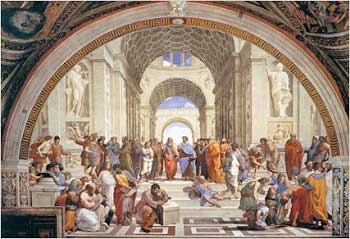
Institutions of higher learning had been largely destroyed. The [Christian] emperorsʼ attacks had centered on the chief of them, Athens and Alexandria, in the late fourth century and were turned against them again toward the end of the fifth and in 529 [the year that the School of Athens was closed by the decree of the Christian Roman Emperor Justinian.
— E.T.B.].

As to the initiators of the persecution, the [Christian] emperors themselves, a steady decline in their level of cultivation has been noticed. Thus books and philosophy were bound to fade from sight.

After Constantine there existed an empire-wide instrument of education: the church. What bishops, even emperors, made plain, and what could be heard in broader terms from every pulpit, was an agreed upon teaching. Every witness, every listener should know the great danger to his soul in Platoʼs books, in Aristotleʼs, in any of the philosophical corpus handed down from the past. The same danger threatened anyone using his mind according to their manner, with analytical intent, ranging widely for the materials of understanding, and independent of divine imparted teachings.

Another factor that arose specifically out of the ongoing conversion of the empire was the doctrine of demonic causation. The belief in the operation of maleficent forces on a large scale had to await Christianity; and it was of course Christianity that was to form the medieval and Byzantine world.

Satanic agents were to be seen as the cause not only of wars and rebellions, persecution and heresy, storms at sea and earthquakes on land, but of a host of minor or major personal afflictions. So, in consequence, Christians were forever crossing themselves, whatever new action they set about, and painted crosses on their foreheads too, responding to their leadersʼ urging them to do so. It would protect them against all evil.
- Ramsay MacMullen, Christianity and Paganism in the Fourth to Eighth Centuries


[Lucky thing that the Moslems preserved such a huge library of classical books stored in Seville, Spain, that helped reignite the European Christian world of learning. It was that Moslem library at Seville that helped revive learning more than all the books the Irish monks were busy “illuminating.” (I learned that from the famed CONNECTIONS television series). - E.T.B.]

The Origin Of Universities

As for Christian universities they were inspired by revived Greek and Roman learning during the Renaissance. Calvin attended such a “humanistic” institution of learning before becoming a Reformer. Luther was certainly in close contact with such “humanist” scholars like Erasmus and others. Such institutions were inspired by the Renaissanceʼs revival of ancient pagan knowledge and ideals of scholarship. So the Christians took their studies from the Greeks and Romans. Aquinas built his system on that of Aristotleʼs philosophy (and added eternal hell and the joy of seeing the damned rot there). See the following quotations:


Because of the emphasis on authority and the all-pervasive influence of the church, the medieval atmosphere was not conductive to free scientific investigation. Those who studied science were churchmen, and their findings were supposed to illuminate rather than contradict the dogmas of the theologians. When Greek and Arabic works were translated in the twelfth century, the West inherited a magnificent legacy of mathematical and scientific knowledge. Algebra, trigonometry, and Euclidʼs Geometry became available, and Arabic numerals and the symbol for zero made possible the decimal system of computation…

Scholasticism reached its zenith with Thomas Aquinas (1225?-1274). In his Summa Theologica, this brilliant Italian Dominican dealt exhaustively with the great problems of theology, philosophy, politics, and economics. Thomasʼ major concern was to reconcile Aristotle and church dogmain other words, the truths of natural reason and the truths of faith. There can be no real contradiction, he argued, since all truth comes from God. In case of an unresolved contradiction, however, faith won out.

Origin Of Universities

The rebirth of learning in the twelfth century, with especially its revival of classical learning, its unprecedented number of students flocking to the schools, and its development of professional studies in law, medicine, and theology, led to the rise of organized centers of learning - the universities, which soon eclipsed monastic and cathedral schools. Originally the word university meant a group of persons possessing a common purpose. In this case it referred to a guild of learners, both teachers and students, similar to the craft guilds with their masters and apprentices. In the thirteenth century the universities had no campuses and little property or money, and the masters taught in hired rooms or religious houses. If the university was dissatisfied with its treatment by the townspeople, it could migrate elsewhere. The earliest universities - Bologna, Paris, and Oxford - were not officially founded or created, but in time the popes and kings granted them and other universities charters of self-government. The charters gave legal status to the universities and rights to the students, such as freedom from the jurisdiction of town officials.
Source: ragz-international.com


Since we [the nation of India] inherited the present system of university education from the British, one may be tempted to believe that university education had its origins in the West. The truth of the matter is very different. India and Sri Lanka had their own systems of university education, their origins going back to the pre-Christian era. Jawaharlal Nehru, the first Prime Minister of India, describing the structure of the village republics of ancient India, in his ‘Glimpses of World History’ describes the origin of universities in very simple terms: “Many learned men used to retire into the forests, near the towns and villages, in order to lead simple lives, or to study and work in quiet. Pupils gathered round them, and gradually fresh settlements grew up for these teachers and their students. We can consider these settlements as universities. There were not many fine buildings there, but those who sought knowledge came from long distances to these places of leaning” (P.25).

When large towns and cities grew up, the universities also grew up into large complexes. “And in these centers of learning” continues Nehru, “every kind of subject that was then known was taught. The Brahmans even taught the science of war” (P.26). Prof. A. L. Basham, the author of the famous book, ‘The Wonder That was India’ tells us more about these Indian universities.

“Certain cities became renowned for their learned teachers, and achieved a reputation comparable to that of the university cities of medieval Europe. Chief among these were Varanasi and Taksasila, which were already famous in the time of the Buddha; later, around the beginning of the Christian era; Kanci acquired a similar reputation in the South. Varanasi, then usually called Kasi, was particularly renowned for its religious teachers, but Taksasila, in the far North-West, laid more emphasis on secular studies.”

Taksasila, which is now in Pakistan, had become so famous as a university that even the Buddhist Jataka tales make reference to it. Says Prof. Basham: “The Buddhist Jataka tales show that young men from all over the civilized part of India sought education in this city, through which a trickle of Iranian and Mesopotamian influence found its way to India.

Among the famous learned men connected with Taksasila were Panini, the grammarian of the 4th century BC, Kautilya, the Brahman Minister of Chandragupta Maurya, and traditionally the chief master of science of statecraft and Caraka, one of the two great masters of Indian medical science.” (P.165) Indian Buddhists get the credit of establishing monasteries that developed into universities. The Buddhist monastery of Nalanda, in Bihar, founded during the Gupta Age was one such university. According to Hsuan Tsang, the Chinese pilgrim who visited Nalanda in the 7th century, Nalanda was a hive of intellectual activity. As Prof. Basham notes “Under its aged and saintly abbot Silabhadra, Nalanda did not confine itself to training Buddhist novices, but also taught the Vedas, Hindu philosophy, logic, grammar and medicine. It would seem that the student population was not confined to the Buddhist order, but that candidates of other faiths who succeeded in passing a strict oral examination were admitted” (P. 166). [Here this website adds, “To be continued”]

Origins of Hospitals

“A Christian” writes: Hospitals as we know them were an innovation of Christianity (hence the universal healing symbol of a cross to represent hospitals).
Origins of Hospitals

Ed: Hospitals existed in antiquity, in Egypt and in India. And after Christianity became the state religion of the Roman Empire hospitals were built in Christian nations, and, after Islam arose, in Moslem countries as well. Regardless of questions of their origin, hospitals and the practice of modern medicine have continued to evolve. People of all faiths and non-faiths may today study medicine and work in hospitals and in worldwide relief organizations.

Take the Red Cross (now known as the “Red Cross and Red Crescent”), which is perhaps the largest international relief organization in the world. (See my earlier article on Christianity, Florence Nightingale, And The Red Cross for in-depth information.)

Aside from the cross (and the crescent) as its symbol, it treats people of all creeds and is supported by people of all faiths internationally.

Or take the MSF which stands for Médecins Sans [without] Frontières (English = “Doctors Without Borders”) which delivers emergency aid to victims of armed conflict, epidemics, and natural and man-made disasters, and to others who lack health care due to social or geographical isolation.

The only thing that Doctors Without Borders refuses to “tolerate” is indifference!

“We are by nature an organization that is unable to tolerate indifference.

We hope that by arousing awareness and a desire to understand, we will also stir up indignation and stimulate action.”

— Rony Brauman, MD, Former President, MSF

Their website explains that MSF was founded in 1971 by a small group of French doctors who believed that all people have the right to medical care regardless of race,religion, creed or political affiliation, and that the needs of these people supersede respect for national borders. It was the first non-governmental organization to both provide emergency medical assistance and publicly bear witness to the plight of the populations they served.

A private, nonprofit organization, MSF is at the forefront of emergency health care as well as care for populations suffering from endemic diseases and neglect. MSF provides primary health care, performs surgery, rehabilitates hospitals and clinics, runs nutrition and sanitation programs, trains local medical personnel, and provides mental health care.

Through longer-term programs, MSF treats chronic diseases such as tuberculosis, malaria, sleeping sickness, and AIDS; assists with the medical and psychological problems of marginalized populations including street children and ethnic minorities; and brings health care to remote, isolated areas where resources and training are limited. MSF unites direct medical care with a commitment to bearing witness and speaking out against the underlying causes of suffering. Its volunteers protest violations of humanitarian law on behalf of populations who have no voice, and bring the concerns of their patients to public forums, such as the United Nations, governments (in both home and project countries), and the media. In a wide range of circumstances, MSF volunteers have spoken out about forgotten conflicts and under-reported atrocities they have witnessed-from Chechnya to Angola, and from Kosovo to Sri Lanka. MSF is an international network with sections in 18 countries. Each year, more than 2,500 volunteer doctors, nurses, other medical professionals, logistics experts, water/sanitation engineers, and administrators join 15,000 locally hired staff to provide medical aid in more than 80 countries.

Source: www.doctorswithoutborders.org


History of Hospitals (from Encyc Britannica online)

As early as 4000 BC religions identified certain of their deities with healing. The temples of Saturn, and later of Asclepius in Asia Minor, were recognized as healing centers. Brahmanic hospitals were established in Sri Lanka as early as 431 BC, and King Asoka established a chain of hospitals in Hindustan about 230 BC. Around 100 BC the Romans established hospitals (valetudinaria) for the treatment of their sick and injured soldiers; their care was important because it was upon the integrity of the legions that the power of Rome was based.

It can be said, however, that the modern concept of a hospital dates from AD 331 when Constantine , having been converted to Christianity, abolished all pagan hospitals and thus created the opportunity for a new start. Until that time disease had isolated the sufferer from the community. The Christian tradition emphasized the close relationship of the sufferer to his fellow man, upon whom rested the obligation for care. Illness thus became a matter for the Christian church.

Around AD 370 St. Basil of Caesarea established a religious foundation in Cappadocia that included a hospital, an isolation unit for those suffering from leprosy, and buildings to house the poor, the elderly, and the sick. Following this example similar hospitals were later built in the eastern part of the Roman Empire. Another notable foundation was that of St. Benedict at Monte Cassino, founded early in the 6th century, where the care of the sick was placed above and before every other Christian duty. It was from this beginning that one of the first medical schools in Europe ultimately grew at Salerno and was of high repute by the 11th century. This example led to the establishment of similar monastic infirmaries in the western part of the empire.

The Hôtel-Dieu of Lyon was opened in 542 and the Hôtel-Dieu of Paris in 660. In these hospitals more attention was given to the well-being of the patientʼs soul than to curing bodily ailments. The manner in which monks cared for their own sick became a model for the laity. The monasteries had an infirmitorium, a place to which their sick were taken for treatment. The monasteries had a pharmacy and frequently a garden with medicinal plants. In addition to caring for sick monks, the monasteries opened their doors to pilgrims and to other travelers.

Religion continued to be the dominant influence in the establishment of hospitals during the Middle Ages . The growth of hospitals accelerated during the Crusades, which began at the end of the 11th century. Pestilence and disease were more potent enemies than the Saracens in defeating the crusaders. Military hospitals came into being along the traveled routes; the Knights Hospitalers of the Order of St. John in 1099 established in the Holy Land a hospital that could care for some 2,000 patients. It is said to have been especially concerned with eye disease, and may have been the first of the specialized hospitals. This order has survived through the centuries as the St. Johnʼs Ambulance Corps.

Throughout the Middle Ages, but notably in the 12th century, the number of hospitals grew rapidly in Europe. The Arabs established hospitals in Baghdad and Damascus and in Córdoba in Spain. Arab hospitals were notable for the fact that they admitted patients regardless of religious belief, race, or social order. The Hospital of the Holy Ghost, founded in 1145 at Montpelier in France, established a high reputation and later became one of the most important centers in Europe for the training of doctors. By far the greater number of hospitals established during the Middle Ages, however, were monastic institutions under the Benedictines, who are credited with having founded more than 2,000.

The Middle Ages also saw the beginnings of support for hospital-like institutions by secular authorities. Toward the end of the 15th century many cities and towns supported some kind of institutional health care: it has been said that in England there were no less than 200 such establishments that met a growing social need. This gradual transfer of responsibility for institutional health care from the church to civil authorities continued in Europe after the dissolution of the monasteries in 1540 by Henry VIII, which put an end to hospital building in England for some 200 years.

The loss of monastic hospitals in England caused the secular authorities to provide for the sick, the injured, and the handicapped, thus laying the foundation for the voluntary hospital movement. The first voluntary hospital in England was probably established in 1718 by Huguenots from France and was closely followed by the foundation of such London hospitals as the Westminster Hospital in 1719, Guyʼs Hospital in 1724, and the London Hospital in 1740. Between 1736 and 1787 hospitals were established outside London in at least 18 cities. The initiative spread to Scotland where the first voluntary hospital, the Little Hospital, was opened in Edinburgh in 1729.

The first hospital in North America was built in Mexico City in 1524 by Cortés; the structure still stands. The French established a hospital in Canada in 1639 at Quebec city, the Hôtel-Dieu du Précieux Sang, which is still in operation although not at its original location. In 1644 Jeanne Mance, a French noblewoman, built a hospital of ax-hewn logs on the island of Montreal; this was the beginning of the Hôtel-Dieu de St. Joseph, out of which grew the order of the Sisters of St. Joseph, now considered to be the oldest nursing group organized in North America. The first hospital in the territory of the present-day United States is said to have been a hospital for soldiers on Manhattan Island, established in 1663. The early hospitals were primarily almshouses, one of the first of which was established by William Penn in Philadelphia in 1713. The first incorporated hospital in America was the Pennsylvania Hospital, in Philadelphia, which obtained a charter from the crown in 1751.

The Introduction Of Hospitals

Late antiquity witnessed one revolution in the medical scene: the birth of the hospital. Literary sources occasionally mention hospitals, but only documents from Egypt reveal how widespread they were. These testimonial from Egypt record a multitude of hospitals founded by private individuals and independent of ecclesiastical institutions. The origin of the hospital as an independent institution for the care and treatment of the sick can be dated to the third quarter of the fourth century CE. The hospital resolved major tensions in the medical, ecclesiastical and religious scenes of late antiquity.

The 1911 Edition Encyclopedia

The Origin of Hospitals.- In spite of contrary opinions the germ of the hospital system may be seen in pre-Christian times (see ‘Charity And Charities’)

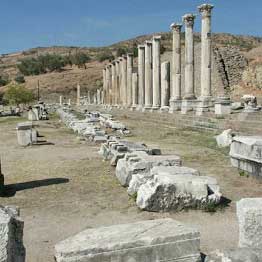
Pinel goes so far as to declare that there were asylums distinctly set apart for the insaneʼ in the temples of Saturn in ancient Egypt. But this is probably an exaggeration, the real historical facts pointing to the existence of medical schools in connexion with the temples generally, to the knowledge that the priests possessed what medical science existed, and finally to the rite of “Incubation,” which involved the visit of sick persons to the temple, in the shade of which they slept, that the god might inform them by dreams of the treatment they ought to follow. The temples of Saturn are know to have existed some 4000 years before Christ; and that those temples were medical schools in their earliest form is beyond question. The reason why no records of these temples have survived is due to the fact that they were destroyed in a religious revolution which swept away the very name of Saturn from the monuments in the country. Professor Georg Ebers of Leipzig, whose possession of that important handbook of Egyptian medicine called the Papyrus Ebers constitutes him an authority, says the Heliopolis certainly had a clinic united to the temple. The temples of Dendera, Thebes and Memphis, are other examples. Those early medical works, the Books of Hernies, were preserved in the shrines. Patients coming to them paid contributions to the priests. The most famous temples in Greece for the cure of disease were those of Aesculapius at Cos and Trikka, while others at Rhodes, Cnidus, Pergamum and Epidaurus were less known but frequented. Thus it is clear that both in Egypt and in Greece the custom of laying the sick in the precincts of the temples was a national practice.

Alexandria again was a famous medical center. Before describing the European growth of the hospital system in modern times, to which its development in the Roman Empire is the natural introduction, it will be well to dispose very briefly of the facts relating to the hospital system in the East. Harun al-Rashid (A.D. 763-809) attached a college to every mosque, and to that again a hospital. He placed at Baghdad an asylum for the insane open to all believers; and there was a large number of public infirmaries for the sick without payment in that city. Benjamin, the Jewish traveler, notes an efficient scheme for the reception of the sick in A.D. 1173,which had long been in existence.

The Buddhists no less than the Mahommedans had their hospitals, and as early as 260 B.c. the emperor Asoka founded the many hospitals of which Hindustan could then boast. The one at Surat, made famous by travelers, and considered to have been built under the emperorʼs second edict, is still in existence. These hospitals contained provision so extensive as to be quite comparable to modern institutions. In China the only records that remain are those of books of very early date dealing with the theory of medicine. To return to India, the hospitals of the Buddhist Emperor, Asoka, were swept away by a revival of Brahmanism, ‘and a practical hiatus exists between the hospitals he introduced and those that were refounded by the’ British ascendancy.

Hadrianʼs reign contains the first notice of a military hospital in Rome. At the beginning of the Christian era we hear of the existence of open surgeries (of various price and reputation), the specialization of the medical profession, and the presence of women practitioners, often as obstetricians. latria, or tabcrnae-medicae, are described by Galen and Placetus: many towns built them at their own cost. These iatria attended almost entirely to out-patients, and the system of medicine fostered by them continued without much development down to the middle of the 18th century. It is to be noted that these out-patients paid reasonable fees.

In Christian days no establishments were founded for the relief of the sick till the time of Constantine. A law of Justinian referring to various institutions connected with the church mentions among them the Nosocomia, which correspond to our idea of hospitals. In A.D. 370 Basil had one built for lepers at Caesarea. St Chrysostom founded a hospital at Constantinople. At Alexandria an order of 600 Parabolani attended to the sick, being chosen for the purpose for their experience by the prelate of the city (A.D. 416). Fabiola, a rich Roman lady, founded the first hospital at Rome possessed of a convalescent home in the country. She even became a nurse herself. St Augustine founded one at his see of Hippo.

These Nosocomia fell indeed almost entirely into the hands of the church, which supported them by its revenues when necessary and controlled their administration. Salerno became famous as a school of medicine; its rosiest days were between A.D. 1000 and 1050. Frederick II. prescribed the course for students there, and founded a rival school at Naples. At this period the connexion between monasteries and hospitals becomes a marked one. The crusaders also created another bond between the church and hospital development, as the route they traversed was marked by such foundations. Lepers were some of the earliest patients for whom a specialized treatment was recognized.