
Showing posts with label satan. Show all posts

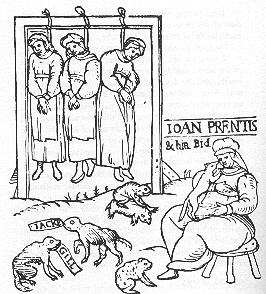
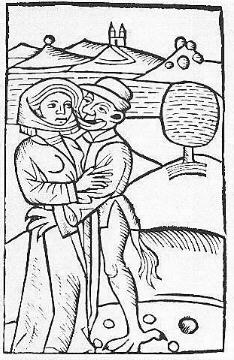
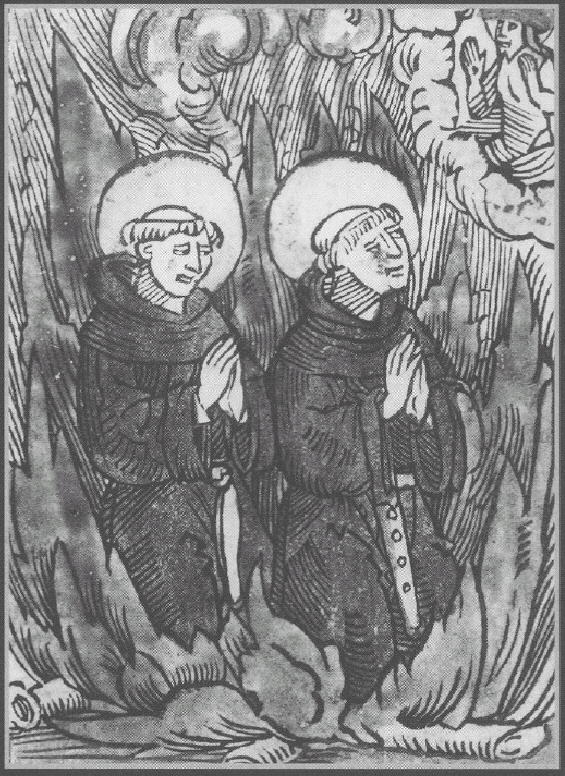
Artworks by Christians, around 1400 - 1600 portraying images of Satan, Demons, werewolves and witches.

It was believed that people by the aid of the Devil could assume any shape they wished. Witches and wizards were changed into wolves, dogs, cats and serpents.

Within two years, between 1598 and 1600, in one district of France, the district of Jura, more than six hundred men and women were tried and convicted before one judge of having changed themselves into wolves, and all were put to death.

This is only one instance. There were thousands.

— Robert Ingersoll, “The Devil”

Read More

Pictures of Demons and Satan

View Photographs which may contain demons and an outline of Satan. Includes comments by Skeptics.

Photographs of Satan and Demons

Real Pictures - Decide for Yourself

Loook very closely for the Seraphims

Look very closely… it is believed that a Seraphimʼs shadow (An Angel) was caught in this picture - inside a church!

Look very closely at the area of the picture, where the yellow flowers are.

It is believed that the outline of Satan appeared in this picture when it was taken.

Photograph of what is believed to be a Desert Demon as discussed in the book of Enoch.

Another picture of what may very well be a Desert Demon, in the 21st Century!

If you study this picture, notice the shadows falling on land — it is believed that this may be a Cherubim (An Angel).

Sharon

I am very excited about these five photographs that Iʼve obtained.

I wanted to share them with ANY Christians that might be around, to confirm the faith.
The skeptics no longer have an argument that will hold water.
As they say, a picture is worth 1000 words.

The one photograph is believed to contain an outline of Satan in it, this picture is astounding. I donʼt know what Paranormal researchers will think about it, but Iʼm overwhelmed with this evidence!


From: “BDK”

LOL, you need to see a doctor, an eye doctor at least, but I doubt heʼs the right kind of doctor for you…
Donʼt you have some pills to take or something??

BDK


From: “John Baker”

Itʼs quite obvious thereʼs nothing unusual in the photographs, but thatʼs no doubt the entire point.
Sharon has a unique sense of humor. [G]


From: “Dangorn”

I think I saw Elvis in one of those pictures!


*
Send them to Ed Conrad.

earle
*

Yeah, Ed probably has petrified angel toenails for sale on ebay.

Liam


From: “johac”
I saw Bigfoot! And a chupacabra!

From: “Mylon”

A chupacabra? Pfft, I saw 20!


From: “sharon”

The problem is you must take things as these on Faith!
It only takes faith… Go back, and just believe.


From: “quibbler”

Then why have photographs? All but the first photo had nothing and the first photo appears to have been quite obviously doctored to produce some vague, blurry smudges. None of that inspires much faith, Iʼm afraid.


From: “Wolf333”

<begin Foghorn Leghorn mode>

Itʼs a joke, son…

<end Foghorn Leghorn mode>


From: “sharon”

Only some dry sarcasm about Christians. *smile*

A couple years ago on the world news, they featured a story about a volcano that was erupting overseas, and all the damage it had caused — the newscaster made the comment “The Natives believe a demon lives inside the mountain.” An angry demon makes the mountain roar and move. (To them, it is completely realistic to believe, without science. Besides hearing this explanation all their life.)

If you tell a Christian that a demon lives inside a mountain, they will mark it off as superstitious nonsense… even *heathen* nonsense. Yet they go on themselves acknowledging their own demons and devils, even to this day. To deny demons, they will think you are going to hell, for denying what is written in the Bible. The Bible says there is a Satan and demons, and therefore it is blaspheme to deny a belief in them. Will they ever see the connection between superstitious natives, and their own beliefs?

Yes, the photos I gave had nothing unusual in them — nothing is there. Thatʼs the point. NOTHING is there. The faithful fundamentalist Christians have hundreds of thousands of stories to tell about how Satan is running the world, and demons are destroying society… and where are these demons?

Where is one photograph of a demon? Nobody has yet succeeded to point out so much as one demon in my entire life… but some of the people at the local churches would hysterically instruct to anoint the windows and doors with oil — and offering up prayers to keep the evil spirits out. I wish some Christian would understand my point — when theyʼre told “This is a photo of a demon”, and they look and seeing nothing — that it sink in, thereʼs nothing there. They have never seen these so-called evil spirits they fervently claim to be real… if they could only comprehend demons are completely mythological leftovers, from very primitive times.

I feel pity on Christians who believe in such superstitions. There is ONLY one positive thing, that being if you believe in devils and demons, it makes Blattyʼs “The Exorcist” a whole lot more interesting. But Christians cannot criticize anyone as ignorant, or superstitious for believing an “angry demon” makes volcanoes erupt.

Later on it was the early christians who blamed volcanoes on the devil. They turned Vulcan into a demon, and his angry voice, coming from the smoking mountain, was trying to drown out the moans and screams of torment of all the lost souls.


Together through the mist of myth, the richness of legend, and the dawn of understanding.

At the start it was to please and appease the gods.

  1. An azrec priest, armed with a knife, the handle of gold and platinum, slaughters captives on the peak of a rumbling mountain.

  2. A young girl, colorfully dressed, bright flowers in her hair, is led by a village chief up a smoking mountain. At the top, trembling, she steps over the edge and for the moment the god is satisfied.

    In other parts of the world:

    1. It was to explain what was believed to be smoke and fire, and to give some understanding to the awful noise. So was born Vulcan, his forges, and his chief helpers-cyclops.
    2. In Indonesia it was the great snake Hontobago. When he moved his body the earth shook, fire flew from the mountains, and even the gods were afraid.
    3. Later on it was the early christians who blamed volcanoes on the devil. They turned Vulcan into a demon, and his angry voice, coming from the smoking mountain, was trying to drown out the moans and screams of torment of all the lost souls.
    4. In the middle ages it was largely believed that the Icelandic volcano Hekla was the gateway to hell, and the hissing chunks thrown out of it were the souls of the damned.
    5. There were those, however, who viewed volcanoes in a different way. Mark Twain was fond of saying “the smell of sulfur is strong, but not unpleasant for a sinner.”

From: “Glenn (Christian Mystic)”

I see only blurry pictures


From: “sharon”

you are declared sane.


From: “Glenn (Christian Mystic)”

Thanx, I needed that :=}


SmileJeff: I looked really hard, but I donʼt see the outline of the Talking Snake anywhere in the picture. Perhaps he is just magically blinding me and keeping me from seeing the glory of his outline, though. After all, if itʼs reasonable to believe that a talking animal is blinding me (and most of the rest of the world) from seeing the alleged TRUTH of the Fabulous Magical Myth of Kryasst, perhaps itʼs not too much of a stretch to believe that he could magically blind me from seeing his outline in a picture. Amen? Glory!
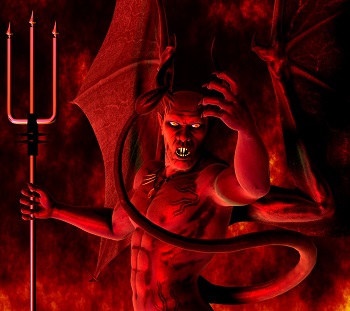
No, I Don't Believe in a Personal Devil or a Personal Savior

I think if there are evil spirits, but men like Hitler probably taught them a thing or two about being evil. Of course if there ARE evil spirits, the best way to combat them is not with constant prayer and seeing “da deyvil” in everything, that just invites them in, always being obsessed with them I was more full of fear as a Christian than now, more obsessed. Personal Devil or a Personal Savior Today I believe that the best way to combat “evil” is simply to try and seek the best in everyone, in all books, in all manner of things. Demons or whatever you wish to call them, probably HATE simple things like honest handshakes and honest smiles and really detest people who can simply examine the universe with a quiet mind. If you are comfortable with yourself alone in a dark room, simply listening to your own breathing, then the devilʼs got nothing on you. He has no fear to hang on to. Demons are probably like animals that sense fear and that gives them strength. Or maybe most demons are busy taunting other demons to have much time to bother with humanity as much as some people claim they do. I think Godʼs cadre of diseases and parasites and hunger and repetitious labor, hard labor, boring labor, accidents, miscommunications, unrequited love, dashed hopes, and simply the ability to fear things that havenʼt happened yet, along with numerous painful natural phenomena, work havoc quite well without having to invoke “THE devil” or “demons” to explain “evil” in the world.

But wait, thereʼs more, if you order now weʼll include with our explanation the following…

Satan

But who prays for Satan? Who, in eighteen centuries, has had the common humanity to pray for the one sinner that needed it most?
- Mark Twain, Autobiography


I have no special regard for Satan; but I can at least claim that I have no prejudice against him. It may even be that I lean a little his way, on account of his not having a fair show. All religions issue Bibles against him, and say the most injurious things about him, but we never hear his side. We have none but the evidence for the prosecution, and yet we have rendered the verdict. To my mind this is irregular. It is un-English. It is un-American; it is French.
- Mark Twain


We may not pay him reverence, for that would be indiscreet, but we can at least respect his talents. A person who has for untold centuries maintained the imposing position of spiritual head of four-fifths of the human race, and political head of the whole of it, must be granted the possession of executive abilities of the loftiest order. Not only that, but Satan hasnʼt a single salaried helper, while the Opposition employs a million.
- Mark Twain


Another “Satan seller” is Dr. Rebecca Brown. Her tales of “Satanic cult abuse” (He Came To Set The Captives Free) were published by Jack Chick, who specializes in publishing mini-comic books portraying demons and hellfire. “Dr. Rebecca Brown” was originally “an Indiana physician named Ruth Bailey, who had her license removed by the Medical Licensing Board of Indiana for a number of reasons. Among the boardʼs seventeen findings are: Bailey knowingly misdiagnosed serious illnesses, including brain tumors and leukemia, as ‘caused by demons, devils, and other evil spirits;’ she told her patients that doctors at Ball Memorial Hospital and St. Johnʼs Medical Center were ‘demons, devils, and other evil spirits’ themselves; and she falsified patient charts and hospital records. The boardʼs report states: ‘Dr. Bailey also addicted numerous patients to controlled substances which required them to suffer withdrawal and undergo detoxification, and that she self-medicated herself with non-therapeutic amounts of Demerol which she injected on an hourly basis.’ A psychiatrist appointed by the board to diagnose Bailey described her as ‘suffering from acute personality disorders including demonic delusions and/or paranoid schizophrenia.’ Refusing to appear before the board, Bailey moved to California, changed her name to Rebecca Brown, and began working with Jack Chick.” (David Alexander, “Giving the Devil More Than His Due: For Occult Crime ‘Experts’ and the Media, Anti-Satanist Hysteria Has Become A Growth Industry,” The Humanist, March/April 1990) Jack Chick recently stopped publishing Brownʼs books, “We used to publish her books. Then the Lord told us he didnʼt want us to put ʻem out anymore.” (Jack Chick, speaking to Dwayne Walker in 1997)

Even the editors of Christianity Today praised a book in which well-documented research showed that the problem with the “Satanic panic” of the 1980s was that “rumor was prevailing over truth, and people, particularly Christians, are too believing.” The Christian book reviewer cited a case in a megachurch in Chicago where one man was “disfellowshipped” because a female in the congregation “freaked out” whenever she saw him on Sunday mornings, claiming he was a “Satanic cult leader” who had “ritually abused her.” “The man was not allowed to face his accuser, nor would they discuss with the man any specific dates or events of alleged crimes. Though the man denied the allegations, and the elders and pastor of the church saw no evidence of sin in the manʼs life, they felt compelled to protect the accuser.” The review continued, “To date there has been no investigation that has substantiated the claims of alleged Satanic abuse survivors. Recovered ‘memories’ are the only evidence any specialist will offer...Well-meaning but uncritical therapists have validated, if not helped to construct, vile fantasies that foment a terror of Satan rather than confidence in God...In periods of rising concern over actual child abuse and sexual immorality the historical tendency has been to find scapegoats for social ills. A despised segment of society is depicted as the perpetrator of a villainous conspiracy. Romans accused the early Christians of wearing black robes, secretly meeting in caves, and performing animal and baby mutilation. In the Middle Ages, the scapegoat was the Jews. In America of the 1830s and 40s, kidnapping and murder of children were said to be the work of the Catholics. A best-selling book of the time, The Awful Disclosures of Maria Monk, chronicled the atrocities committed by priests and nuns at a particular convent. That account sparked myriad copycat claims by other young women.” (Susan Bergman, “Rumors from Hell,” Christianity Today, Vol. 38, No. 3, March, 1994 - a review of Jeffrey S. Victorʼs, Satanic Panic)

The modern “Satanic cult hysteria” only began in 1981 with the publication of the best-seller, Michelle Remembers. “Prior to 1981 there were no reports of ‘satanic-cult torture and murder.’ We have none on record, and I challenge you to find any in the psychiatric or scientific literature.” So says F.B.I. Special Agent Kenneth Lanning (who has a masterʼs degree in behavioral science and whose published work on the sexual victimization of children is well-known in the law-enforcement and psychology fields). (Interestingly enough, the article featuring Lanningʼs statement appeared in Penthouse magazine, while the statements directly preceding Lanningʼs appeared in Christianity Today. Itʼs nice to know that Christians and secularists, can agree on some matters!)

There are indeed practicing “Satanists” in America, but the F.B.I. has been studying ritual criminal behavior for many years and has not found evidence of any organized “satanic menace.” According to Lanning, “I started out believing this stuff [about ritual murders by organized satanic-cults]. I mean, I had been dealing with bizarre crimes for many years and I knew from experience that almost anything is possible...But I canʼt find one documented case [of satanic-cult victimization], and Iʼve been looking for seven years or more. I personally have investigated some 300 cases - and there is not a shred of evidence of a crime.” He mentioned how psychiatric patients [and/or people who undergo hypnosis to “recover memories”] are the ones claiming such crimes took place, but when the alleged crime scene is investigated there is never a trace of blood or bone, though the F.B.I. has many means to detect even the faintest traces of splashed blood, and whole lawns and farm fields have been dug up in search of bones and bone fragments though none were found.

Satan-mongers inflate statistics, claiming that “according to the F.B.I., two million children are missing each year.” “Itʼs wrong,” said Lanning. The Justice Department (Juvenile Justice Bulletin, January 1989) reported that between 52 and 58 children were kidnapped and murdered by non-family members in 1988. The “Cult Crime Network” claims that “50,000 human sacrifices” are being performed each year by “satanic cults.” But there are only 20,000 murders, total in the U.S. each year, and that figure accounts for all the gang, drug, domestic, and “regular” murders in the country.

People do commit strange crimes. Some may even be committing human sacrifice in the name of Satan. But there is absolutely no evidence of any widespread, organized satanic movement. At one conference on satanism in America in 1989 the same photo of a boy whose death was “linked to satanism” was dragged out by just about everyone interviewed by a reporter covering the conference, implying that was the one and only corpse in the U.S. that could be traced to satanic-cult activity, and it was the result of an isolated incident that could not be connected in any way with an organized group.

As Lanning sums things up, “The fact is that more crime and child abuse has been committed by zealots in the name of God, Jesus, and Muhammad than has ever been committed in the name of Satan.”
- Skip Church


Devils Devils Everywhere, So Throw A Pot Of Ink!

The Father of Protestant Christianity, Martin Luther, saw “Satan” lurking everywhere and once boasted about throwing an inkpot at old Split-foot himself. (The following quotations, unless otherwise stated, are from Table Talk, a volume in The Collected Works of Martin Luther):

Snakes and monkeys are subjected to the demon more than other animals. Satan lives in them and possesses them. He uses them to deceive men and to injure them.

In my country, upon a mountain called Polterberg, there is a pool. If one throws a stone into it, instantly a storm arises and the whole surrounding countryside is overwhelmed by it. This lake is full of demons; Satan holds them captive there.

Demons are in woods, in waters, in wildernesses, and in dark pooly places ready to hurt and prejudice people; some are also in thick black clouds, which cause hail, lightning and thunder, and poison the air, the pastures and grounds.

How often have not the demons called “Nix,” drawn women and girls into the water, and there had commerce with them, With fearful consequences.

I myself saw and touched at Dessay, a child which had no human parents, but had proceeded from the Devil. He was twelve years old, and, in outward form, exactly resembled ordinary children.

A large number of deaf, crippled and blind people are afflicted solely through the malice of the demon. And one must in no wise doubt that plagues, fevers and every sort of evil come from him.

Our bodies are always exposed to the attacks of Satan. The maladies I suffer are not natural, but Devilʼs spells.

As for the demented, I hold it certain that all beings deprived of reason are thus afflicted only by the Devil.

Satan produces all the maladies which afflict mankind for he is the prince of death.

(Who needs modern medicine, sanitation, health, and city planning practices? According to Luther we just need more exorcists to heal “all the maladies which afflict mankind.” On the other hand, even the “apple of Godʼs eye,” the ancient Hebrews, did not enjoy unparalleled good health to judge by the lengthy number of illnesses mentioned in the book of Deuteronomy. Add to that Luther and Calvinʼs own devilishly recurring bowel problems. Dare I suggest that the early invention of Ex-lax and Pepto-bismol might have taken the edge off of some of the Reformationʼs more spitefully inspired fears? - Skip)

When I was a child there were many witches, and they bewitched both cattle and men, especially children. (Luther, Commentary on Galatians)

I would have no compassion on a witch; I would burn them all. (Luther, Table Talk)

The heathen writes that the Comet may arise from natural causes; but God creates not one that does not foretoken a sure calamity. (Luther, Advent Sermon)

(For further quotations like those above, see Heiko Oberman, Luther: Man Between God and the Devil)


Some people believe in the Devil. So do I, in a way. He could be nothing more than one of Godʼs staff members, the one who on Judgment Day will take the fall for war, famine, tooth decay, etc. (In fact, “Armageddon” is probably Aramaic for “reshuffling the cabinet.”) He could be just random badness, the absence of goodness: evil doesnʼt have to unionize to be effective. I just do not believe that old Splitfoot has a hot line to everyoneʼs id and makes us go all steamy with evil thoughts when the fancy strikes him.

- James Lileks, “The Devil, You Say,” Fresh Lies)


May The Higher Power Win

I cannot find Satan or Him
In this desolate heart.
Nor have I found a concrete way
To tell the two apart.

Through the myths, I hear the legends.
Through the songs I hear the praise.
Through “Glory God” and “Satan Rules” -
I still hear but one phrase.

Have mercy on my empty soul,
Whoever bids the lot.
And may the Higher Power win,
If itʼs a soul I got.

- Norbert Thiemann

Origins of Hospitals and Schools of Higher Learning

Many hospitals and universities too were indeed founded by churches, religious orders and individual Christians.
If youʼre making a distinction between founded on and founded by Iʼd be curious to see it. You can find hospitals founded by non-Christian institutions or individuals but a large number owe their existence to the aforementioned Christian associations and individuals. Itʼs a historic fact.
I read Edʼs article and donʼt see a contradiction between it and what I wrote. There are hospitals in other parts of the world and other cultures had their own means of healthcare. He contends that “hospitals as we know them were an innovation of Christianity.” The operative phrase being “as we know them.” Stephen is probably right but I expect heʼll weigh in himself on this. — Paul
Article in Dispute, History of Hospitals

Origins of Hospitals and Schools of Higher Learning

Ed: Paul, I would like to add something to what you wrote above concerning “the origin of universities,” since you have added that to the topic of the origin of hospitals. Please read the quotations below, from recognized scholars. The early Christian church under the Christianized Emperors let languish and helped destroy the greatest library known to the ancient world. It associated “Satanʼs influence” with great works of pagan genius. It threatened people with hell for reading “pagan” books, it closed the schools of the ancient pagan scientists and doctors and mathematicians (Ramsay McMullen, cited often below, is a well known and well respected professor of history concerning this particular time period and has written copiously about it):

[During the reign of Christian Emperor Theodosius] bands of wandering monks attacked synagogues, pagan temples, hereticsʼ meeting places, and the homes of wealthy non-believers in Mesopotamia, Syria, Egypt, Palestine, and North Africa. [Also during his reign] the bishop of Alexandria incited local vigilantes to destroy the Temple of Serapis [also known as the Serapeum], one of the largest and most beautiful builds in the ancient world that also housed a library donated by Cleopatra. Alexandrian Christians whipped up by Bishop Cyril rioted against the Jews in 415, and then murdered Hypatia, a wise and beloved Platonic philosopher.
- Richard E. Rubenstein, When Jesus Became God: The Epic Fight Over Christʼs Divinity in the Last Days of Rome, p.226-227


Art, philosophy, literature, the very psychology of Western man, all suffered by the victory of the [Christian] bishops.
- John Holland Smith, The Death of Classical Paganism


The Christian zealots for conversion took to the streets or criss-crossed the countryside, destroying no doubt more of the architectural and artistic treasure of their world than any passing barbarians thereafter.
- Ramsay MacMullen, Christianizing the Roman Empire


Examples of destroyed Temples: the Sanctuary of Aesculap in Aegaea, the Temple of Aphrodite in Golgatha, Aphaka in Lebanon, the Heliopolis. Christian priests such as Mark of Arethusa or Cyrill of Heliopolis were famous as “temple destroyers.”

In the early fourth century the philosopher Sopatros was executed on demand of Christian authorities.

In the sixth century pagans were declared void of all rights.

- K. Deschner, Abermals krähte der Hahn, (Stuttgart 1962), p. 466, 468


Pagans had not been clear or unanimous in their belief in an afterlife, but those who credited it looked to mystery cults for insurance in their future. Christians were much more positive. The Christians united ritual and philosophy and brought the certainty of God and history to questions whose answers eluded the pagan schools. Whereas pagan cults won adherents, Christianity aimed, and contrived, to win converts.

Paganism was reclassified as a demonic system. If Satan was the source of error and evil, false teaching and wrongdoing were not merely mistaken: they were diabolic. The division between a Christian “community of goodness” and an “outer world of evil” could easily become too pronounced. The idea of Satan magnified the difference between “true” and “false” Christians and between Christian sinners and saints.

Like Satan, the Last Judgment was a force that Christians exaggerated and then claimed to be able to defeat. This teaching was reinforced by an equally powerful ally, the Christian idea of sin. Sin was not just the sin of an action, or even an intention, but also the sin of a thought, even a passing interest in an appealing man or woman. This combination of rarefied sin and eternal punishment was supported, as we shall see, by books of vision and revelation that were probably more widely read than modern contempt for “pseudepigraphic” forgeries allows: acquaintance with the Apocalypse of “Peter” would make anyone think twice before leaving the Church (we happen to know that “Peterʼs vision of hell” was still read as a holy text in the churches in Palestine on Good Friday during the fifth century). If fears for Eternity brought converts to the faith, one suspects that they did even more to keep existing converts in it.
- Robin Lane Fox, Pagans and Christians (Alfred A. Knopf, Inc., New York, 1987), p. 326-327, 330-331, 412


Institutions of higher learning had been largely destroyed. The [Christian] emperorsʼ attacks had centered on the chief of them, Athens and Alexandria, in the late fourth century and were turned against them again toward the end of the fifth and in 529 [the year that the School of Athens was closed by the decree of the Christian Roman Emperor Justinian.
— E.T.B.].

As to the initiators of the persecution, the [Christian] emperors themselves, a steady decline in their level of cultivation has been noticed. Thus books and philosophy were bound to fade from sight.

After Constantine there existed an empire-wide instrument of education: the church. What bishops, even emperors, made plain, and what could be heard in broader terms from every pulpit, was an agreed upon teaching. Every witness, every listener should know the great danger to his soul in Platoʼs books, in Aristotleʼs, in any of the philosophical corpus handed down from the past. The same danger threatened anyone using his mind according to their manner, with analytical intent, ranging widely for the materials of understanding, and independent of divine imparted teachings.

Another factor that arose specifically out of the ongoing conversion of the empire was the doctrine of demonic causation. The belief in the operation of maleficent forces on a large scale had to await Christianity; and it was of course Christianity that was to form the medieval and Byzantine world.

Satanic agents were to be seen as the cause not only of wars and rebellions, persecution and heresy, storms at sea and earthquakes on land, but of a host of minor or major personal afflictions. So, in consequence, Christians were forever crossing themselves, whatever new action they set about, and painted crosses on their foreheads too, responding to their leadersʼ urging them to do so. It would protect them against all evil.
- Ramsay MacMullen, Christianity and Paganism in the Fourth to Eighth Centuries


[Lucky thing that the Moslems preserved such a huge library of classical books stored in Seville, Spain, that helped reignite the European Christian world of learning. It was that Moslem library at Seville that helped revive learning more than all the books the Irish monks were busy “illuminating.” (I learned that from the famed CONNECTIONS television series). - E.T.B.]

The Origin Of Universities

As for Christian universities they were inspired by revived Greek and Roman learning during the Renaissance. Calvin attended such a “humanistic” institution of learning before becoming a Reformer. Luther was certainly in close contact with such “humanist” scholars like Erasmus and others. Such institutions were inspired by the Renaissanceʼs revival of ancient pagan knowledge and ideals of scholarship. So the Christians took their studies from the Greeks and Romans. Aquinas built his system on that of Aristotleʼs philosophy (and added eternal hell and the joy of seeing the damned rot there). See the following quotations:


Because of the emphasis on authority and the all-pervasive influence of the church, the medieval atmosphere was not conductive to free scientific investigation. Those who studied science were churchmen, and their findings were supposed to illuminate rather than contradict the dogmas of the theologians. When Greek and Arabic works were translated in the twelfth century, the West inherited a magnificent legacy of mathematical and scientific knowledge. Algebra, trigonometry, and Euclidʼs Geometry became available, and Arabic numerals and the symbol for zero made possible the decimal system of computation…

Scholasticism reached its zenith with Thomas Aquinas (1225?-1274). In his Summa Theologica, this brilliant Italian Dominican dealt exhaustively with the great problems of theology, philosophy, politics, and economics. Thomasʼ major concern was to reconcile Aristotle and church dogmain other words, the truths of natural reason and the truths of faith. There can be no real contradiction, he argued, since all truth comes from God. In case of an unresolved contradiction, however, faith won out.

Origin Of Universities

The rebirth of learning in the twelfth century, with especially its revival of classical learning, its unprecedented number of students flocking to the schools, and its development of professional studies in law, medicine, and theology, led to the rise of organized centers of learning - the universities, which soon eclipsed monastic and cathedral schools. Originally the word university meant a group of persons possessing a common purpose. In this case it referred to a guild of learners, both teachers and students, similar to the craft guilds with their masters and apprentices. In the thirteenth century the universities had no campuses and little property or money, and the masters taught in hired rooms or religious houses. If the university was dissatisfied with its treatment by the townspeople, it could migrate elsewhere. The earliest universities - Bologna, Paris, and Oxford - were not officially founded or created, but in time the popes and kings granted them and other universities charters of self-government. The charters gave legal status to the universities and rights to the students, such as freedom from the jurisdiction of town officials.
Source: ragz-international.com


Since we [the nation of India] inherited the present system of university education from the British, one may be tempted to believe that university education had its origins in the West. The truth of the matter is very different. India and Sri Lanka had their own systems of university education, their origins going back to the pre-Christian era. Jawaharlal Nehru, the first Prime Minister of India, describing the structure of the village republics of ancient India, in his ‘Glimpses of World History’ describes the origin of universities in very simple terms: “Many learned men used to retire into the forests, near the towns and villages, in order to lead simple lives, or to study and work in quiet. Pupils gathered round them, and gradually fresh settlements grew up for these teachers and their students. We can consider these settlements as universities. There were not many fine buildings there, but those who sought knowledge came from long distances to these places of leaning” (P.25).

When large towns and cities grew up, the universities also grew up into large complexes. “And in these centers of learning” continues Nehru, “every kind of subject that was then known was taught. The Brahmans even taught the science of war” (P.26). Prof. A. L. Basham, the author of the famous book, ‘The Wonder That was India’ tells us more about these Indian universities.

“Certain cities became renowned for their learned teachers, and achieved a reputation comparable to that of the university cities of medieval Europe. Chief among these were Varanasi and Taksasila, which were already famous in the time of the Buddha; later, around the beginning of the Christian era; Kanci acquired a similar reputation in the South. Varanasi, then usually called Kasi, was particularly renowned for its religious teachers, but Taksasila, in the far North-West, laid more emphasis on secular studies.”

Taksasila, which is now in Pakistan, had become so famous as a university that even the Buddhist Jataka tales make reference to it. Says Prof. Basham: “The Buddhist Jataka tales show that young men from all over the civilized part of India sought education in this city, through which a trickle of Iranian and Mesopotamian influence found its way to India.

Among the famous learned men connected with Taksasila were Panini, the grammarian of the 4th century BC, Kautilya, the Brahman Minister of Chandragupta Maurya, and traditionally the chief master of science of statecraft and Caraka, one of the two great masters of Indian medical science.” (P.165) Indian Buddhists get the credit of establishing monasteries that developed into universities. The Buddhist monastery of Nalanda, in Bihar, founded during the Gupta Age was one such university. According to Hsuan Tsang, the Chinese pilgrim who visited Nalanda in the 7th century, Nalanda was a hive of intellectual activity. As Prof. Basham notes “Under its aged and saintly abbot Silabhadra, Nalanda did not confine itself to training Buddhist novices, but also taught the Vedas, Hindu philosophy, logic, grammar and medicine. It would seem that the student population was not confined to the Buddhist order, but that candidates of other faiths who succeeded in passing a strict oral examination were admitted” (P. 166). [Here this website adds, “To be continued”]

Witches, Divination, Magic and Satanism

Witches, Divination, Magic and Satanism

We owe a tremendous debt of gratitude to our New England forefathers. For if it hadnʼt been for their amazing wisdom and foresight over two hundred years ago, weʼd be up to our asses in witches.
- Cecil Wyche & Tom Weisel

It was believed that people by the aid of the Devil could assume any shape they wished. Witches and wizards were changed into wolves, dogs, cats and serpents. Within two years, between 1598 and 1600, in once district of France, the district of Jura, more than six hundred men and women were tried and convicted before one judge of having changed themselves into wolves, and all were put to death. This is only one instance. There were thousands.
- Robert Ingersoll, “The Devil”


In three centuries (1450 to 1750) more than 100,000 persons, the overwhelming majority of them being women, were tried for the crime of witchcraft, and more than half were executed. The prosecutions by church and governmental authorities often involved the use of torture, and constitute one of the greatest miscarriages of justice in the history of the West.
- Witch-hunting in Early Modern Europe, Vol. 3, Articles on Witchcraft, Magic, and Demonology, ed., Brian P. Levack


For centuries the Catholic church proclaimed the reality of the crime of “witchcraft,” backed by the Biblical command, “Thou shalt not suffer a witch to live.” Even the Protestant Reformer, Martin Luther, said about witches, “I would burn them all!” John Calvin personally prosecuted twenty witches in one year who were executed in the city of Geneva for having “sent the plague.”

A few centuries later, after the smoke cleared, the famed Christian evangelist, John Wesley, lamented, “The giving up of witchcraft is in effect the giving up of the Bible.”
(The Journal of John Wesley, 1766-1768)

My how times change.
- Skip Church


The witch text in the Bible remains; the practice of executing them changed. The slavery text in the Bible remains; the practice changed. Infant damnation is gone, but the text remains. Hell fire is gone, but the text remains. More than two hundred death penalties are gone from the law books, but the Biblical texts that authorized them remain.

Is it not well worthy of note that of all the multitude of Biblical texts through which man has driven his annihilating pen he has never once made the mistake of obliterating a good and useful one? It does certainly seem to suggest that if man continues in the direction of enlightenment, his religious practice may, in the end, attain some semblance of human decency.

- Mark Twain, “Bible Teaching and Religious Practice”


If A Witch Curses Your Enemies Itʼs Witchcraft.
If God Curses Your Enemies, Isnʼt That ‘Godcraft’?

In 1994 the Capitol Hill Prayer Alert, a Washington D.C.-based prayer group, produced a list of twenty-five Democratic incumbents, and urged prayer partners to petition God to bring evil upon the people on that list. “Donʼt hesitate to pray imprecatory Psalms over them,” wrote one of the groupʼs founders, Harry Valentine, in the groupʼs newsletter. Imprecatory means to “call down evil upon.” Such Psalms include: “Let his days be few; and let another take his office. Let his children be fatherless, and his wife a widow.” (Ps. 109:8,9) “Let death seize upon them, and let them go down quick into Sheol.” (Ps. 55:15)

“The righteous shall rejoice when he sees the vengeance: he shall wash his own feet in the blood of the wicked.” (Ps. 58:10) (How is this different from sticking pins in voodoo dolls, or whipping up a witchʼs brew and mumbling curses? I guess itʼs all right for Christians to “curse” people so long as they use a “Biblically sound” method. - Skip)
- Skipp Porteous, “Election ʻ94 Observations,” Free Inquiry, Winter 1994/95


When The Bible Says “No Divination” It Means? “Some Divination.”

According to Deuteronomy 18:10,12, “There shall not be found among you anyone who…uses divination…For whoever does such things is detestable to the Lord.” However…


Joseph Practiced The Art Of Divination Known As Lecanomancy

The Hebrew patriarch, Joseph, practiced the ancient magical art of cup-divination (lecanomancy):

Is not this [cup] it in which my lord drinketh, and whereby indeed he divineth??And Joseph said unto them, What deed is this that ye have done? wot ye not that such a man as I can certainly divine? - Gen. 44:5,15

By means of cup-divination, a person could supposedly foretell the future and find lost objects. Neither was Joseph condemned in the Bible for being a cup-diviner. Go figure.
- Skip Church


Hebrews And Christians Practiced The Art Of Divination Known As Cleromancy

The ancient Hebrews and early Christians cast lots (cleromancy) to divine Godʼs will, kind of like tossing Chinese I Ching sticks haphazardly then “reading” the result. Or, as it says in the Bible, “The lot is cast into the lap; but its decision is from the Lord.” (Prov. 16:33) “The lot puts an end to contentions, and decides between the mighty.” (Prov. 18:18) Numerous examples of this magical practice of divining Godʼs will can be found in the Bible:

The tribes of Israel divided the “promised land” by “casting lots.” (Num. 26:52-56; 33:54; 36:1-2; Joshua 13:6; 14:1-2; 15:1; 16:1; 17:1-2,14-17; 18:6-11; chapts. 19,21,22,23; Isa. 34:17; Ezk. 45:1; 47:22; 48:29)

Hebrew kings were chosen and tactical decisions in battle were decided by “lot.” (1 Sam. 10:20-23; 14:41-42; Judges 20:9) Also chosen by “lot” were “governors” for each “ward,” and for the house of God. (1 Chron. 24:5-7,31;
25:8-9; 26:14-16)

People were chosen to receive special favors by “lot” (Lev. 16:8-10; Mic. 2:5; Neh. 10:34; 11:1)

The guilt of people was judged and confirmed by casting lots. (Josh. 7:13-18 - the Hebrew word ‘lakad’ translated ‘taken,’ means ‘chosen by lot;’ Jonah 1:7)

And when the first Christians had to choose between two candidates to take Judasʼ place among the twelve apostles, they did it, you guessed it, by “lot.”
(Acts 1:23-26)

Based on the strength of so many Bible verses, the Puritans took the “casting of lots” as seriously as they took the hanging of witches. They outlawed all “dice” play in games or gambling because the casting of dies or lots should be reserved only for divining Godʼs will. And yet there isnʼt a church today that decides how its money will be spent, or which preacher to hire, or who is guilty of crimes against the church, based on “casting lots.” Write me if you hear of one. I guess todayʼs believers donʼt have as strong a faith in Yahwehʼs ability to communicate via cleromancy.
- Skip Church


Not Only Does The Hebrew Lord Play Dice, But He Also Changes His Mind, As Any All-Knowing Being Will Do. ?Not!

The Lord repented that he had made Saul king over Israel.
- 1 Sam. 15:35 (But the Lordʼs “dice” had chosen Saul to be king in the first place!)

And it repented the Lord that he had made man on the earth, and it grieved him at his heart.
- Gen. 6:6 (see also Deut. 32:36 & Ps. 135:14)

And the Lord repented of the evil which he thought to do unto his people.
- Ex. 32:14

And the Lord repented of the evil, that he had said he would do unto them; and he did it not.
- Jonah 3:10

I [the Lord] am weary of repenting.
- Jer. 15:6


More “Godly” Divination: The Urim And Thummim

Another magical way to divine Godʼs will was via the “Urim and Thummim.” Those two objects were connected with the breastplate worn by the high priest (Ex. 28:30) but it is not known what the Urim and Thummim were. Were they gems kept in a pouch worn on the high priestʼs chest? Were they engraved with symbols that reflected a divine “yes” and a divine “no?” Were they like the ancient Assyrian “Tablets of Destiny” that were tossed to determine the will of ancient Near Eastern gods like Marduk or Bel? We donʼt know. But such prominent figures as Aaron (Ex. 28:30) and Joshua (Num. 27:21), and the Hebrew tribe of priests, the Levites (Deut. 28:8), used the Urim and Thummim to divine Godʼs will.

King Saul consulted the “Urim” but received “no answer.” (1 Sam. 28:6) Maybe the Urim and Thummim were the two most sacred “lots” of Israel, and after you tossed both of them, if one landed on its “yes” side, but the other landed on its “no” side, it was interpreted as God leaving the receiver off the hook?
- Skip Church


Hereʼs Christʼs Spit In Yer Eye!

Magical spit was an ancient remedy of folk medicine and was widely known for its healing virtues. Jesus used it on several occasions to cure the blind and those with impediments of speech (Mark 7:31-37; 8:22-26; John 9:6). Hence Jesusʼ miracles appeared to his contemporaries to be those of a typical ancient wonder worker.
- A. J. Mattill, Jr., The Seven Mighty Blows to Traditional Beliefs (enlarged edition)


Behold The Bird Of God, Who Takes Away The Mildew, Mold, And Leprosy Of The World!

Weʼve all heard the story of the “scapegoat,” which, according to the Hebrew Bible, was an animal that God told the priest to transfer the sins of the people onto, then send out into the wilderness with all of their sins. (Lev. 16:20-22) But we forget about the lowly scape-bird, an animal that God told the priest to transfer “uncleanness” to, then send flying into the sky. (Lev. 14:4-7,48-53) What kinds of “uncleanness” does the scape-bird carry away with it? Would you believe leprosy, mold and mildew?

To the ancient mind “mold on clothing or on leather goods, moldy growths or algae in or on the walls of houses, and certain forms of skin diseases were all regarded as manifestations of that dreaded disease, leprosy! (The same Hebrew word applies to all despite the tendency of modern translations to use such words as ‘mold’ or ‘mildew’ in the cases of leather goods and houses.) Might not that greenish growth in the wall of your house or on poorly stored clothing and leather goods be just another manifestation of that dreaded skin disease? Some of the ‘inspired’ authors of the Bible thought so! Consequently, such matters are treated as extremely important and extreme remedies are required by Godʼs law.”
- Dave Matson, “Godʼs Ignorance Concerning Leprosy,” Commonsense Versus the Bible

Satan

But who prays for Satan? Who, in eighteen centuries, has had the common humanity to pray for the one sinner that needed it most?
- Mark Twain, Autobiography


I have no special regard for Satan; but I can at least claim that I have no prejudice against him. It may even be that I lean a little his way, on account of his not having a fair show. All religions issue Bibles against him, and say the most injurious things about him, but we never hear his side. We have none but the evidence for the prosecution, and yet we have rendered the verdict. To my mind this is irregular. It is un-English. It is un-American; it is French.
- Mark Twain


We may not pay him reverence, for that would be indiscreet, but we can at least respect his talents. A person who has for untold centuries maintained the imposing position of spiritual head of four-fifths of the human race, and political head of the whole of it, must be granted the possession of executive abilities of the loftiest order. Not only that, but Satan hasnʼt a single salaried helper, while the Opposition employs a million.
- Mark Twain


Another “Satan seller” is Dr. Rebecca Brown. Her tales of “Satanic cult abuse” (He Came To Set The Captives Free) were published by Jack Chick, who specializes in publishing mini-comic books portraying demons and hellfire. “Dr. Rebecca Brown” was originally “an Indiana physician named Ruth Bailey, who had her license removed by the Medical Licensing Board of Indiana for a number of reasons. Among the boardʼs seventeen findings are: Bailey knowingly misdiagnosed serious illnesses, including brain tumors and leukemia, as ‘caused by demons, devils, and other evil spirits;’ she told her patients that doctors at Ball Memorial Hospital and St. Johnʼs Medical Center were ‘demons, devils, and other evil spirits’ themselves; and she falsified patient charts and hospital records. The boardʼs report states: ‘Dr. Bailey also addicted numerous patients to controlled substances which required them to suffer withdrawal and undergo detoxification, and that she self-medicated herself with non-therapeutic amounts of Demerol which she injected on an hourly basis.’ A psychiatrist appointed by the board to diagnose Bailey described her as ‘suffering from acute personality disorders including demonic delusions and/or paranoid schizophrenia.’ Refusing to appear before the board, Bailey moved to California, changed her name to Rebecca Brown, and began working with Jack Chick.” (David Alexander, “Giving the Devil More Than His Due: For Occult Crime ‘Experts’ and the Media, Anti-Satanist Hysteria Has Become A Growth Industry,” The Humanist, March/April 1990) Jack Chick recently stopped publishing Brownʼs books, “We used to publish her books. Then the Lord told us he didnʼt want us to put ʻem out anymore.” (Jack Chick, speaking to Dwayne Walker in 1997)

Even the editors of Christianity Today praised a book in which well-documented research showed that the problem with the “Satanic panic” of the 1980s was that “rumor was prevailing over truth, and people, particularly Christians, are too believing.” The Christian book reviewer cited a case in a megachurch in Chicago where one man was “disfellowshipped” because a female in the congregation “freaked out” whenever she saw him on Sunday mornings, claiming he was a “Satanic cult leader” who had “ritually abused her.” “The man was not allowed to face his accuser, nor would they discuss with the man any specific dates or events of alleged crimes. Though the man denied the allegations, and the elders and pastor of the church saw no evidence of sin in the manʼs life, they felt compelled to protect the accuser.” The review continued, “To date there has been no investigation that has substantiated the claims of alleged Satanic abuse survivors. Recovered ‘memories’ are the only evidence any specialist will offer…Well-meaning but uncritical therapists have validated, if not helped to construct, vile fantasies that foment a terror of Satan rather than confidence in God…In periods of rising concern over actual child abuse and sexual immorality the historical tendency has been to find scapegoats for social ills. A despised segment of society is depicted as the perpetrator of a villainous conspiracy. Romans accused the early Christians of wearing black robes, secretly meeting in caves, and performing animal and baby mutilation. In the Middle Ages, the scapegoat was the Jews. In America of the 1830s and 40s, kidnapping and murder of children were said to be the work of the Catholics. A best-selling book of the time, The Awful Disclosures of Maria Monk, chronicled the atrocities committed by priests and nuns at a particular convent. That account sparked myriad copycat claims by other young women.” (Susan Bergman, “Rumors from Hell,” Christianity Today, Vol. 38, No. 3, March, 1994 - a review of Jeffrey S. Victorʼs, Satanic Panic)

The modern “Satanic cult hysteria” only began in 1981 with the publication of the best-seller, Michelle Remembers. “Prior to 1981 there were no reports of ‘satanic-cult torture and murder.’ We have none on record, and I challenge you to find any in the psychiatric or scientific literature.” So says F.B.I. Special Agent Kenneth Lanning (who has a masterʼs degree in behavioral science and whose published work on the sexual victimization of children is well-known in the law-enforcement and psychology fields). (Interestingly enough, the article featuring Lanningʼs statement appeared in Penthouse magazine, while the statements directly preceding Lanningʼs appeared in Christianity Today. Itʼs nice to know that Christians and secularists, can agree on some matters!)

There are indeed practicing “Satanists” in America, but the F.B.I. has been studying ritual criminal behavior for many years and has not found evidence of any organized “satanic menace.” According to Lanning, “I started out believing this stuff [about ritual murders by organized satanic-cults]. I mean, I had been dealing with bizarre crimes for many years and I knew from experience that almost anything is possible…But I canʼt find one documented case [of satanic-cult victimization], and Iʼve been looking for seven years or more. I personally have investigated some 300 cases - and there is not a shred of evidence of a crime.” He mentioned how psychiatric patients [and/or people who undergo hypnosis to “recover memories”] are the ones claiming such crimes took place, but when the alleged crime scene is investigated there is never a trace of blood or bone, though the F.B.I. has many means to detect even the faintest traces of splashed blood, and whole lawns and farm fields have been dug up in search of bones and bone fragments though none were found.

Satan-mongers inflate statistics, claiming that “according to the F.B.I., two million children are missing each year.” “Itʼs wrong,” said Lanning. The Justice Department (Juvenile Justice Bulletin, January 1989) reported that between 52 and 58 children were kidnapped and murdered by non-family members in 1988. The “Cult Crime Network” claims that “50,000 human sacrifices” are being performed each year by “satanic cults.” But there are only 20,000 murders, total in the U.S. each year, and that figure accounts for all the gang, drug, domestic, and “regular” murders in the country.

People do commit strange crimes. Some may even be committing human sacrifice in the name of Satan. But there is absolutely no evidence of any widespread, organized satanic movement. At one conference on Satanism in America in 1989 the same photo of a boy whose death was “linked to Satanism” was dragged out by just about everyone interviewed by a reporter covering the conference, implying that was the one and only corpse in the U.S. that could be traced to satanic-cult activity, and it was the result of an isolated incident that could not be connected in any way with an organized group.

As Lanning sums things up, “The fact is that more crime and child abuse has been committed by zealots in the name of God, Jesus, and Muhammad than has ever been committed in the name of Satan.”
- Skip Church


The Father of Protestant Christianity, Martin Luther, saw “Satan” lurking everywhere. (The following quotations, unless otherwise stated, are from Table Talk, a volume in The Collected Works of Martin Luther):

Snakes and monkeys are subjected to the demon more than other animals. Satan lives in them and possesses them. He uses them to deceive men and to injure them.

In my country, upon a mountain called Polterberg, there is a pool. If one throws a stone into it, instantly a storm arises and the whole surrounding countryside is overwhelmed by it. This lake is full of demons; Satan holds them captive there.

Demons are in woods, in waters, in wildernesses, and in dark pooly places ready to hurt and prejudice people; some are also in thick black clouds, which cause hail, lightning and thunder, and poison the air, the pastures and grounds.

How often have not the demons called “Nix,” drawn women and girls into the water, and there had commerce with them, With fearful consequences.

I myself saw and touched at Dessay, a child which had no human parents, but had proceeded from the Devil. He was twelve years old, and, in outward form, exactly resembled ordinary children.

A large number of deaf, crippled and blind people are afflicted solely through the malice of the demon. And one must in no wise doubt that plagues, fevers and every sort of evil come from him.

Our bodies are always exposed to the attacks of Satan. The maladies I suffer are not natural, but Devilʼs spells.

As for the demented, I hold it certain that all beings deprived of reason are thus afflicted only by the Devil.

Satan produces all the maladies which afflict mankind for he is the prince of death.

(So, who needs modern medicine, sanitation, health and city planning practices? We just need more exorcists to heal “all the maladies which afflict mankind.” Of course, even the “apple of Godʼs eye, the ancient Hebrews, did not enjoy unparalleled good health to judge by the lengthy number of illnesses mentioned in the book of Deuteronomy. - Skip)

When I was a child there were many witches, and they bewitched both cattle and men, especially children. (Luther, Commentary on Galatians)

I would have no compassion on a witch; I would burn them all. (Luther, Table Talk)

The heathen writes that the Comet may arise from natural causes; but God creates not one that does not foretoken a sure calamity. (Luther, Advent Sermon)

(For further quotations like those above, see Heiko Oberman, Luther: Man Between God and the Devil)


Some people believe in the Devil. So do I, in a way. He could be nothing more than one of Godʼs staff members, the one who on Judgment Day will take the fall for war, famine, tooth decay, etc. (In fact, “Armageddon” is probably Aramaic for “reshuffling the cabinet.”) He could be just random badness, the absence of goodness: evil doesnʼt have to unionize to be effective. I just do not believe that old Splitfoot has a hot line to everyoneʼs id and makes us go all steamy with evil thoughts when the fancy strikes him.
- James Lileks, “The Devil, You Say,” Fresh Lies)


May The Higher Power Win

I cannot find Satan or Him
In this desolate heart.
Nor have I found a concrete way
To tell the two apart.

Through the myths, I hear the legends.
Through the songs I hear the praise.
Through “Glory God” and “Satan Rules” -
I still hear but one phrase.

Have mercy on my empty soul,
Whoever bids the lot.
And may the Higher Power win,
If itʼs a soul I got.

- Norbert Thiemann